



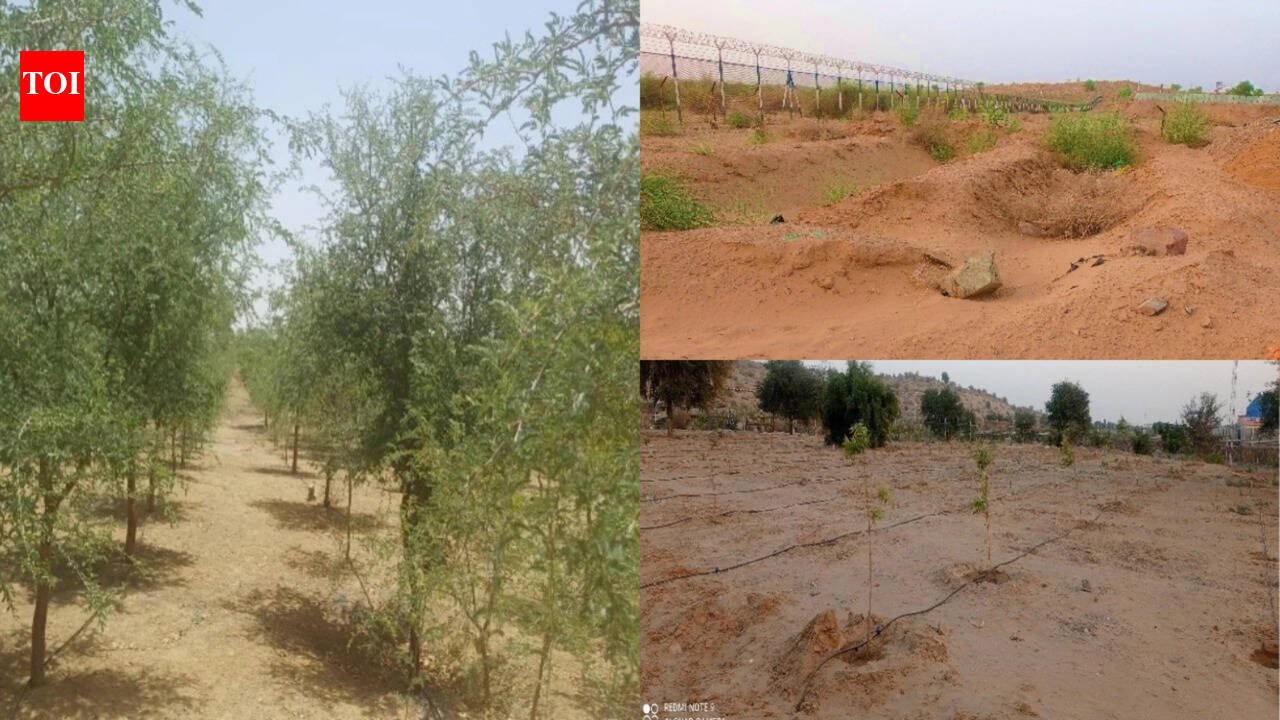
JAISALMER: In the vast expanse of Rajasthan’s Thar Desert, where shifting sand dunes, scorching winds, and temperatures touching 50 degree celcius define everyday life, a native tree species is quietly leading an environmental transformation. The Khejri tree, long regarded as the lifeline of the desert, is once again proving its resilience by helping restore greenery and biodiversity in one of India’s harshest landscapes.At Vedanta Oil & Gas–Cairn’s Mangala Processing Terminal (MPT)-SRP area in Barmer district, Khejri has become the centerpiece of a successful ecological restoration initiative. What was once a barren stretch dominated by loose sand and sparse vegetation is gradually turning into a thriving green zone. Birds have returned to the area, bees are actively pollinating plants, and the ecosystem is showing visible signs of recovery.The transformation began in 2022 through a series of carefully planned environmental interventions, including land improvement, soil conservation measures, and drip irrigation systems.A key aspect of the project was the emphasis on planting native and climate-resilient species, particularly Khejri. Out of nearly 4,500 saplings planted across the site, an impressive 98% have survived despite the challenging desert conditions.According to Dr Bhoma Ram Jat, chief environment officer at Vedanta Oil & Gas–Cairn, Khejri is often referred to as the “Kalpavriksha of the Desert” due to its extraordinary ecological and economic value. The tree can withstand prolonged drought, extreme temperatures, and limited rainfall, making it uniquely suited to the desert environment.Its extensive root system allows it to access underground moisture deep beneath the surface, enabling it to survive where many other species fail. In addition to preventing soil erosion and stabilizing sand dunes, Khejri improves soil fertility and creates favorable conditions for other plants to grow.Beyond its environmental significance, Khejri plays a vital role in supporting local livelihoods. Its leaves, locally known as loong, serve as nutritious fodder for livestock, while its pods, sangri, are a prized ingredient in traditional Rajasthani cuisine and an important source of income for rural communities. During periods of drought, the tree often becomes a critical resource for pastoral families and livestock owners.Environmental experts note that the increasing green cover around the project site has resulted in a noticeable rise in biodiversity. Several bird species and pollinators such as bees are now frequently observed in the area, indicating a healthier and more balanced ecosystem.Khejri’s importance is deeply rooted in Rajasthan’s traditional conservation practices, including community-managed lands known as Orans and Gauchars. These indigenous systems have protected biodiversity for generations and continue to demonstrate the value of local ecological knowledge.Speaking ahead of World Environment Day, Dr Jat emphasized that meaningful environmental restoration depends not merely on the number of trees planted but on selecting the right native species and respecting traditional wisdom.The success of Khejri in Barmer offers a powerful lesson in sustainable development. It shows that even in the most challenging environments, ecological restoration is possible when modern conservation efforts work in harmony with nature.Amid the sands of the Thar Desert, Khejri is writing a new story of resilience, hope, and green transformation.


