






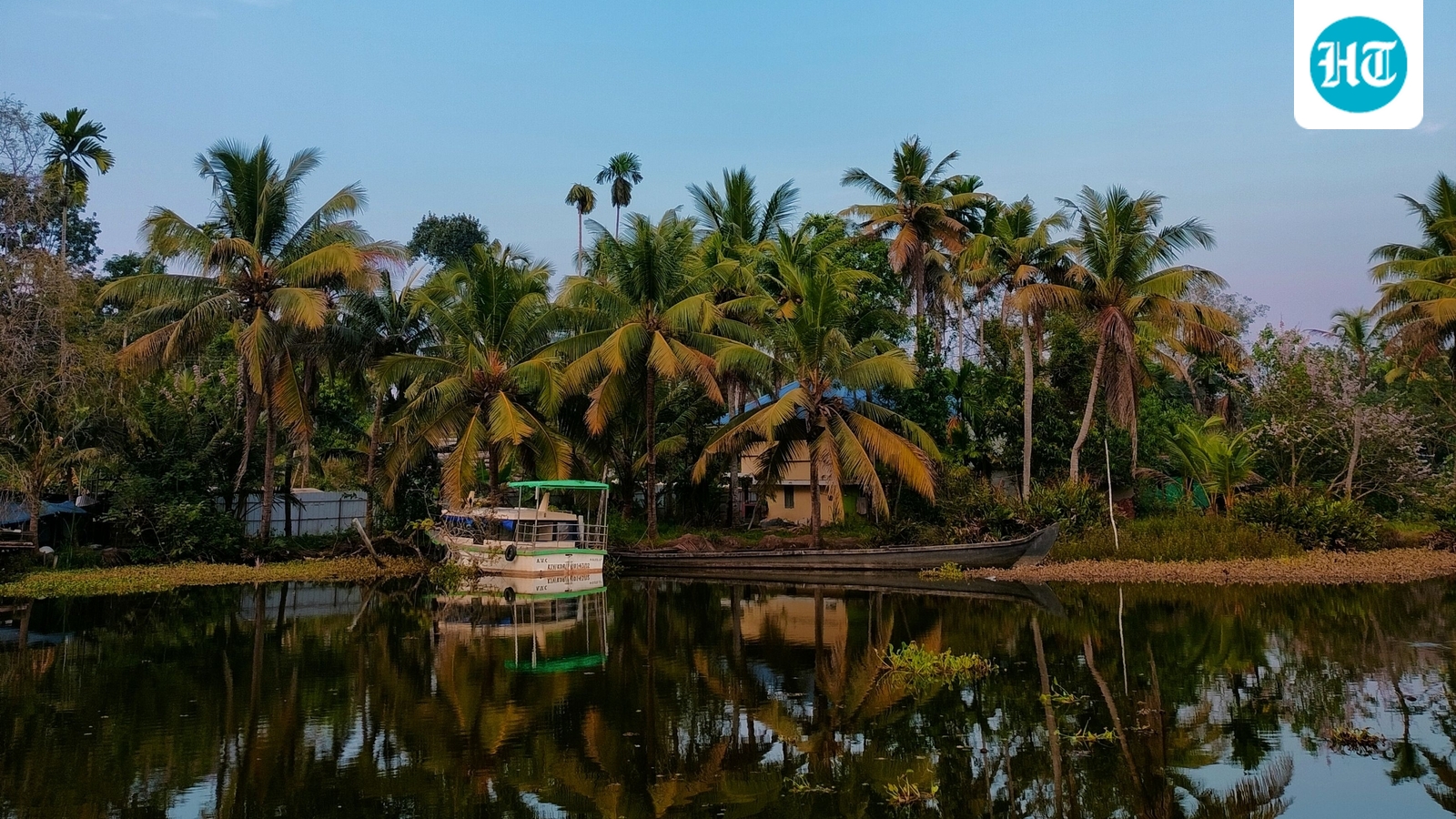
The idea of the perfect Kerala holiday is changing – instead of rushing between popular attractions, travellers are choosing to stay put, explore at their own pace and make room for the small experiences that often end up becoming the most memorable part of a trip.
In an interview with HT Lifestyle, Pranav Dangi, CEO of The Hosteller, shares his perspective on why Kerala is emerging as a preferred destination for slow travel and how younger travellers are changing the way they experience the state. (Also read: Travel vlogger takes ‘world’s most expensive first-class flight’ from Dubai to London: ‘It’s literally an apartment’ )
From packed itineraries to slower travel
“The way people travel to Kerala has changed. For a long time, a Kerala trip meant a packed few days: a houseboat night in Alleppey, a day in Munnar, a stop in Fort Kochi, then home. That itinerary still exists, but fewer travellers want to run it at that speed,” Pranav says.
“They are staying longer, moving less, and building the trip around local culture, nature, and an unhurried pace rather than a checklist of sights,” he adds.
According to him, Kerala is naturally suited to this style of travel, with its diverse landscapes and experiences encouraging visitors to spend more time in one place. “Kerala happens to be built for exactly this. The backwaters, the beaches, the plantations, the older neighbourhoods and the wellness stays are not places you rush through,” he says.
“Give them time, and you start to notice the everyday life around you: the food people actually eat, the small talk at a chai shop, the rhythm of a working plantation. That is a very different trip from moving between attractions with a camera,” Pranav says.
Younger travellers are choosing experiences over checklists
Pranav believes younger travellers are playing a major role in reshaping the idea of what makes a holiday worthwhile.
“A lot of this is being driven by younger travellers, who have quietly redefined what a good holiday looks like,” he says, adding, “For them, the win is a good afternoon in a village they had not planned to visit, a café someone local pointed them to, a trail that was not on any list.”
Pranav says, “The trip is measured in experiences that stick, not in spots ticked off.” This shift is also influencing the destinations travellers choose within Kerala. While popular locations such as Munnar and Fort Kochi continue to attract visitors, quieter destinations are gaining attention.
“You can see it in where people are going. Munnar and Fort Kochi are still busy, but Wayanad and Vagamon are pulling in travellers who want something quieter and closer to nature, with fewer people around and more room to just be somewhere,” Pranav says.
Hostels are becoming part of the travel experience
The growing interest in slow travel is also reflected in accommodation trends. According to Pranav, guest volumes across The Hosteller’s properties in Munnar, Wayanad, Fort Kochi and BAM Vagamon were up 75.6% in 2026 compared with 2025.
“The shift shows up in the numbers too. Across The Hosteller’s properties in Munnar, Wayanad, Fort Kochi and BAM Vagamon, guest volumes were up 75.6% in 2026 over 2025,” he says.
Pranav says, “That kind of jump is not really about beds. For younger travellers, where they stay has become part of the trip.” He adds that hostels can become social spaces where travellers discover experiences beyond their original itineraries.
“A hostel is where you meet other people, swap recommendations, and end up doing things that were never on your own plan. The common room does what a guidebook cannot,” Pranav says.
Slow travel could benefit lesser-known destinations
Beyond changing individual travel experiences, Pranav believes slower travel can also help distribute tourism more widely across a destination. “There is a bigger upside here that is worth naming. When people slow down and stay longer, tourism spreads out,” he says.
“Instead of the same handful of destinations absorbing all the footfall, travellers venture into lesser-known areas, spend more time with local communities and leave more behind in more places. Slow travel is quietly better for the map,” he adds.
Ultimately, he sees Kerala’s growing appeal as a slow-travel destination not as a move towards travelling less, but towards travelling with greater intention.
“So Kerala’s turn as a slow-travel destination is not about travelling less. It is about travelling differently: fewer places, more time in each, and a real preference for experiences that connect you to where you are rather than just prove you were there,” Pranav says.


