


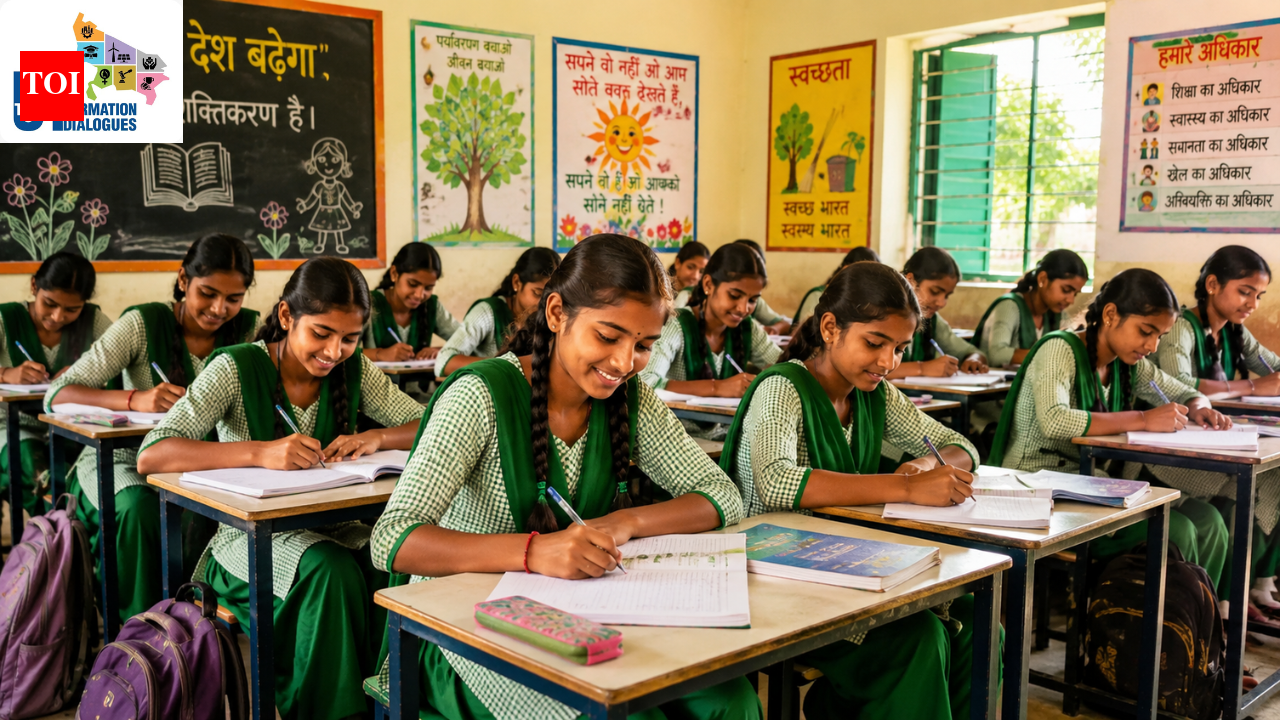
The Kasturba Gandhi Balika Vidyalaya (KGBV) Scheme is a centrally sponsored initiative launched by the government in 2004 to establish residential schools at the upper primary level (and now extended) for girls from disadvantaged sections, particularly SC, ST, OBC, minority communities, and those in educationally backward blocks. The scheme addresses gender gaps in literacy by providing free boarding, lodging, and quality education in a safe environment, with a focus on reducing dropouts and empowering girls from marginalised backgrounds. Under Chief Minister Yogi Adityanath, the KGBV scheme has received renewed impetus as part of a broader push for girls’ education and women’s empowerment. Classes have been extended from Class 8 to Class 12 in many schools, new buildings and hostels have been constructed (including the inauguration of 139 new/upgraded KGBV facilities), and specialised facilities like astronomy labs have been introduced. The government has also rolled out an 18-point action plan focusing on student safety, digital learning, sports, scholarships, hostel management, and holistic development, including life skills. Yogi Adityanath’s vision for KGBVs centres on transforming these schools into modern, secure, and high-quality institutions that not only impart education but also nurture self-reliant, confident young women capable of contributing to a developed Uttar Pradesh. By emphasising safety, infrastructure upgrades, digital empowerment, and extended access to secondary and senior secondary education — even planning new residential schools in underserved blocks — his administration views KGBVs as a cornerstone for bridging gender disparities, preventing dropouts among girls from poor families, and building an educated, empowered female workforce aligned with the goals of Viksit UP and Viksit Bharat. This approach integrates KGBVs with other initiatives like smart classrooms and career guidance portals to ensure girls receive comprehensive support for academic excellence and future opportunities.Objectives
- Provide free residential education to girls from Classes VI to XII.
- Bring out-of-school and dropout girls back into the education system.
- Improve enrolment, retention and completion of secondary education among girls from marginalized communities.
Target beneficiaries
- Girls belonging to Scheduled Castes (SCs), Scheduled Tribes (STs), Other Backward Classes (OBCs) and minority communities.
- Girls from Below Poverty Line (BPL) and other socio-economically disadvantaged families, particularly in educationally backward areas.
Facilities provided
- Free boarding and lodging.
- Free education, textbooks, uniforms and study material.
- Nutritious meals, healthcare, counselling, sports and co-curricular activities.
- Safe residential environment with wardens and women staff.
KGBVs in Uttar Pradesh
- Uttar Pradesh has one of the largest KGBV networks in the country.
- The state established 746 KGBVs, many of which have been upgraded to provide education up to Class XII.
- Around 78,500 girls are currently enrolled across these residential schools.
Impact
- Increased enrolment and retention of girls from disadvantaged communities.
- Reduced dropout rates among adolescent girls.
- Many former KGBV students in Uttar Pradesh have gone on to become police personnel, civil servants and sportspersons, demonstrating the scheme’s role in social empowerment.
