


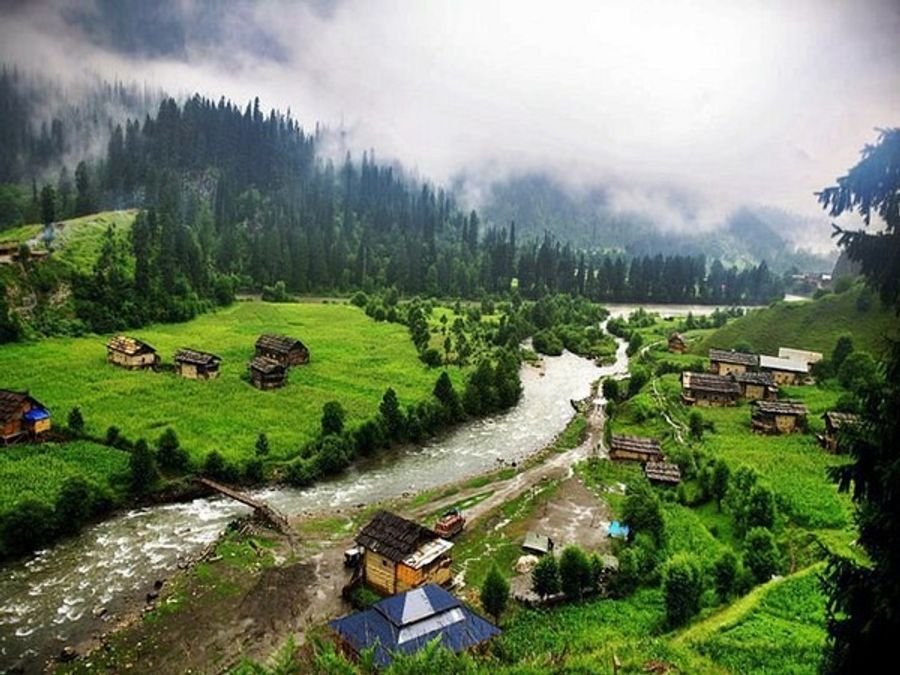
Srinagar, Aug 19: For decades, areas along the Line of Control (LoC) in Kashmir were known mainly for security installations, checkpoints and military activity. Today, several of these remote areas are slowly gaining attention as emerging tourist destinations.
Places such as Keran, Tangdhar, Uri and Gurez are seeing growing interest as improved infrastructure and a sustained ceasefire have made travel easier. The change is giving visitors a chance to explore areas that remained largely outside the traditional tourism circuit.
Tangdhar Valley, reached through the Sadhna Pass, offers mountain views, alpine meadows and access to remote villages. Travellers, however, need to plan carefully around security checks and changing weather conditions.
Teetwal, located along the Kishanganga River, is also attracting visitors interested in Kashmir’s history and culture. The restored Sharada Temple has added to the area’s appeal among pilgrims, researchers and heritage enthusiasts.
Uri offers another perspective on the region’s history. The Aman Setu, associated with cross-LoC links, remains an important landmark reflecting the area’s strategic and political past.
Further north, Gurez Valley offers visitors an opportunity to experience the culture of the Dard-Shin community. Traditional wooden houses, mountain landscapes and the prominent Habba Khatoon Peak remain among its major attractions.
The growing interest in these areas is different from conventional mass tourism. Visitors are increasingly looking for history, culture, local experiences and lesser-known landscapes.
The trend could also support local communities through homestays, transport services, guides, handicrafts and small businesses. At the same time, tourism authorities and local residents face the challenge of protecting the fragile Himalayan environment.
As more frontier villages enter Kashmir’s tourism map, the focus is shifting from security-only narratives to community-led tourism, cultural preservation and sustainable economic opportunities.
