



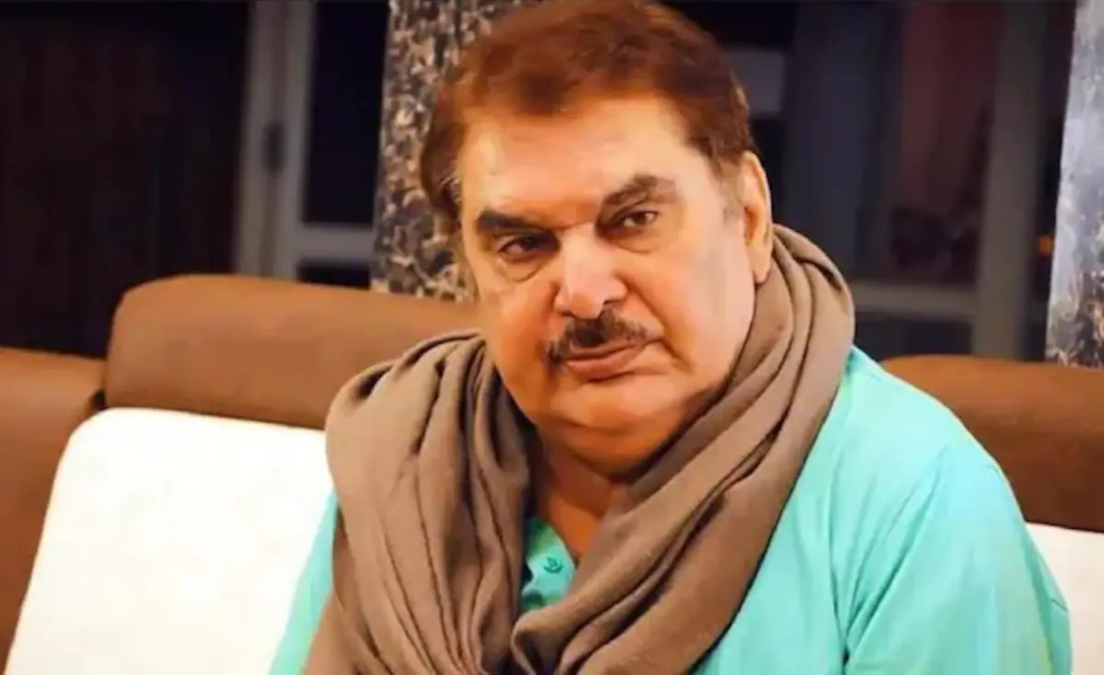
Veteran Bollywood actor Raza Murad, who has worked in over 500 films, first came to Kashmir in 1976 and has been returning ever since — for shoots, for his honeymoon on a houseboat, and later with his daughter. In a candid conversation with Rising Kashmir’s Idrees Bukhtiyar, he recalled the golden era of film shootings in Gulmarg, Yusmarg and Srinagar. He credited Shammi Kapoor’s Junglee for putting Kashmir on Bollywood’s map, questioned why people rush to Switzerland when Kashmir is far more beautiful, admitted his love for Goshtaba, and said that while much has changed over the decades, Kashmir remains an emotion — timeless, beautiful, and always welcoming.
Q: Do you remember your first trip to Kashmir?
Raza Murad: Yes, very clearly. I first came to Kashmir in 1976. We were shooting in Ludhiana and one of my close friends, actor Satish Kaul, who is originally from Kashmir, suggested we visit. After the shoot, we took a flight from Amritsar to Srinagar and stayed at Nedous Hotel. I was here for four days, and from then on, I kept coming back.
Q: How was it shooting in Kashmir those days?
Raza Murad: In 1977, Kishore Kumar was making a film called Door Wadiyon Mein Kahin. The shooting was held in Gulmarg, and we stayed at the Highland Park Hotel. Another schedule was shot in Yusmarg. Later, I worked in Khuddar with Amitabh Bachchan. I remember we had to shoot a court scene, and for that, a courtroom set was created inside Nedous Hotel in Srinagar. Many actors were visiting Kashmir at that time – it was a golden era for film shoots in the valley.
Q: What personal memories do you have of Kashmir?
Raza Murad: Absolutely. The year after, I got married, and I came here again for my honeymoon. We stayed in a houseboat – it was a magical experience. Later, I returned with my daughter because she always wanted to see Kashmir.
Q: You often compare Kashmir to Switzerland. Why?
Raza Murad: I honestly don’t understand why people run to Switzerland. Our Kashmir is far more beautiful than Switzerland -whether it’s the lakes, mountains, or snow. In the 1990s, unrest had stopped film producers from coming here, and we had to recreate Srinagar in places like Kullu and Manali. But now, the situation has improved, and filmmakers once again love to shoot in Kashmir.
Q: J&K government has been promoting film tourism. Do you think that’s needed?
Raza Murad: I remember when Mehbooba Mufti, the former chief minister, came to Mumbai to announce the film policy. I was present at that meeting. Kashmir doesn’t need recommendations -filmmakers themselves want to shoot here. They are drawn by the sheer beauty: the lakes, the gardens, the snow-covered mountains.
Q: In your view, who brought Kashmir into Bollywood’s limelight?
Raza Murad: If anyone deserves credit, it is Shammi Kapoor. His film Junglee, which was among the first colour films shot here, marked the beginning of Kashmir’s journey in Bollywood. He later shot Kashmir Ki Kali, Janwar, and many more films here. I personally feel there should be a colony or a road named after him in Srinagar because he played such a pivotal role in promoting Kashmir through cinema.
Q: How do you find Kashmir today compared to your earlier visits?
Raza Murad: Kashmir has changed a lot. Many new stores and facilities have opened. When I came with my daughter in 1995, there were no mobile phones here. We had to go to a PCO to make a call. Now, things are very different.
Q: Any favourite Kashmiri delicacies?
Raza Murad: Yes, I love to eat Goshtaba whenever I am here – that is my absolute favourite.
Q: And the places you’ve enjoyed the most in the valley?
Raza Murad: I’ve been to Gulmarg, Sonamarg, Dal Lake, the Mughal Gardens, Shankaracharya Temple, and, of course, the Lalit Hotel. Each place has its own charm. But for me, Kashmir as a whole is an emotion – timeless, beautiful, and always welcoming.
