



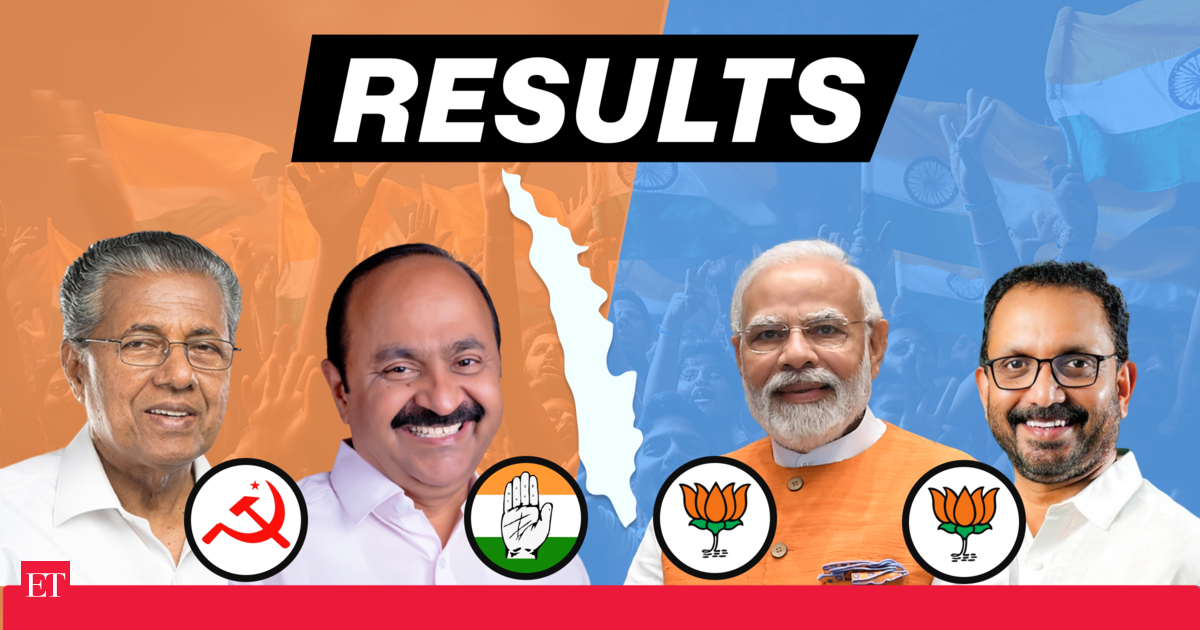
Also read: Kerala Election Results 2026: Check full list of leading candidates, UDF surges ahead in early trends
Final trends: who won, who trailed
- Kallatra Mahin (IUML) has won the Kasaragod seat with 76,396 votes (45.15%), securing a comfortable lead over his nearest rival.
- Ashwini M L (BJP) finished as the first runner-up with 53,698 votes (31.74%), trailing by a margin of 22,698 votes.
- Among others, Shanavas Padhoor (Independent) polled 36,678 votes (21.68%), emerging as a significant third force in the contest.
Further behind, Shanavas A A (Independent) received 893 votes, Mohammed Ali Fathah B M (Independent) secured 824 votes, while NOTA accounted for 714 votes.
The results indicate a clear victory for IUML, with the contest largely consolidating around the top two candidates, even as an independent candidate drew notable support.
2026: A diverse border constituency
Kasaragod has a distinct electoral character shaped by its geography and demography. Bordering Karnataka, it brings together coastal communities, inland populations, and a multilingual voter base.
Key issues influencing voters include:
- Border connectivity and infrastructure
- Access to healthcare and public services
- Employment opportunities, particularly for youth
- Minority welfare and social equity
This mix of concerns gives the constituency a unique political identity within Kerala.Also read: Nemom Election Results 2026: BJP, Congress, CPI(M) lock horns as Chandrasekhar goes against Sabarinadhan, Sivankutty
Voting and turnout
Kerala voted in a single phase, with strong participation across constituencies. Kasaragod recorded a voter turnout of 79.61%, reflecting robust electoral engagement
The high turnout underscores the stakes involved in what has traditionally been a competitive, multi-cornered seat.
Exit poll signals
Exit polls ahead of the results had suggested a close contest statewide between the LDF and the UDF, with no clear landslide projected.
- Most pollsters indicated a narrow edge for either front
- Margins were expected to remain tight across several constituencies
Kasaragod, with its history of triangular contests involving the BJP, was seen as one of the more unpredictable seats.
Electoral dynamics
The 2026 outcome reinforced Kasaragod’s status as a politically competitive constituency. The IUML’s victory highlights strong consolidation within the UDF base, particularly among minority and coastal voters.
The BJP’s second-place finish reflects its continued presence and attempt to expand in northern Kerala, though it fell short of bridging the gap. The significant vote share for an independent candidate points to localised factors and candidate-specific appeal playing a role alongside party politics.
A key northern signal
Kasaragod remains a crucial indicator of political trends in Kerala’s northern districts. Its diverse electorate, border dynamics, and history of close contests make it a seat where outcomes often carry broader implications.
With a decisive verdict in 2026, the constituency offers insight into how voters are balancing development priorities, identity considerations, and political alliances in a complex electoral landscape.


