



Bengaluru: Karnataka on Tuesday unveiled an ambitious roadmap to position itself as an “AI-native” state, announcing plans to establish India’s first government-led Artificial Intelligence (AI) University in Bengaluru, introduce AI education from Class VI, set up a dedicated AI Hub, formulate a Karnataka AI Policy and develop two hyperscale green data centres.
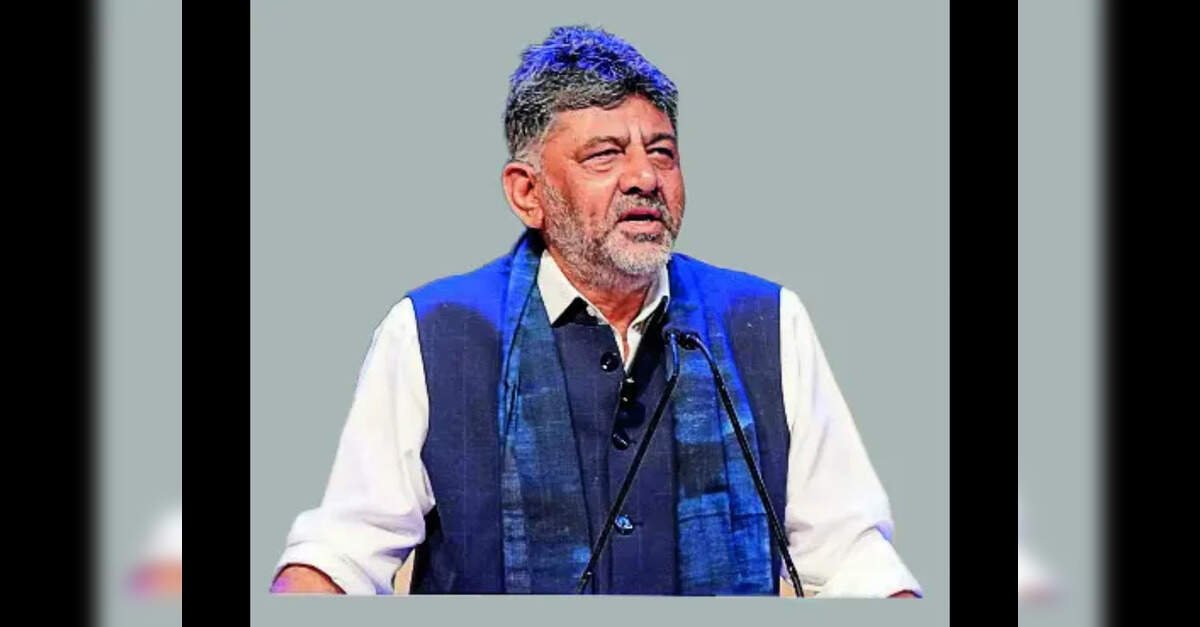
The announcements were made by Deputy Chief Minister D K Shivakumar while inaugurating Google I/O Connect India 2026 at the Bangalore International Exhibition Centre (BIEC).
In a post on X after the event, Shivakumar said, “Building an AI-native Karnataka. India’s first government-led AI University in Bengaluru, a dedicated AI Hub, the Karnataka AI Policy, AI education from Class VI, and two Hyperscale Green Data Centres will power the next era of innovation.”
The proposed AI University will be developed on a 100-acre campus in Bengaluru, with regional campuses planned in Kalaburagi, Belagavi, Hubballi-Dharwad, Mangaluru and Mysuru. The university is expected to focus on AI education, research, innovation and industry collaboration to strengthen the state’s talent pipeline in emerging technologies.
To foster AI-led innovation, the state will establish a dedicated AI Hub as an incubation centre for startups, companies, researchers and academic institutions working on artificial intelligence. The government also plans to introduce a Karnataka AI Policy aimed at attracting investments and creating a globally competitive AI ecosystem.
In a significant school education initiative, Shivakumar announced that AI education will be introduced from Class VI onwards. However, the government is yet to announce details regarding the curriculum, implementation timeline, teacher training framework or whether the initiative will be rolled out in phases.
As part of its digital infrastructure strategy, Karnataka will also establish two next-generation hyperscale green data centres—one near Bengaluru and another along the state’s coastline—to support the growing computing requirements of AI applications and digital services.
Addressing the gathering, Shivakumar said artificial intelligence should be leveraged to improve public service delivery by helping teachers teach better, enabling doctors to diagnose diseases earlier, providing farmers with better advisory services, ensuring citizens receive government services with dignity and speed, and empowering small businesses to compete more effectively.
Highlighting Karnataka’s technology ecosystem, he said the state contributes nearly 40 per cent of India’s software exports, while Bengaluru is home to more than 17,000 startups and thousands of Global Capability Centres (GCCs), positioning it to lead India’s next phase of AI-driven growth.
The announcements come as states increasingly compete to attract AI investments, research institutions and skilled talent while integrating artificial intelligence into education and governance. If implemented as proposed, Karnataka’s initiative would create an AI ecosystem spanning school education, higher education, research, innovation, infrastructure and industry.


