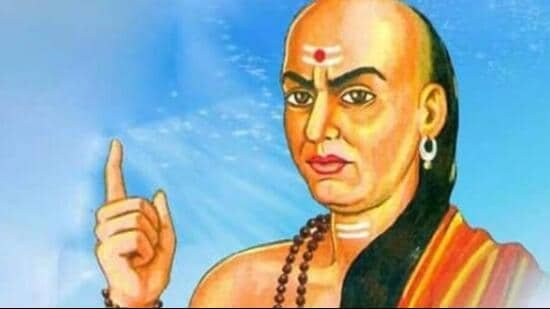
Few individuals in India’s long history have exercised such a profound influence on the destiny of the subcontinent as Chanakya, also known as Kautilya or Vishnugupta. If Chandragupta Maurya was the sword that forged India’s first great empire, Chanakya was unquestionably the mind that imagined it. His life reminds us that ideas, when allied with determination and political will, can alter the course of history.
Chanakya’s life reminds us that ideas, when allied with determination and political will, can alter the course of history.
Who exactly was Chanakya? Historical certainty is elusive. Most scholars agree that he lived during the fourth century BCE, approximately between 375 and 283 BCE, though precise dates remain uncertain. He belonged to an age of immense political ferment. Alexander’s invasion of north-western India in 326 BCE had exposed the vulnerability of the fragmented kingdoms of the subcontinent. The mighty Nanda dynasty ruled Magadha but had become unpopular, burdened by accusations of oppressive taxation and arbitrary rule. It was into this fractured political landscape that Chanakya entered with a vision far greater than that of any contemporary ruler.
Tradition identifies him as a Brahmin scholar associated with the renowned university of Takshashila. Learned in the Vedas, economics, diplomacy, and philosophy, he possessed not merely scholastic brilliance but also an extraordinary grasp of human nature. Legend has it that after being publicly humiliated at the court of the Nandas, he took a solemn vow to overthrow the dynasty. Whether this episode is historically verifiable is less important than what followed: the emergence of one of the most remarkable partnerships in political history.
Chanakya encountered the young Chandragupta Maurya while the latter was still an obscure youth. Various traditions differ on the circumstances of their meeting, but all agree on one fact: Chanakya recognised exceptional potential in the boy. He became not merely Chandragupta’s teacher but also his strategist, mentor, and political architect. According to one anecdote, the young Chandragupta began eating from a thali of hot khichdi by putting his fingers right in the centre, thereby scalding them. Chanakya, watching closely, then gave him the invaluable advice that haste is often self-defeating. If one has to get to the centre, start from the edges.
Chanakya’s achievement lay not only in helping Chandragupta overthrow the Nandas around 322 BCE, but also in constructing an enduring imperial framework through the establishment of the Mauryan Empire, which eventually stretched across most of the Indian subcontinent. It was India’s first truly pan-regional empire, bringing under one political authority territories that had long remained divided. The significance of this accomplishment cannot be overstated. At a time when Europe was still fragmented into competing city-states and kingdoms, India had produced a sophisticated imperial state with an elaborate administrative machinery.
The intellectual foundation of this achievement is found in the Arthashastra, one of the greatest works ever written on politics, governance, and economics. The title itself is revealing. “Artha” signifies material well-being and statecraft rather than mere wealth, while “shastra” means a systematic treatise. The work addresses virtually every aspect of government: taxation, law, intelligence gathering, diplomacy, warfare, agriculture, commerce, urban planning, mining, irrigation, and public finance.
Is the Arthashastra the first major work on politics in world history? Chinese civilisation produced the writings of Confucius and Sun Tzu around the same broad period, while the Greek philosopher Plato wrote The Republic, and Aristotle composed Politics. Yet, unlike these works, which often explore ideal states or philosophical principles, Kautilya’s treatise is an exhaustive manual of practical governance. It combines political theory with administrative detail, fiscal management, military organisation, and foreign policy in a manner unparalleled in the ancient world. In that sense, it remains among the earliest and certainly one of the most comprehensive treatises on statecraft ever composed.
Modern readers are often struck by Chanakya’s realpolitik. He viewed politics as the art of securing the stability and prosperity of the state. Espionage, deception, and calculated alliances all had their place, provided they served the larger interests of the kingdom. This has led many to compare him with Niccolò Machiavelli. The comparison, however, is a Western conceit. Machiavelli wrote nearly eighteen centuries later, and whereas The Prince focuses primarily on the acquisition and maintenance of power, the Arthashastra is equally concerned with economic development, public welfare, and institutional governance. Indeed, Kautilya repeatedly emphasises that the ruler’s happiness lies in the happiness of his subjects—a striking reminder that even his hard-headed realism was anchored in the obligation of good governance.
The Arthashastra has its own remarkable history. For centuries, the work virtually disappeared from public knowledge. Although fragments of its ideas survived in later texts and traditions, the complete manuscript was believed lost. It was only in 1905 that the Sanskrit scholar R. Shamasastry discovered a manuscript at the Oriental Research Institute in Mysore. He published the Sanskrit text in 1909 and an English translation shortly thereafter, introducing the world to a masterpiece that had remained hidden for centuries. Its rediscovery transformed scholarly understanding of ancient India, revealing a civilisation whose political thought was as sophisticated as its achievements in philosophy, mathematics, and literature.
In an age when India’s civilisation achievements are increasingly being rediscovered, Chanakya deserves to be recognised as one of history’s greatest political thinkers, a master strategist who transformed an ambitious youth into an emperor, and the architect of an enduring vision of statecraft whose relevance continues to resonate more than two millennia after it was first conceived.
(Pavan K Varma is an author, diplomat, and former member of Parliament (Rajya Sabha). The views expressed are personal)