


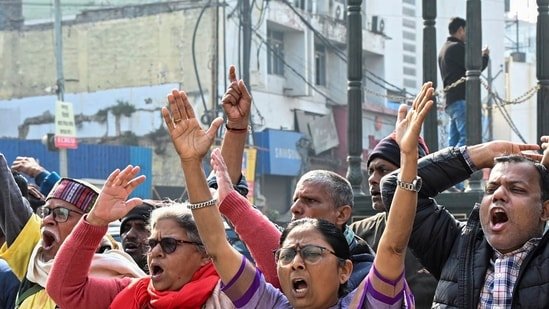
Several parts of the city witnessed protests on Monday as job aspirants and anganwadi workers staged demonstrations demanding recruitment, better wages and administrative action.
At the education department headquarters Bikash Bhavan, candidates who claimed to have cleared the Teachers Eligibility Test and hold B.Ed or D.El.Ed degrees demonstrate for seven hours, alleging that those trained through the National Institute of Open Schooling were being excluded from the primary recruitment process. They banged utensils during their protest.
The agitators claimed a Supreme Court of India order issued in April 2023 directed the appointment of around 1,200 such candidates within three months, but no action has been taken so far. Some of the protesters carried placards reading “No News, No Vote” and demanded the resignation of the president of the state primary education board.
“We will not leave the place till we get concrete assurances. Till we meet Education Minister Bratya Basu. We are pushed to the edge,” said Debalina Barik, a candidate, standing before a police barricade.
She and 100 other protestors were finally persuaded to leave the spot by waiting police personnel after a senior education official accepted their memorandum.
In another demonstration, upper primary job aspirants who have already appeared for interviews marched toward the West Bengal Assembly, seeking immediate recruitment to vacant posts.
They sought the intervention of Chief Minister Mamata Banerjee, claiming they had completed all stages of the selection process.
They blocked the arterial S N Banerjee Road in Esplanade for hours before threatening to hit the roads again till either Chief Minister Mamata Banerjee or the education minister met them and promised to address their issues.
Meanwhile, members of the West Bengal Anganwadi Workers and Helpers Welfare Association began a three-day sit-in near Shaishali complex, the headquarters of the social welfare department, demanding “equal pay for equal work”, permanent job status, pensions and gratuity benefits on par with those provided in states such as Gujarat.
Raising concerns over digital reporting requirements under the Poshan tracker system, they said they would not use personal mobile phones or accept the existing allowance.


