


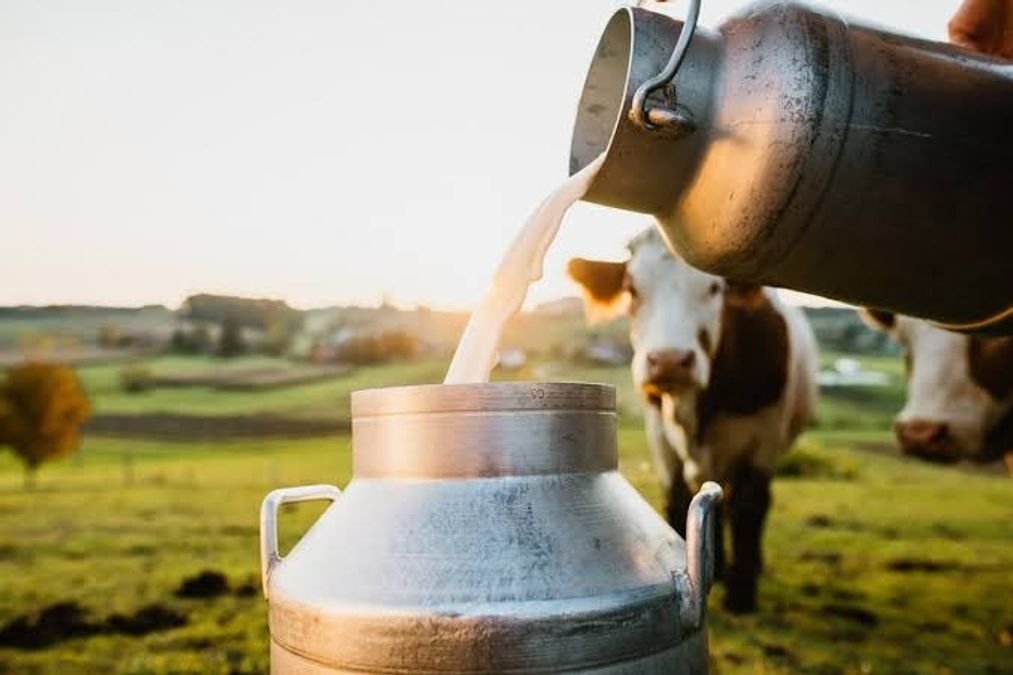
Srinagar, Aug 05: Jammu and Kashmir’s milk production rose to 29.7 lakh tonnes in 2024-25 from 28.7 lakh tonnes in 2023-24 and 28.2 lakh tonnes in 2022-23, according to data placed before the Lok Sabha.
Per capita milk availability in the region also rose, to 595 grams per day in 2024-25 from 577 grams the previous year, well above the national average of 485 grams per day, the data showed.
The figures were part of a written reply to Starred Question on strengthening dairy infrastructure, raised by Geniben Nagaji Thakor. The question was answered by Union Minister of Fisheries, Animal Husbandry and Dairying Rajiv Ranjan Singh alias Lalan Singh.
Central assistance to Jammu and Kashmir under the government’s dairy development schemes swung sharply from year to year, the data showed. Funding under the Rashtriya Gokul Mission, aimed at improving milk productivity, rose from nothing in 2023-24 to Rs 61.20 crore in 2024-25, then fell to Rs 14.13 crore in 2025-26. Support under the National Programme for Dairy Development moved in the opposite direction, from Rs 24.31 crore in 2023-24 to zero the following year, before rising marginally to Rs 1.40 crore in 2025-26.
J&K received no funds at all under the Supporting Dairy Cooperatives and Farmer Producer Organisations scheme in any of the three years, the data show, while releases under the Animal Husbandry Infrastructure Development Fund stayed negligible, ranging between Rs 0.02 crore and Rs 0.09 crore.
The Livestock Health and Disease Control Programme, which funds disease prevention and vaccination drives, was the steadiest source of support for the region, with releases of Rs 18.85 crore, Rs 20.37 crore and Rs 16.50 crore over the three years. Funding under the National Livestock Mission rose each year, from Rs 1 crore in 2023-24 to Rs 9.10 crore in 2025-26.
The government said the six schemes, which also include the Animal Husbandry Infrastructure Development Fund and National Programme for Dairy Development, are meant to improve milk productivity, expand the network of dairy cooperatives, strengthen infrastructure, and enhance the availability of feed and fodder across states.
Nationally, milk production rose to 247.87 million tonnes in 2024-25 from 239.30 million tonnes in 2023-24, making India the world’s largest milk producer, the govt said.
The government said that as of June 2026, 36,611 new dairy cooperative societies had been organised nationwide and 34,557 strengthened at the village level under the National Programme for Dairy Development, as part of the White Revolution 2.0 initiative. About 168 lakh litres per day of milk chilling capacity has been created, along with 76,748 quality testing devices distributed, it said.
Asked whether any new scheme was planned for animal disease prevention, quality feed provision, or expanding artificial insemination facilities, the government said existing schemes “adequately cover” these areas and there was no proposal for a new scheme.
