



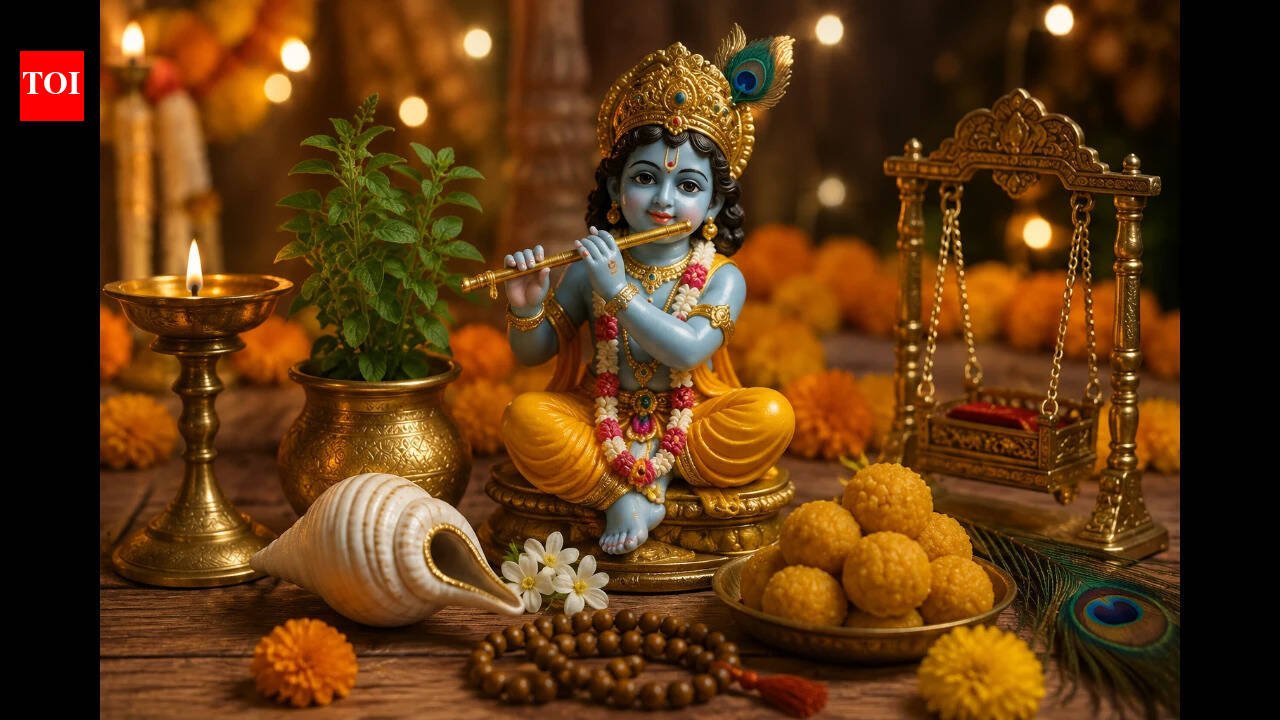
Krishna Janmashtami 2026 celebrates the birth of Lord Krishna with devotion, fasting, bhajans and midnight puja. Many families also decorate their homes and prepare special bhog. They also bring in things which are closely associated with Krishna.In Hindu tradition, it is believed that certain symbols bring positive energy, happiness, devotion and peace to the home. Their value is not only for decoration. Each of them is connected to the life and teachings of Krishna and thus holds greater spiritual significance. This year, Krishna Janmashtami will be celebrated on September 4.
1.Feather of Peacock
The peacock feather is one of the most well-known symbols of Lord Krishna. Krishna is often shown wearing a peacock feather in his crown.The feather has been a symbol of beauty separated from pride. The peacock’s feather looks so grand, but Krishna wore it as a humble ornament. It’s a reminder to its followers that ego should never be built on talent, success or attractiveness.You can keep a clean peacock feather near your Krishna idol or in the puja room. Some people also keep it in the study or living room as a representation of positive thinking and wisdom.
2.Krishna’s Flute
A small decorative flute can be a great addition to your Janmashtami puja space.Krishna’s flute is a symbol of the attraction of love and not of force. In devotional symbolism, the empty flute can only be played when Krishna breathes through it. This is often interpreted as a spiritual practice of letting go of the ego so divine guidance can flow.Buy a basic wooden flute and keep it in front of the image of Krishna or Laddu Gopal.It can be a reminder to leave unnecessary control in relationships to a minimum. Let people decide for themselves. Speak softly, listen softly.The flute also represents harmony and emotional understanding for couples.
3.Tulsi Plant
Tulsi has an indispensable place in the worship of Lord Krishna and Lord Vishnu. Tulsi leaves are widely used in the preparation of bhog and Krishna puja.If you don’t have a healthy Tulsi plant in your home, Janmashtami is a very auspicious occasion to get one.Place the plant in a clean and appropriate location that gets enough sun and care.Spiritually, Tulsi stands for consistency, purity and devotion. Watering and caring for the plant can become a part of a daily mindfulness practice.If this is your family tradition, you can offer Tulsi leaves with Krishna’s bhog on Janmashtami.
4.The Cow and Calf Symbol
Krishna’s childhood is intimately bound up with Gokul, with cows, and with pastoral life. He is also called Gopala and Govinda.Hence, a small cow-and-calf statue can be a good addition to the house for Janmashtami. Traditionally, it has been linked to nourishment, love, family protection, and gratitude for the basic elements that support life.Place it in the vicinity of your Krishna altar or any clean corner of your home.But the bigger message is to be kind. You can help a dependent, feed animals or support a real charity.In Krishna devotion, symbolism is strengthened when it is supported by action.
5.Idol of Laddu Gopal
Janmashtami is often considered an auspicious occasion for families to purchase a Laddu Gopal idol to initiate regular Krishna worship.Laddu Gopal is the representation of Krishna in his child form. His devotees treat him with affection and provide him with clothing, food, water and daily care.But bringing an idol home should not be considered a fad. Accountability is needed for regular worship. Choose a size and shape that will be easy to care for.On the night of Janmashtami, you can take a holy dip as per your customs, dress up Laddu Gopal in new clothes, offer makhan-mishri, fruits or any other permissible bhog and decorate the puja area with flowers.


