



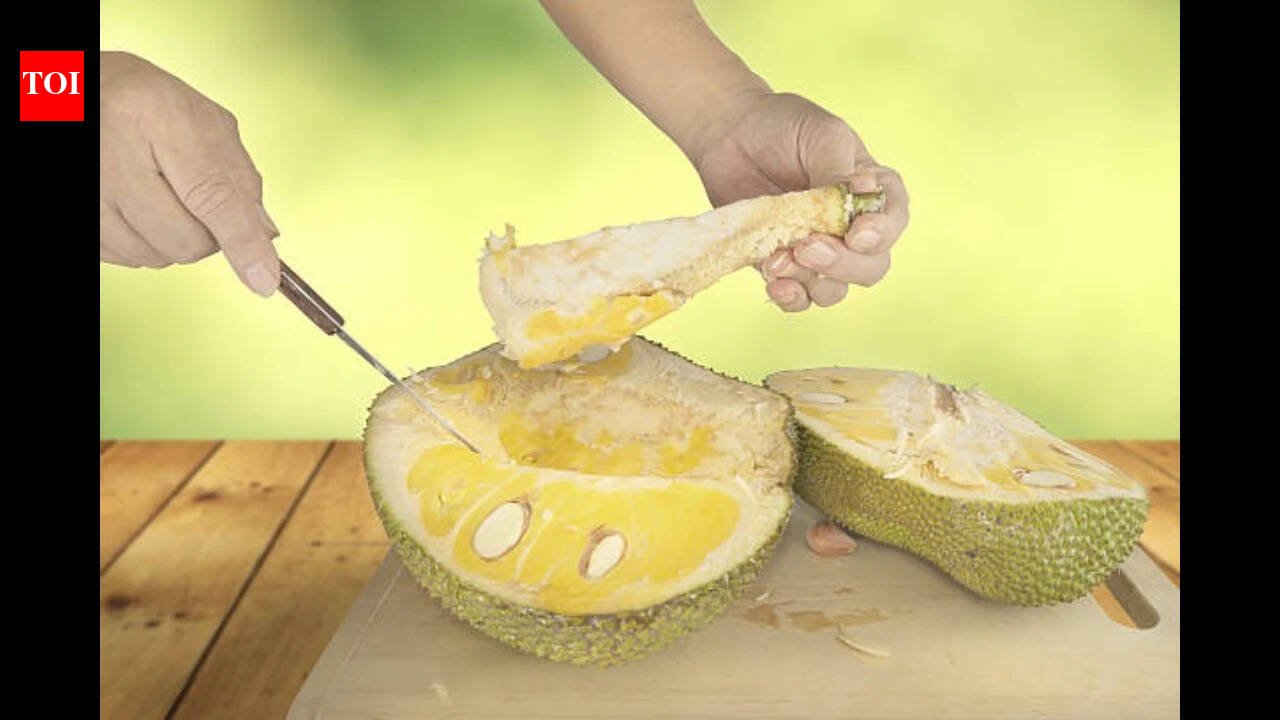
Ask anyone who’s cut into a jackfruit for the first time without knowing what they were signing up for, and you’ll likely get the same story: sap on the counter, sap on the knife, sap somehow on the ceiling fan, and a good twenty minutes spent scrubbing hands that still feel tacky afterwards. That white, glue-like latex oozing out the moment you slice into a jackfruit is completely natural and harmless, but it’s genuinely one of the stickiest substances you’ll ever deal with in a kitchen, and water alone does almost nothing to shift it. The good news is that with a handful of simple, well-tested tricks, mostly involving nothing more than cooking oil, you can get through an entire jackfruit without the usual mess. Here are five beginner-friendly tips to make the whole process painless.
Oil your hands and knife before you even start
This is, without question, the single most important step in the entire process, and nearly every seasoned jackfruit-cutter, particularly in Kerala households where this fruit is a kitchen staple, will tell you the same thing. Coat your palms generously with coconut oil or any neutral cooking oil, and do the same to your knife blade before making a single cut. The oil creates a barrier that stops the latex from properly bonding to your skin or the metal, meaning what would otherwise be an immovable, glue-like mess simply wipes away instead of clinging on.
Protect your work surface before the sap starts flowing
Once you cut into a jackfruit, that sticky sap doesn’t stay politely contained to the fruit itself, it drips, spreads, and has a tendency to end up on counters, tables, and anything else nearby. Before you make your first cut, line your cutting board and the surrounding surface with newspaper, parchment paper, or even a large plastic sheet, something you can simply gather up and toss away once you’re done. It turns what could be a lengthy countertop scrubbing session into a quick, five-second cleanup instead.
Work in stages, not all at once
Trying to tackle a whole jackfruit in one go is exactly how most beginners end up overwhelmed and covered in sap within minutes. Cut it in half first, then into quarters, working your way down to more manageable sections rather than diving straight for the fruit pods. As you go, cut out and discard the tough white core early on, since it holds a disproportionate amount of the sticky latex, removing it early genuinely cuts down on how much mess spreads to the rest of the fruit as you continue.
Keep reapplying oil as you go
A single coat of oil at the start won’t carry you through an entire jackfruit, the sap is persistent, and your knife and hands will need fresh oil reapplied every few cuts to keep working smoothly. Keep a small bowl of oil and a brush, or simply your fingers, within easy reach so you can top up without breaking your rhythm. If you notice your knife starting to drag or stick rather than gliding cleanly through the flesh, that’s usually your cue that it’s time to re-oil.
Clean up with oil first, not water
This is the step most beginners get backwards, and it’s the reason so many people end up frustrated at the sink. Rinsing sap-covered hands or a knife under plain water first does almost nothing, since the latex is oil-based and water simply can’t break it down. Instead, rub a fresh coat of oil directly onto the sticky area, let it sit for a minute if the buildup is heavy, then wipe with a cloth or paper towel before finally washing with warm, soapy water. The oil dissolves what water alone never could.Cutting a jackfruit will probably never feel like a completely mess-free job, this is simply a fruit that comes with a bit of a reputation. But with oil on hand, a protected surface, and a little patience working through it in stages, what once felt like a sticky ordeal becomes a genuinely manageable, even satisfying kitchen task.
Disclaimer:
This article is intended for general informational purposes only. Use a sharp, sturdy knife and cut on a stable surface, taking care as oiled handles and blades can become slippery during the process. If you have a latex sensitivity, exercise caution when handling jackfruit, as its sap contains natural latex and may cause irritation in sensitive individuals.


