



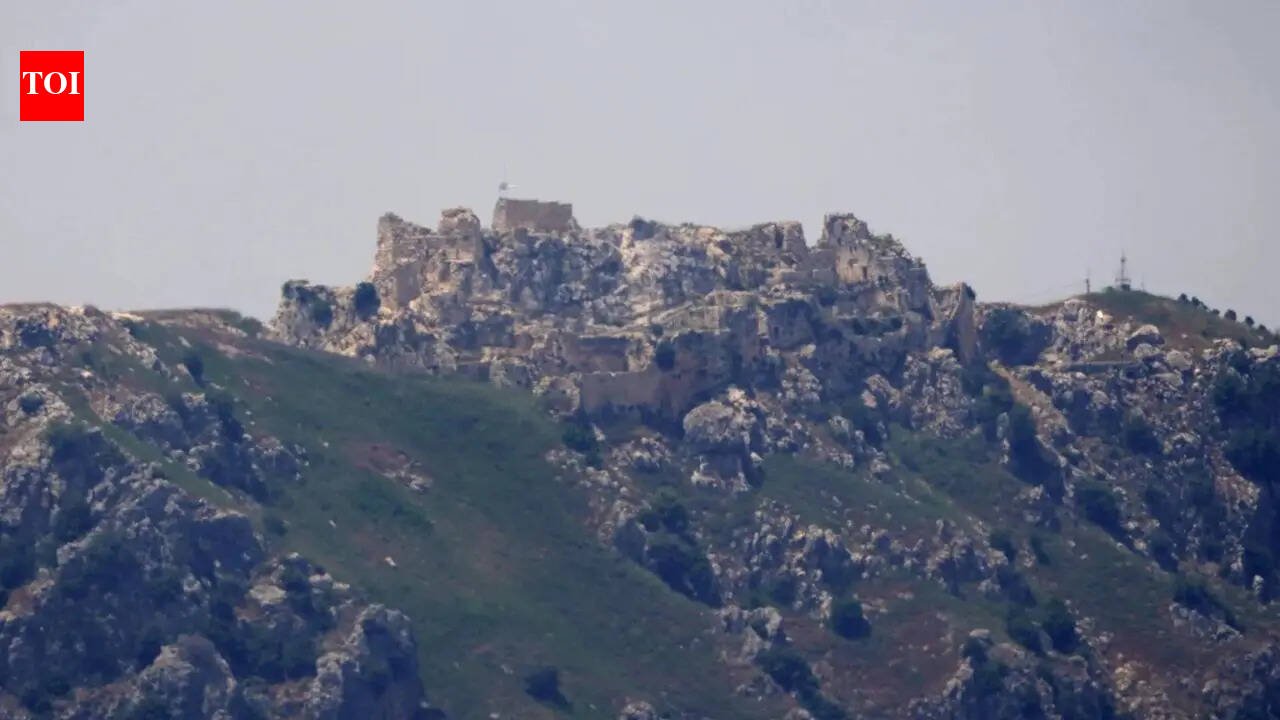
Israeli forces have captured the historic Beaufort Castle in southern Lebanon, marking its one of the deepest advances into Lebanese territory. The assault was part of a broader ground offensive that pushed Israeli forces beyond the Litani River, marking their deepest incursion into Lebanon since 2000.Israeli forces captured Beaufort Castle after days of intense airstrikes, artillery bombardment and ground fighting against Hezbollah positions in southern Lebanon. According to the Israeli military, troops advanced through villages near Nabatiyeh and the Beaufort Ridge before securing the surrounding ridge and military positions. Israeli soldiers then took control of the castle and raised the Israeli flag over the site.
The capture of Beaufort Castle gives Israel control of a strategic hilltop overlooking the Litani River valley, key roads and parts of the Israel-Lebanon border. The high-ground position enhances surveillance, intelligence gathering and operational coordination, while potentially limiting Hezbollah’s movement and activities in southern Lebanon.Lebanon has accused Israel of violating its sovereignty and escalating tensions in the already volatile region. Israel argues that its operations are aimed at dismantling Hezbollah’s military infrastructure and preventing attacks on northern Israeli communities.
Photo credit: X/@haaretzcom
The development comes as the United States intensifies efforts to broker a new ceasefire between Israel and Hezbollah. The issue has also emerged as a point of contention in wider U.S.-Iran negotiations, with Tehran insisting that any diplomatic progress must include a ceasefire in Lebanon.Iranian foreign ministry spokesperson Esmaeil Baghaei said ongoing Israeli military operations are complicating negotiations and stressed that efforts to reduce regional tensions would require an end to hostilities between Israel and Hezbollah.Historical Significance of the Castle:Beaufort Castle, known as Qalaat al-Shaqif in Arabic is medieval era fortress in Lebanon. Built during the crusader period in the 12th century, the castle sits on top of a hill about 700 meters above sea level overlooking Litani river.The Beaufort castle has changed hands many times over the last 900 years,· 1139-1190: Built and controlled by Crusaders, specifically the Kingdom of Jerusalem.· 1190-1240: Captured by Saladin’s Ayyubid sultanate during Crusaders-Muslim wars· 1240-1268: Returned to Crusader control through treaties and political agreements· 1268-1516: Captured by the Mamluk sultanate under Sultan Baybars.· 1516-1918: Controlled by the Ottoman empire after its conquest of the Mamluk territories.· 1918-1943: Came under the French mandate for Lebanon following the collapse of ottoman empire after the first World War· 1943- present: Became the part of independent republic of Lebanon.In the modern era, Beaufort Castle has frequently been controlled by forces opposed to Israel. In 1970s the Palestine Liberation Organization (PLO) used the fortress as a stronghold to launch operations against Israel.Following Israel’s withdrawal from southern Lebanon in 2000, the castle came under the influence of Hezbollah. The Beaufort castle remains a focal point in the conflicts involving Israel and armed groups operating from Lebanese territory. New ceasefire proposal:The latest ceasefire proposal is being pushed by the United States, with secretary of state, Marco Rubio leading diplomatic efforts to prevent further escalation between Israel and Hezbollah.According to Reuters, Rubio recently held discussions with both Lebanese President Joseph Aoun and Israeli Prime minister Benjamin Natanyahu. He proposes a framework under which Hezbollah would stop rocket, missile and drone attack on Israel, while Israel would avoid expanding military operations particularly major strikes in Beirut.The proposal comes after the collapse of an earlier US-brokered ceasefire that took effect on April 16. Benjamin Netanyahu recently declared that Israeli forces had crosses the lithia river and operating across multiple fronts in Lebanon. Israel had maintained that military operations will continue until Hezbollah threat is reduced.The capture of Beaufort castle marks a major milestone in the ongoing conflict. Beyond its strategic importance, the fortress serves as a reminder of the region’s long history o of conflict and its continued relevance in modern warfare.The coming days are very crucial for the region. With fighting continuing on the ground and a new US-backed ceasefire proposal under discussion, the focus is now on whether diplomacy can keep pace with development on battlefield.


