NO MATTER HOW often you are told that “looks aren’t everything”, it is simply true that attractive people tend to earn more, rise higher in their careers and have more choices of mate. Young women have faced pressure over their appearance for generations. But now young men are dealing with the burden, too—and as with any social problem, online influencers are peddling a handsome solution.
“Looksmaxxing”, a social-media-driven trend in which young men go to absurd lengths to look more attractive, has become popular recently.
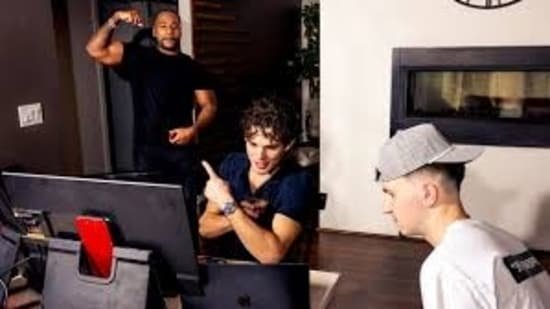
“Looksmaxxing”, a social-media-driven trend in which young men go to absurd lengths to look more attractive, has become popular recently. That is in part thanks to Clavicular (pictured centre), a 20-year-old American influencer whose real name is Braden Peters. Clav, as his fans call him, shot to fame for his efforts to “ascend”, or enhance his looks; now he coaches other young men to do the same. His videos have nearly 30m likes on TikTok.
Clav leads a pack of popular looksmaxxers. In their jargon-filled videos they speak of “ascension”, “mogging” (outclassing in appearance) and “chads” (men who look hot). Many of them monetise male insecurities: Clav reportedly earns more than $100,000 a month from livestreaming; other influencers advertise looksmaxxing apps, which analyse users’ faces and suggest improvements.
As anyone who has brought up (or been) a teenage boy knows, a little self-care advice is no bad thing: wash your face and hair regularly; get adequate sleep and exercise; get rid of that wispy moustache. But looksmaxxers go to extremes. They claim to take peptides to smoothen skin, meth to suppress hunger and testosterone to grow muscle. Another troubling, if rare, trend is “bone smashing”. It involves hitting your face repeatedly with a hammer to change the shape of your jawline—the (erroneous) belief being that the bones will grow back stronger.
Some looksmaxxers also peddle a grim worldview. The word “looksmaxxing” was coined by “incels” (involuntary celibates) on internet forums in the 2010s. Today influencers offer a noxious mix of scientific-sounding terms (“canthal tilt”, for instance, denotes the angle of the eyes) and concepts from the manosphere (such as the “red pill”: being awake to the truth of the world). Many wear their prejudices proudly: viral videos often involve harassing women; a black looksmaxxer was told that to be attractive he should “just be white”. Clav was arrested in Florida on March 26th on a battery charge: he is accused of instigating a fight between his girlfriend and another influencer.
Just as social media make many teenage girls feel worse about their lives, looksmaxxing seems to make many men unhappy and insecure. “Am I finally loveable?” asked one on a forum; another referred to his pre-looksmaxxing self as “subhuman”. Such feelings of self-loathing inevitably affect an individual’s mental health.
Obsessing over exercise and calories can lead to eating disorders. A recent study of 1,500 boys and men in America and Canada found that over 20% met the criteria for an eating-disorder diagnosis. Muscle dysmorphia (colloquially called “bigorexia”) is becoming more prevalent, says Jason Nagata, a paediatrician and professor at the University of California. Its sufferers—commonly boys and men aged 15 to 32—never feel they are muscular enough, leading them to lift weights compulsively or to take steroids and other risky supplements.
Looksmaxxing is not only poisonous: it is pointless. Polling by The Economist and YouGov found that most people attracted to men were indifferent to eye and jawline shape and cheekbone definition; only 53% said that facial symmetry was important. Non-physical traits, such as kindness or a sense of humour, matter rather a lot. If looksmaxxers put as much effort into sharpening their wits as their jaws, they might be happier in dating and life.