



The U.S. war with Iran has triggered the broadest and fastest wave of attacks against U.S. embassies and consulates in the post-9/11 era, current and former officials said, as the Trump administration grapples with continuing threats to its overseas posts.


The series of missile and drone strikes has yielded no injuries to U.S. personnel and collectively caused limited damage to U.S. diplomatic compounds, the officials said.
Taken together, however, the barrage underscores how Iran and its supporters are widening retaliation beyond U.S. military targets or even the region itself. The attacks have disrupted operations, forced drawdowns of staff at multiple posts across the Middle East, and threaten to further shrink the U.S. presence as the State Department works to manage the diplomatic fallout from the war.
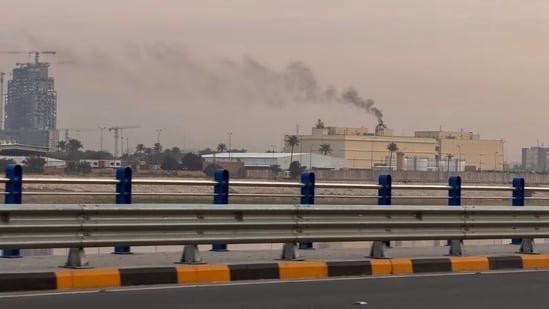
On Friday, the U.S. evacuated more of its staff from its embassy compound in Baghdad, officials said, after the compound faced multiple rocket and drone attacks. The U.S. diplomatic compound in Baghdad is equipped with counter-rocket, artillery and mortar systems (or C-RAMs) operated by the U.S. military that can also intercept drones, but current and former officials said these systems are too complex and expensive to maintain at other embassies.
The latest evacuation round in Baghdad leaves a small skeleton crew at one of the largest and most important U.S. outposts in the Middle East.
“Attacks on diplomatic facilities, including outside the conflict zone, are becoming normalized,” said Jen Gavito, a former senior U.S. career diplomat. “The scale and scope of these attacks are unprecedented.”
While the Pentagon says the U.S. and Israel have significantly degraded Iran’s missile and drone capabilities during the conflict, officials say the State Department is still closely monitoring the threat posed by additional drone attacks, terrorist plots or Iran-inspired “lone wolf” attacks on embassies and consulates worldwide.
The proliferation of cheap “suicide” drones used by Iran and its proxy forces is a particularly thorny problem for State Department security officials, as it poses a low-cost but high-impact way to target from the air embassies otherwise surrounded by reinforced walls, bulletproof glass and security checkpoints.
The drone threat is a vulnerability that the agency has been grappling with for years. State Department officials began elevating concerns about how to protect diplomatic facilities against drone threats in late 2022, as the war in Ukraine revealed how cheap, widely available unmanned systems were becoming a central feature of modern conflicts.
The State Department has condemned the attacks and says each embassy is constantly assessing security as new threats arise. “Our highest priority is the safety and security of Americans, including our diplomats,” State Department spokesman Tommy Pigott said.
Former senior career State Department officials have criticized the Trump administration for not swiftly drawing down staff at more of its embassies in the region or alerting U.S. citizens to evacuate the Middle East ahead of the war.
The Trump administration’s deep cuts to the State Department last year also stripped out significant Iran, energy and consular expertise, according to a new letter from more than 240 foreign service officers targeted in the layoffs.
The eliminated positions include the entire rapid-response consular team, senior officials with direct evacuation experience in the Middle East, and energy and language experts who would ordinarily play key roles in such a crisis, they say.
“The expertise required to manage the current crisis has been systematically removed,” the group wrote in a 28-page memo to Sen. Elizabeth Warren, (D., Mass.), responding to the questions she sent to Secretary of State Marco Rubio earlier this month. “The U.S. Government is not trimming fat. It amputated capability, and Americans are now paying the price.”
Pigott said the layoffs didn’t affect overseas operations, and dismissed the criticisms of “failed former officials” as “politically motivated” and said the department has helped more than 50,000 U.S. citizens leave the Middle East since the war began.
“Experienced professionals at the State Department are actively working to anticipate and prevent threats against our diplomatic missions,” he added.
After the U.S. first attacked Iran on Feb. 28, Tehran’s drones or missiles or those fired by Iran-backed proxy militant groups have hit or targeted U.S. diplomatic compounds in Baghdad, Dubai, Kuwait and Riyadh, Saudi Arabia. Part of an Iranian missile struck the building used by the U.S. consul in Jerusalem on Sunday after Israeli interceptors targeted the missile.
Since the outbreak of conflict, the State Department has drawn down nonemergency staff at 10 embassies and consulates throughout the region, and fully suspended operations at the U.S. Embassy in Kuwait and the consulate in Karachi, Pakistan. A senior department official also ordered all U.S. diplomatic posts worldwide to conduct a review of their security posture for possible threats in the wake of the war, according to an internal State Department cable.
In Karachi, 11 people were killed and dozens more were injured after U.S. Marines opened fire when protesters tried to breach the U.S. consulate compound on March 1 amid protests over the killing of Iran’s Supreme Leader Ayatollah Ali Khamenei.
The State Department is also cooperating with authorities in Norway to investigate a bombing at the U.S. Embassy in Oslo on March 8 and shots fired at the U.S. consulate in Toronto on March 10, officials said. In both cases, no one was injured and authorities are investigating the incidents as national-security matters.
“We’re potentially at the front end of a pretty long, persistent effort [by Tehran] which is going to look a lot more like the challenges we experienced in dealing with al Qaeda and Daesh over the last 25 years,” said John Bass, a former senior career diplomat who served as U.S. ambassador to Turkey and Afghanistan.
“I unfortunately will not be surprised if their focus on diplomatic facilities extends well beyond the Gulf region, and I anticipate they are going to be looking to conduct attacks against us as they see opportunities to do so,” he said.
The Iranian government is responsible for some of the deadliest attacks against American diplomats and military personnel, including the 1983 bombings by Tehran’s proxy terror groups in Beirut that killed more than 250 Americans, including U.S. servicemembers and diplomats. In recent years, the U.S. has also accused Iran of drawing up plans to assassinate former senior U.S. officials from the first Trump administration.
The current and former U.S. officials said the department is well-versed in tackling terror threats to its overseas posts, including shootings and bombings.
Previous deadly attacks—including al Qaeda’s 1998 truck bombings of the embassies in Nairobi and Dar es Salaam, which killed 224 people, and the 2012 assault in Benghazi, which killed Ambassador Chris Stevens and three other Americans—prompted tougher physical security standards for U.S. diplomatic facilities.
Write to Robbie Gramer at robbie.gramer@wsj.com and Vera Bergengruen at vera.bergengruen@wsj.com


