



Iranian top officials vowed on Sunday (March 1, 2026) to avenge their slain supreme leader Ayatollah Ali Khamenei and declared a new wave of strikes on U.S. bases in the Gulf, defying U.S. President Donald Trump’s threat of an unprecedented escalation in force.
As crowds gathered in Tehran, explosions rang out and the Israeli military announced that it was again striking targets in the heart of the city — as more blasts were heard in Jerusalem, Riyadh, Dubai, Doha and Manama.
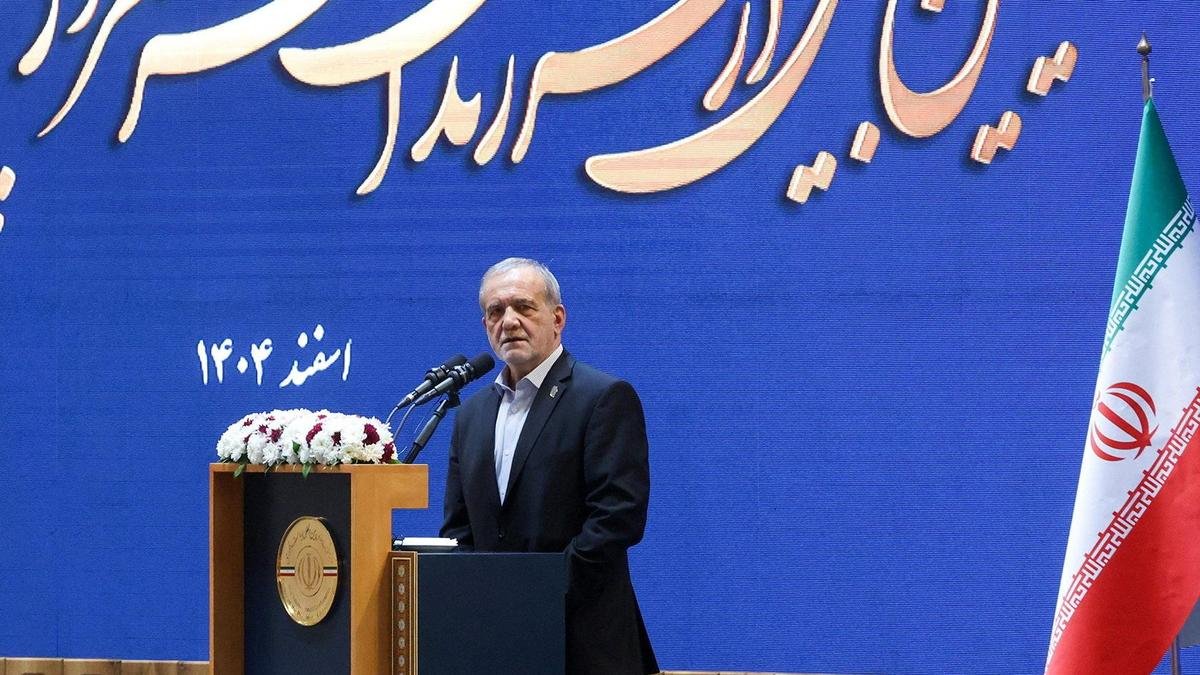
Iran’s President Masoud Pezeshkian declared Khamenei’s killing a “declaration of war against Muslims” and warned: “Iran considers it its legitimate duty and right to avenge the perpetrators and masterminds of this historic crime.”
Iran-Israel conflict LIVE updates
Ali Larijani, the powerful head of Iran’s Supreme National Security Council, declared: “The brave soldiers and the great nation of Iran will teach an unforgettable lesson to the international oppressors.”
In a social media post that adopted Mr. Trump’s style and rhetoric, he warned: “YESTERDAY IRAN FIRED MISSILES AT THE UNITED STATES AND ISRAEL, AND THEY DID HURT. TODAY WE WILL HIT THEM WITH A FORCE THAT THEY HAVE NEVER EXPERIENCED BEFORE.”
Meanwhile, blasts were heard in northern Tehran and smoke was seen emanating from a building, an AFP journalist reported. It was not immediately clear what the target was.
Unprecedented force threat
Earlier, cheers had been heard as some Iranians celebrated early reports of the death of their longtime leader, but — after state media confirmed his killing — pro-government demonstrations also formed, chanting “Death to America!”.
As crowds demanded revenge — and Iran’s army announced strikes targeting U.S. bases in the Gulf and Iraqi Kurdistan — Mr. Trump threatened to unleash “force that has never been seen before” and urged Iran’s people to rise up and seize power.
Iran’s first retaliatory strikes on Saturday (February 28) had hit all the Gulf states apart from Oman, which had sought to mediate U.S.-Iran talks. But on Sunday (March 1, 2026) the country’s commercial port of Duqm was hit by two drones, injuring a foreign worker, the Oman News Agency said, with a tanker off the sultanate’s coast also hit.
Outrage at Saturday’s (February 28) wave of U.S. and Israeli strikes against Iran, which killed 86-year-old Khamanei and some other senior figures, spilled over into neighbouring Iraq and Pakistan, where crowds attempted to storm US diplomatic missions.
In Iran, the Red Crescent said strikes had left 201 people dead and injured hundreds more.
Iran’s judiciary confirmed that Ali Shamkhani, a top adviser to Khamenei, and the head of Iran’s powerful Revolutionary Guards, General Mohammad Pakpour, were both killed.
Iran responded to the strikes with a flurry of missile and drone strikes across the Middle East, killing at least two people in Abu Dhabi and another in Tel Aviv, before following up with a new wave after state media confirmed Khamenei’s death.
Question on succession
Iran had already seen intense speculation on a successor to Khamenei, given his age. Upon his death, many observers expected greater power for the Revolutionary Guards, which are deeply entrenched in the Iranian economy.
Mr. Pezeshkian and two other top officials would lead Iran in the transitional period following Khamenei’s death, state television said.
Reza Pahlavi, the son of the late pro-Western shah deposed in the 1979 Islamic revolution, said any successor within the system would be illegitimate.
Hailing the demise of Khamenei, Mr. Pahlavi said: “With his death, the Islamic Republic has effectively come to an end and will soon be consigned to the dustbin of history.”
Mr. Pahlavi, who has spent most of his life in exile near Washington, has presented himself as a transitional figure to a secular democracy, but he does not enjoy support from across the opposition.
Published – March 01, 2026 03:01 pm IST


