


Kolkata: The catching was always on point. Impeccable, actually. With one hand stretched backward and his body airborne, Manish Pandey, at backward point, made time stand still to stun RCB’s Tim David a few games back. Then came another one for the highlights reel—a difficult running chance to dismiss Nishant Sindhu that Pandey made look procedural, almost dull through sheer efficiency.
For most of this IPL season Pandey had existed on the fringes of Kolkata Knight Riders’ campaign. On most days, making catching look like second nature. On some days, he was seen with his helmet on, gloves tucked under his arm, padded up and waiting.
A senior pro in a tournament that increasingly races past players of his type. And yet, on Wednesday night, in a season threatening to disappear quietly into the archive of “experienced squad members”, Pandey reappeared.
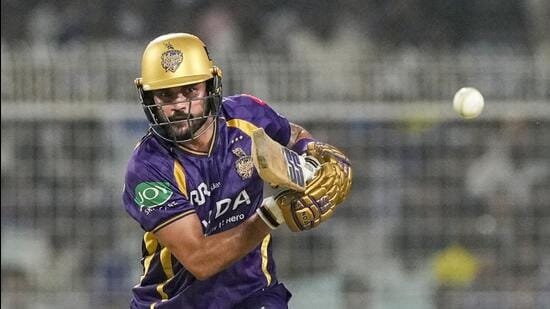
Not dramatically. Not in the now customary T20 manner of 22-ball chaos. Instead, he did it the old way—with timing, composure, placement and game awareness. The innings itself, 45 from 33 balls in a tense chase of 148, was not enormous by modern IPL standards. But it carried the emotional heft of something much larger: the return of a cricketer many had subconsciously stopped expecting from.
Pandey belongs to a strange category of IPL cricketer—deeply familiar yet curiously forgotten. He has been around since the beginning, one of the very few to have played across all 18 IPL seasons. His career, viewed broadly, never quite reached the heights once forecast for it. But there were moments that suggested greatness.
In 2009, as a teenager playing for RCB, he became the first Indian to score an IPL century. Back then, that innings felt prophetic. Here was a technically gifted Indian batter capable of elegance and acceleration in equal measure. Five years later came perhaps the defining night of his career: a 50-ball 94 in the 2014 IPL final for KKR against Kings XI Punjab, one of the greatest title-winning chases in the tournament’s history. Steering KKR to their second IPL title, Pandey’s calmness was hailed as game changing.
Then a tectonic shift occurred. T20 batting evolved into a contest of perpetual aggression. Strike-rates ballooned, anchors became liabilities unless they could also accelerate. Pandey, once modern, slowly began to look classical. Teams drifted toward younger hitters, multi-dimensional players, and specialists for phases and match-ups. Due to different reasons, he became, over time, less central and more supplementary. By this season, his role had shrunk to near invisibility.
Before Wednesday, Pandey had not faced a ball in T20 cricket since May 2025. In KKR’s previous four matches, he had remained unused. So it wasn’t difficult to see the rust initially. His first four deliveries were dots, the rhythm was absent after nearly a year without competitive T20 batting. But then came the shot that seemed to rewind time. Jasprit Bumrah pitched up, Pandey leaned into an on-drive of startling purity.
It was less the boundary itself than the certainty of it. The balance, the shape, the ease with which he accessed one of the world’s best fast bowlers. Younger viewers may have found it surprising because it was as classical as it could get.
Older IPL followers though must have aligned with it immediately. Deepak Chahar lifted over his head, Hardik Pandya punched down the ground and cut through point—Pandey kept manipulating angles smartly, rotating strike, keeping the chase oxygenated. His partnership of 64 with Rovman Powell was just what KKR needed at that juncture.
What stood out most was the absence of panic despite Pandey walking in with KKR slumping to 54/3 chasing a modest 147 to keep alive their playoff chances. Seven dot balls in total, four of them at the beginning. The rest was accumulation, placement and intelligent pacing.
After the match, Pandey’s comments carried none of the bitterness that can sometimes accompany late-career revivals. “KKR has been really nice and kind to me,” he said. “This is the only game I’ve actually batted this season. I wanted to stay there, make our team win, and that’s what happened.”
There was something revealing, too, in the way he spoke about fielding. At 36, when many cricketers begin conserving energy, Pandey remains obsessed with fielding. “It doesn’t matter if it’s raining or sunny,” he said. “I train on my fielding. Because I don’t bowl, I want to contribute in some manner.”
That attitude explains why franchises keep players like Pandey around even when the numbers appear to move against them.
“He’s a super experienced guy. He’s an amazing fielder. He adds so much energy to our group, whether it’s off the field, on the field, around the group. That’s the type of person he is,” said Shane Watson, KKR’s assistant coach, later. “Those types of people, you give anything to be able to have them in your squad, let alone them out in the middle when we’re chasing a challenging total on that pitch.”
A character like Pandey is significant not because he transforms seasons single-handedly anymore but because teams still need the one-off stabilisers. He is the professional who maintains standards quietly, prepares thoroughly for every match even though selection isn’t guaranteed.
And perhaps that is why Wednesday’s performance resonated beyond the scoreboard. It wasn’t merely a comeback innings. It was a reminder that careers don’t always move in clean arcs. Sometimes they linger, sometimes they taper out. And sometimes they stall for months before briefly reminding everyone what that player is still capable of. This was that moment for Pandey.
