



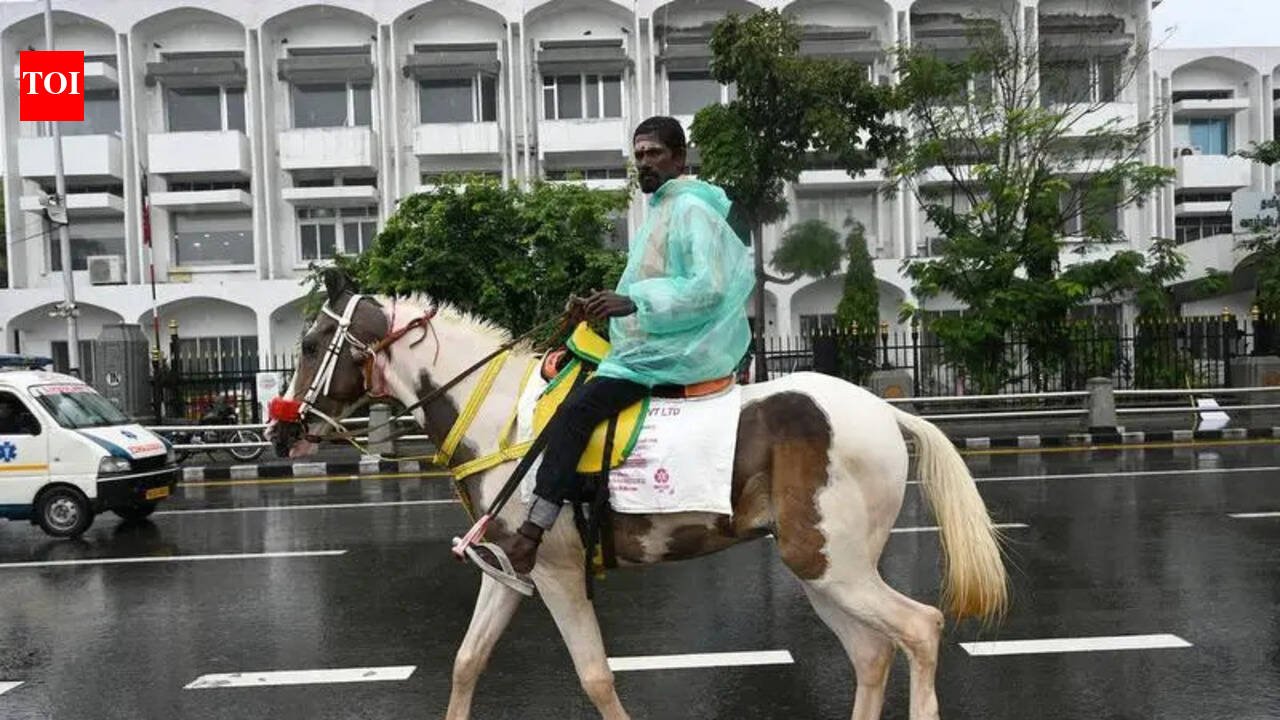
Chennai: Following the death of a horse in the city on Saturday, the animal husbandry department, along with Greater Chennai Corporation, has collected blood samples from 80 horses at stables and carriage points to check for glanders — the highly contagious bacterial infection which caused the equine’s death. The animals are being kept under close observation while test results are awaited.There are around 230 horses in the city, and after the confirmation of the horse’s death, authorities have intensified field inspections. “We have been working closely with the animal husbandry department, and samples are being collected from horses daily,” said GCC veterinary officer Dr J Kamal Hussain. Veterinary experts are examining the horses, while owners have been advised to immediately report conditions such as fever, nasal discharge or skin ulcers, which are symptoms of glanders. “Joy rides have been restricted in the city to prevent any possible spread of the disease,” the official added.Activists said that unlike other animals, horses require significant medical care, including regular vaccinations. Their feeding costs are higher too. “The lack of proper care for horses has resulted in infections. Even the animal husbandry department does not have accurate data on the number of horses. The animals should be provided with proper shelter, especially during the peak summer and monsoon,” said G Arun Prasanna, secretary of NGO People for Cattle in India. He urged that joy rides should be completely banned in the city.Earlier this year, GCC passed a resolution making licences and microchipping mandatory for horses used for rides along Marina and Besant Nagar beaches, along with requirements for vaccination and veterinary fitness certificates. Though the deadline lapsed, there is little visible compliance on the ground.


