


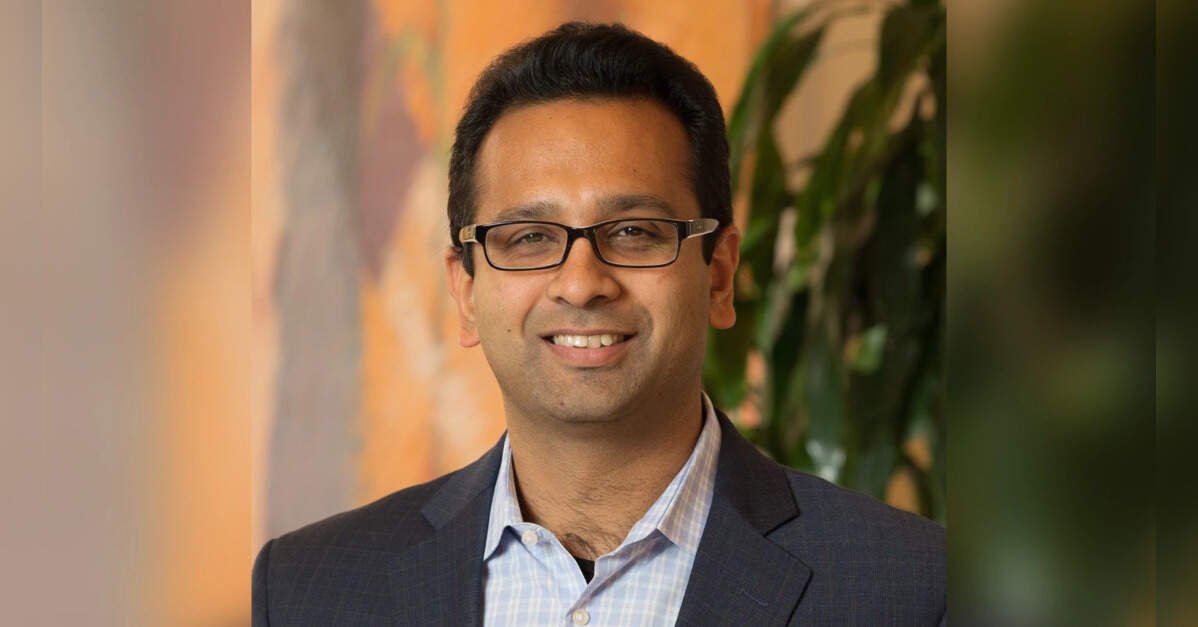
New Delhi : Artificial Intelligence (AI) can analyse vast amounts of data, automate repetitive tasks and accelerate decision-making, but it cannot replace human judgment, empathy or accountability in healthcare, says Karan Dhundia, Regional Managing Principal at ZS. In an interview with ETHealthworld’s Prathiba Raju, Dhundia discusses why AI should be viewed as a force multiplier rather than a substitute for healthcare investment, the evolution of India’s healthcare GCCs, the promise of the Ayushman Bharat Digital Mission (ABDM), and why the future of healthcare lies in combining human expertise with AI.India has no shortage of healthcare data today it has no shortage of healthcare challenges either. India accounts for nearly 18 per cent of the world’s population but only around one per cent of global healthcare spending. Can AI realistically bridge this gap, or are we expecting technology to compensate for structural deficiencies like workforce shortages and inadequate public spending?
AI should not be viewed as a substitute for healthcare infrastructure, skilled clinicians or public investment. Those remain fundamental to improving healthcare outcomes. At the same time, AI is fundamentally changing the productivity equation. For example, helping a physician see more patients more effectively, surfacing disease risk before it becomes expensive to treat, reducing the administrative burden that consumes clinical time. Where AI adds real value is in extending what existing systems can achieve, as a force multiplier on the capacity India already has.
We’re already seeing that impact across the value chain, from accelerating drug discovery and clinical development to streamlining regulatory processes, supporting earlier disease diagnosis and reducing administrative burden, allowing healthcare professionals to focus more of their time on patient care.
That growing confidence is reflected more broadly across the healthcare ecosystem. Healthcare providers increasingly see AI as a tool to strengthen clinical decision-making, while consumers are more willing to embrace it when it enables more personalized care. AI has the potential to help healthcare systems deliver better outcomes at scale, but it works best as an enabler of human expertise not a replacement for the continued investment needed in healthcare infrastructure, workforce capacity and equitable access to care.
Everyone is talking about AI, but healthcare outcomes remain stubbornly unequal. If you had to point to one area where AI has demonstrably improved patient outcomes – not just productivity, what evidence convinces you it has moved beyond the hype?
AI moves beyond hype when it changes the patient’s journey – not just the workflow. The clearest evidence is where it helps diagnose earlier, accelerate treatment and bring therapies to patients faster.
Rare disease diagnosis is a powerful example. Patients can spend years moving between specialists before getting answers, but AI can connect longitudinal data, biomarkers and predictive signals to identify likely patients much earlier. One compelling example comes from Myasthenia Gravis, where AI-enabled approaches have helped identify likely patients within months rather than years, enabling earlier diagnosis and treatment. We are also seeing impact in clinical development, where digital twins, synthetic control arms and better trial design can reduce timelines by 30–50%, helping bring innovation to patients sooner.
That is the real shift, and success in healthcare AI will not be measured by tasks automated, but by whether it helps clinicians intervene earlier, personalize care and improve outcomes across a more connected patient journey.
The industry’s latest buzzword is Agentic AI. Beyond generating reports and insights, can autonomous AI agents be trusted to recommend treatment pathways, optimize clinical trials or influence commercial decisions? Where should we draw the regulatory line?
Agentic AI represents the next evolution of AI because it moves beyond generating insights to executing actions across complex workflows. But in healthcare, autonomy cannot be viewed as an all-or-nothing proposition. The appropriate level of autonomy should always reflect the level of clinical and regulatory risk. The closer a decision is to patient care and outcomes, the greater the need for human judgment, contextual expertise and oversight.
That’s why the regulatory line should be drawn based on decision criticality, not the technology itself. AI agents can safely automate lower-risk activities such as workflow orchestration, content generation and operational decisions. But when decisions directly influence patient care – whether recommending treatment pathways or informing clinical decisions – AI should augment, not replace, human expertise.
The opportunity isn’t to build fully autonomous healthcare systems; it’s to build AI-enabled systems that are trusted, governed and designed around clear decision ownership.
As you are helping global life sciences companies make decisions through data and AI, what is the one healthcare trend that most leaders are underestimating today but which you believe will fundamentally reshape the industry?
I think the most underestimated trend is that healthcare decision-making is moving upstream. AI is not just changing how healthcare organizations operate; it’s changing where health decisions begin. More people are researching symptoms and using AI tools before they even meet a doctor, often walking into consultations with specific questions.
In fact, our institute’s Future of Health study found that in U.S., 42 per cent patients report they research symptoms before deciding whether to see a physician
Patients trust physicians at 96 per cent , but trust in AI-generated health information is already 89 per cent, highlighting how quickly customer behaviors and expectations are evolving.
Healthcare has traditionally been organised around episodes of care, but people experience health as a continuous journey. Many still delay seeking care, diagnostic delays persist, and too many patients never start their prescribed treatment. That points to a bigger opportunity than simply adopting AI the need for healthcare to become more connected, personalized and proactive.
Looking ahead five years, do you think “human + AI” is the future where technology augments rather than replaces expertise? As AI becomes deeply embedded across healthcare and consulting, what skills and mindsets will distinguish professionals who thrive, and what aspects of decision-making do you believe must always remain human-led?
The future isn’t “human versus AI” – it’s unequivocally “human plus AI.” As AI becomes embedded across healthcare and consulting, the professionals who thrive will be the ones who treat it as a collaborator, not just another tool. Technical skill will matter, but learning agility, curiosity and the ability to combine AI-generated insight with real domain judgment will matter just as much.
AI can democratize analysis, but it can’t democratize judgment. It won’t teach you to ask the right question, challenge an assumption, or navigate ambiguity – and especially in consulting, clients aren’t looking for more information, they’re looking for the right decision, translated into real outcomes.
That’s why healthcare will always need a human layer. AI can process evidence and surface recommendations fast, but patient care, ethical trade-offs and accountability have to stay human-led. The real opportunity is using AI to strip out the repetitive, data-heavy work – freeing clinicians and consultants to focus on the judgment, empathy and problem-solving that create the greatest value.
India now hosts over 1,700 Global Capability Centers (GCCs), with healthcare and life sciences among the fastest-growing segments. What separates GCCs that remain cost centers from those becoming innovation engines influencing global boardroom decisions?
We’re seeing a clear evolution in the role of GCCs, particularly in healthcare and life sciences. The leading GCCs are no longer viewed as delivery or cost centers – they’re becoming enterprise capability centers that influence innovation and business outcomes. What separates them isn’t technology; it’s whether they’re empowered to shape enterprise priorities rather than simply execute them.
The organizations leading this shift are investing in senior leadership, building multidisciplinary teams and giving their India GCCs ownership of enterprise-wide capabilities rather than predefined tasks. AI is accelerating that evolution. As organizations redesign workflows around AI, GCCs are moving beyond process execution to orchestrating AI-enabled operating models that improve decision-making across R&D, medical affairs, commercial operations and beyond.
India already has the talent and domain expertise; the differentiator is whether organizations give those teams the responsibility and decision-making authority to create enterprise value.
Your Personalize.AI platform reportedly generated over $100 million in incremental revenue for a quick-service restaurant. Healthcare is a different domain. Where should companies draw the ethical boundary between personalization that improves patient engagement and personalization that risks influencing medical choices?
The ethical boundary comes down to intent. In healthcare, personalisation should improve the patient experience – not influence clinical choice. Its role is to help people access the right information at the right time, stay engaged with their care, improve adherence and navigate complex healthcare journeys more effectively.
Healthcare is fundamentally different from retail because the objective isn’t to influence purchasing behavior it’s to improve patient outcomes. More broadly, healthcare is moving away from one-size-fits-all engagement toward more individualized experiences. Used responsibly, AI enables that shift at scale helping organizations better understand patient needs without crossing into influencing medical choices.
Your work with UCB on Myasthenia Gravis highlighted that patients often consult seven to ten specialists and wait up to four years before diagnosis. India faces similar diagnostic delays across tuberculosis, rare diseases and cancers. Can AI fundamentally compress this timeline, or is the bigger bottleneck fragmented healthcare delivery?
Both challenges need addressing. Fragmented delivery is a longer systems journey. But diagnosis has always depended on connecting many signals: history, biomarkers, imaging, symptoms. AI’s real strength is bringing those together faster, so patterns clinicians would eventually find get surfaced sooner. That’s what we saw with Myasthenia Gravis, where identification moved from years to months. Our Future of Health Report shows this same shift happening more broadly, as EHRs, claims and real-world data increasingly connect to enable earlier risk detection.
So, it isn’t really AI versus fragmentation the two are linked. As healthcare systems become more connected, AI’s ability to shorten the diagnostic path only grows. The clinician stays central to every decision; AI simply gives them the fuller picture sooner. For diseases like TB, cancer or rare conditions, that earlier clarity is where the real impact lies – every month gained is a month of better outcomes ahead.
The National Health Authority (NHA) is accelerating the rollout of the Ayushman Bharat Digital Mission (ABDM), with over a billion ABHA-linked health records and rapid expansion of digital health infrastructure. Yet clinicians continue to raise concerns around interoperability, consent management and data quality. From your global experience, what must India get right now to prevent ABDM from becoming just another digital repository instead of a truly intelligent healthcare ecosystem?
The progress under ABDM is significant because it establishes the digital foundation for a more connected healthcare ecosystem. The next phase of value will come from making these records increasingly actionable across the healthcare journey.
From working with health systems globally, we’ve seen that three factors consistently determine whether large-scale health data infrastructure delivers real value. First, data quality matters more than data volume—records need to be complete, accurate and clinically meaningful. Second, interoperability must extend to the point of care, allowing health records to fit seamlessly into clinical workflows. Third, clinician adoption is critical. Technology alone isn’t enough; healthcare professionals need intuitive tools and the confidence to use them in everyday practice.
We see this through three lenses evidence, engagement and experience. It’s about turning health data into meaningful insights, making digital health easier to use for clinicians and patients, and building trust through secure data sharing and transparent consent.
Ultimately, every patient’s data has the potential to improve care. Realising that potential depends on strong digital infrastructure and widespread adoption—areas where initiatives like ABDM are laying an important foundation.
Healthcare AI is only as good as the data it’s trained on. How concerned are you about algorithmic bias, particularly when most AI models continue to be trained predominantly on Western datasets rather than Indian populations?
It’s a fair concern. AI is only as strong as the data behind it if that data doesn’t reflect the population it serves, outcomes won’t hold up consistently. Our view is that the priority isn’t more sophisticated models – it’s more representative, trustworthy ones. That means combining rigorous clinical evidence with real-world data, validated across diverse populations before deployment at scale.
As markets like India generate richer health data, there’s real opportunity to build AI genuinely aligned to local disease patterns – not retrofitted from elsewhere. Ultimately, this comes down to governance – transparency, validation and oversight at every stage. That’s what lets innovation scale responsibly, and what earns patients’ trust everywhere.
India aims to become a $30-trillion economy by 2047 while simultaneously aspiring to be a global healthcare innovation hub. What role do AI, GCCs and advanced analytics need to play if healthcare is to become one of India’s strongest economic growth engines rather than merely a social sector?
India has a unique opportunity to become a global healthcare innovation hub because it brings together three critical strengths: deep scientific talent, digital capabilities and a rapidly expanding innovation ecosystem. The opportunity isn’t to be a larger delivery base for global healthcare, but the place where new healthcare capabilities are designed and scaled. That requires AI, analytics and GCCs to move beyond individual tasks and transform how medicines are discovered, patients are engaged, and decisions are made at scale.
GCCs are central here bringing data, technology and domain expertise together, evolving from execution hubs into enterprise capability centers that build reusable platforms and AI-enabled decision systems for global organizations. As companies redesign workflows around AI, India has a chance to lead their development, not just adopt them.
Leading organisations are already giving India centers greater ownership of AI and digital capabilities that shape enterprise-wide decisions. If that trend continues pairing India’s talent with greater ownership of innovation and decision-making healthcare can become a powerful source of both economic value and global impact, by building the capabilities that shape its future.
