


India’s space sector is entering a defining phase, driven by rapid commercialisation, growing private participation, and an expanding range of applications across industries. As this ecosystem evolves, the focus is steadily shifting from capability creation to talent readiness, raising critical questions about whether current higher education frameworks are equipped to meet the demands of a multidisciplinary, innovation-led space economy. From advanced engineering and data science to policy and commercial strategy, the need for future-ready skills has never been more urgent.
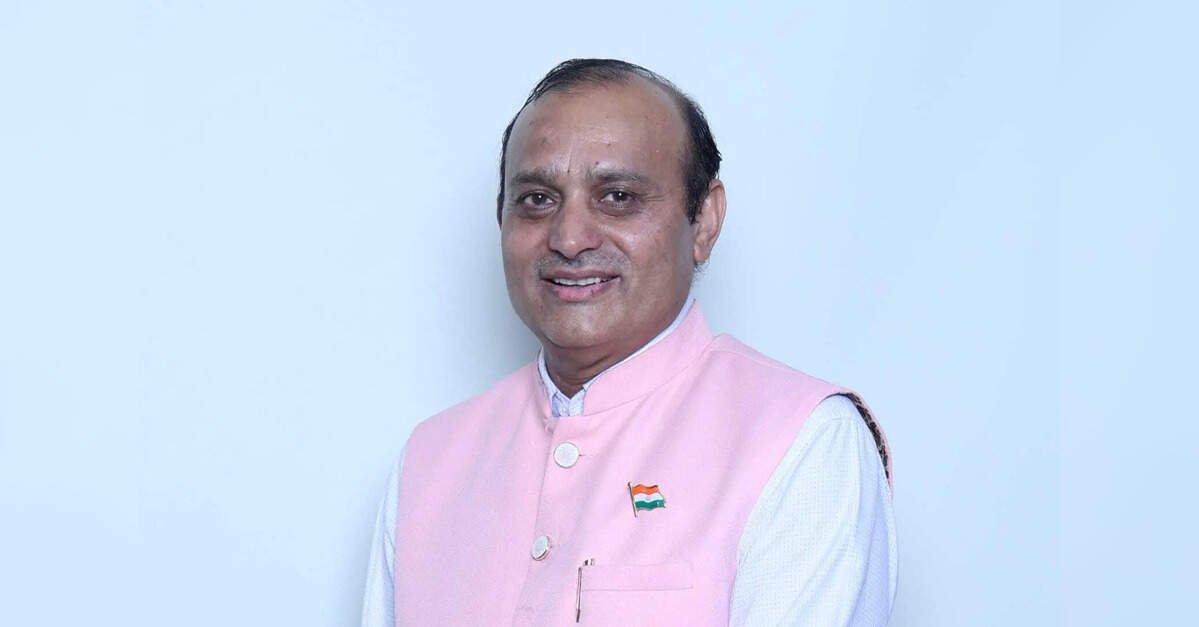
In this context, in an exclusive interaction with ETEducation, Dr Vinod Kumar, Director, Promotion Directorate, INSPACe, shares his perspectives on the emerging talent landscape, the gaps between academia and industry, and the structural shifts required to build a robust, industry-ready workforce for India’s next phase in space exploration and innovation.
Q1. Where is traditional higher education falling short in preparing talent for the space ecosystem?
Much of India’s higher education system still reflects the early institutional phase of the country’s space programme. Many curricula have not fully adapted to the demands of a rapidly commercialising space economy, where expertise in areas such as guidance, navigation and control, RF communications, embedded avionics and integrated mission engineering etc. is essential.
Another challenge is the limited emphasis on hands-on experience. Students often graduate without exposure to building flight software, testing satellite subsystems, or working with real mission hardware. In addition, academic structures remain largely siloed, which makes it difficult for students to meaningfully combine disciplines such as orbital mechanics, data science, space law and commercial strategy.
Q2. What skill gaps do you observe when graduates enter space-linked industries?
First, advanced technical capabilities such as guidance and control, radiation-tolerant software, FPGA programming and avionics integration are still not widely embedded in mainstream engineering programmes.
Second, there is limited academic exposure to the regulatory and policy environment governing the space sector, including authorisation frameworks, spectrum management and export controls.
Third, although space missions generate vast datasets, training in satellite data processing using AI and machine learning remains uneven.
Finally, as the New Space ecosystem grows, there is increasing need for professionals who
understand business models, intellectual property strategy and investor engagement.
Q3. Why do conventional degree structures struggle to nurture interdisciplinary capabilities?
A space mission integrates many domains simultaneously — orbital mechanics, RF engineering, software systems, materials science, regulation and space mission economics.
Traditional degrees are organised around departments rather than systems. Credit structures, faculty incentives and evaluation models reward depth within a single discipline, which makes it difficult to build the cross-domain fluency that space missions actually require.
Q4. What challenges exist in translating national space policy into an industry-ready talent pipeline? What steps INSPACe has taken to bridge this gap?
The speed of industry growth often exceeds the pace of academic change. A company that receives authorisation today cannot wait several years for revised university curricula to produce trained engineers.
To bridge this gap, a set of rapid capacity-building initiatives has been introduced to strengthen industry readiness. These include specialised short-term skill development courses delivered through regular bootcamps covering the full spectrum of the space domain and regulatory aspects, along with structured curriculum frameworks such as a B.Tech. minor in space technology. Immersion programmes and internship opportunities provide hands-on exposure to satellite manufacturing and real-world space systems, while student competitions like model rocketry and CanSat encourage practical learning. In parallel, efforts are being made to establish advanced space laboratories across institutions, enabling students to gain direct experience through applied, lab-based training.
Q5. What systemic barriers hinder student entry into the space sector?
The first barrier is awareness on the career opportunities in upstream space startups and downstream space applications & geospatial companies are still not widely visible in mainstream career counselling.
The second barrier is limited real projects like AzadiSAT or CubeSAT etc. These initiatives, where 750 girl students from across India collaborated to build a satellite launched on SSLV’s maiden flight, demonstrate how early exposure can change perceptions.
Infrastructure is the third barrier. Many tier-2 and tier-3 institutions lack simulation tools, embedded development kits and exposure to satellite systems.
Q6. What makes academy–government–industry collaboration models more effective?
Academia–government–industry collaboration becomes effective when it moves beyond surface-level partnerships to deep, structured integration. This requires strong “boundary-spanning” roles that connect academia and industry, alignment of incentives so both sides value impact as much as output, and governments acting as strategic enablers through funding and shared infrastructure. Equally important are continuous feedback loops, where industry informs academic learning and talent flows seamlessly into the workforce. Ultimately, long-term policy stability and trust-based relationships are critical to sustaining meaningful, outcome-driven collaboration.
Q7. How can academia collaborate more effectively with industry and government?
The key is moving from isolated training programmes to sustained ecosystem building. This includes aligning doctoral research with startup needs through co-funded R&D, embedding live industry projects within academic curricula, and providing access to testing infrastructure through collaborations with ISRO and IN-SPACe.
Such structures create a continuous pipeline where research, training and industry deployment reinforce each other.
Q8. What education reforms are essential for meaningful national capability building?
Meaningful capability building in the space sector requires reforms that move education closer to how the industry actually operates.
First, space engineering must be treated as a multidisciplinary field, allowing students from physics, mathematics, computer science and electronics to participate rather than limiting it to traditional aerospace streams.
Second, structured space curricula must expand across universities. Various IN-SPACe initiatives discussed above need to be scaled nationally and will significantly strengthen the talent pipeline.
Third, hands-on exposure must become central to learning. Initiatives such as Space Technology Incubation Centres, where students work on supervised projects with industry mentors, demonstrate how practical training can bridge the gap between academia and industry.
Finally, sustained investment in faculty development and industry collaboration is essential. When educators themselves stay aligned with evolving industry practices, the benefits extend across generations of students and help build a durable national talent ecosystem.
Q9. Which emerging roles will see the highest demand over the next decade?
As the space economy expands, demand will grow for roles at the intersection of disciplines.
Core engineering roles such as mission systems engineering and guidance, navigation and control will remain essential, especially with programmes such as human spaceflight and the growth of satellite constellations.
At the same time, the rapid increase in Earth observation and communication data will create strong demand for professionals who combine space domain expertise with AI and data science. Like PM Gati Shakti Program.
Equally important will be roles at the policy and commercial interface, including regulatory specialists, spectrum management experts and professionals who can translate space technologies into viable business models.
Q10. What advice would you give young graduates aspiring to build space careers?
Strong fundamentals remain the most important foundation. Physics, mathematics, control systems and electronics shape how engineers think and solve problems in space missions.
Equally important is building something tangible. Whether through a CanSat, a payload experiment or a ground-system prototype, hands-on work develops instincts that cannot be acquired through theory alone.
Finally, young professionals should recognise that the modern space sector combines engineering with policy, regulation and commercial strategy. Those who understand both the technical and ecosystem dimensions will be best positioned to contribute to the next phase of India’s space economy.
