



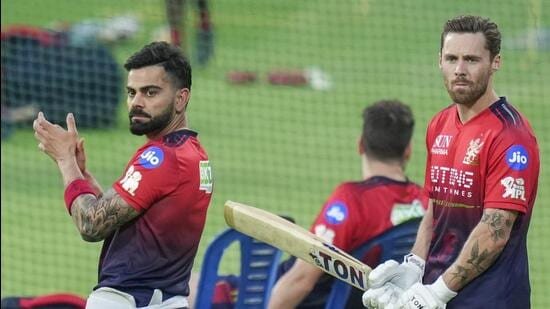
Mumbai: Like with all good investments, entry and exits in Indian Premier League ownership don’t translate to clear winners and losers. Take the latest exchange of hands with the Royal Challengers Bengaluru, whose latest valuation is a record $1.78 billion.
Diageo, for whom franchise ownership was a non-core business decided to walk away. They booked a whopping profit – RCB’s original value in 2008 was $111.6m. As for the soon-to-be owners – a consortium comprising Birla Group, Bolt Ventures’ David Blitzer, Blackstone and Times Internet—they come with a bullish outlook. One way or the other, record numbers from the RCB sale, for one of the league’s most popular franchises, give a further fillip to the IPL’s standing in global sport and to the India story.
“When I first started coming back and forth to India in 2016-17, I remember saying to people, these teams will be worth a billion dollars in 10 years’. People were kind enough not to laugh, but I don’t think they believed me. Nine years later, they are worth $1.7, 1.8b,” said Matthew Wheeler, Founder, A&W Capital, that acted as principal adviser to RCB’s winning consortium.
Wheeler comes with cricket-playing experience in English county cricket—more modest than his grip over cricket finances. He’s been actively engaged in studying the economics of Indian cricket, having advised CVC Group during their Gujarat Titans winning bid in 2021, another IPL team and also a team during WPL’s franchise bidding.
“There are lots of things, lots of factors driving valuations,” he said from London. “Obviously, revenue profit is one, and that’s directly related to media values. Scarcity team value is another. But the fact is that this is just incredible entertainment. We know that hundreds of millions of people are going to be watching the IPL final in May. If you’re an advertiser, you can’t have any other TV programme or media that can guarantee that. People will tune in because it is live. IPL’s dynamics are superb and it’s well-run. Besides, the Indian economy is huge and growing.”
CVC sold a 67 % stake in Gujarat Titans last year and booked a handsome profit quickly; the franchise valuation increased from $750 million to around $900 million in three years. Being private equity investors, CVC were never in line to run the team in perpetuity. But they could make money, largely thanks to a three-times escalation in IPL media rights (2023-27) value, in the year after their entry, when the league expanded from eight to ten teams – LSG came in for $940 million.
Times are more testing now. With a consolidation in the media space, it’s unlikely that values will hit the ceiling in the next IPL rights cycle (2028-32). Why did that not discourage new investors from picking up ownership rights?
“There will be short-term disruptions. But when it comes to ownership, you don’t want to predict what’s going to happen in one rights’ cycle. Is the value likely to triple? Probably not. But everybody was surprised by what happened in the last cycle. So you never say never,” said Wheeler. “You have to take a long-term view – not three or four years, but two if not a three year media cycle. That’s over 10-12 years.”
According to a WPP Media 2025 report, the Indian sports industry crossed the $2 billion mark. 89 % if it was made by cricket and media spending emerged as the largest contributor. A recent FICCI-EY report found digital media crossing the ₹ 1 trillion mark for the first time with digital advertising recording a 26% increase to ₹ 947 billion.
These are the kind of metrics that set up long-term bets. It is widely believed that the next round of media rights escalation in IPL will come in digital. Are global tech giants ready to splash on cricket? If not in the next cycle, perhaps in the following one.
“IPL is in many ways similar to the NFL in the way it’s structured – equal revenue share amongst the teams, salary cap for players. So, I think American investors are now understanding how incredible the IPL is. It’s not going to stop,” said Wheeler. “CVC coming in was a sort of wow moment. When the world outside began thinking, something’s really happening in India with the IPL, this is a validation of it. I think international investors, not just American investors, are looking at the IPL.”
“Am I bullish? Yeah. These teams will be worth 5 billion dollars in 10 years’ time,” he predicted.


