



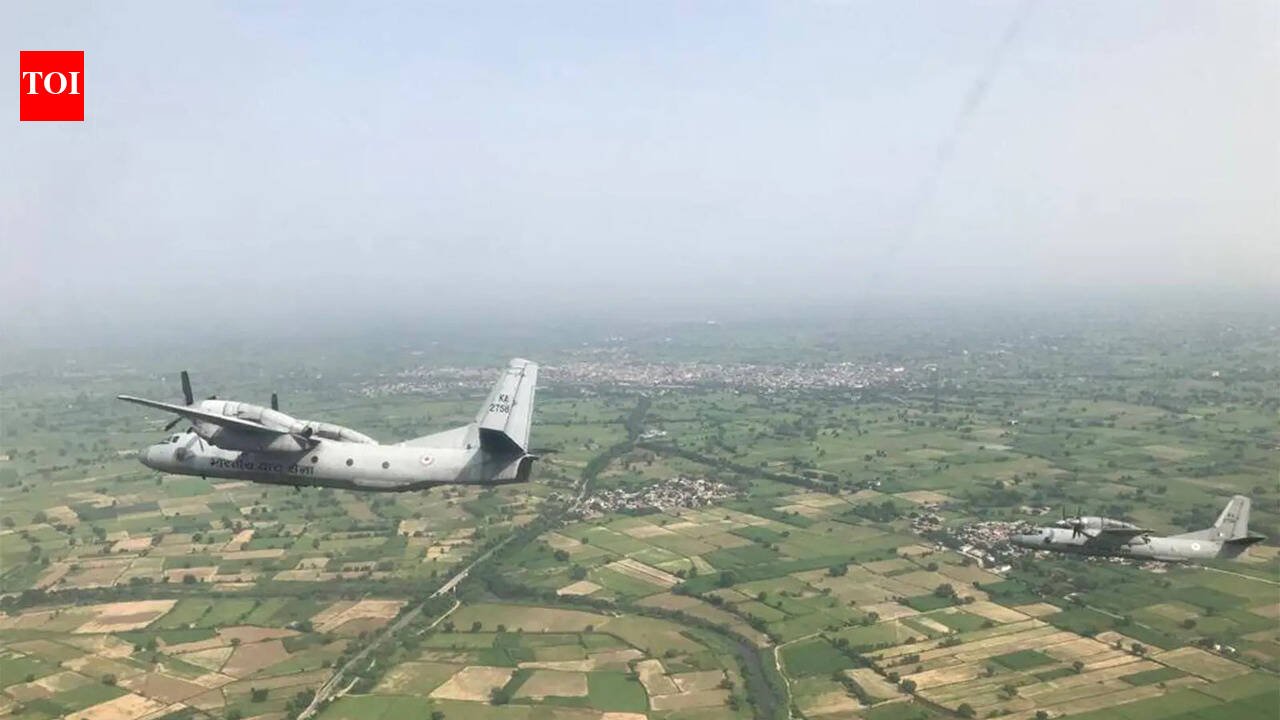
The Antonov-32 (An-32), a Soviet-origin twin-engine turboprop, has been the backbone of the Indian Air Force’s transport fleet since its induction in 1984. With over 100 aircraft in service, India remains the largest operator of this versatile platform, originally designed to perform in tropical and mountainous conditions. The An-32 is specifically designed to operate in the hot and high conditions of India, that is in the desert and mountainous environments. The aircraft is designed by mating the reliable and rugged airframe of the An-26 with more powerful engines. This enables operations in high-altitude airfields in Ladakh and Arunachal Pradesh, making it indispensable for missions over the Himalayas and the Siachen Glacier. The aircraft equips six squadrons of the IAF, which are the 12, 25, 33, 43, 48 and 49 squadrons. Of these 49 squadron of the IAF is located in Jorhat in Assam.The An-32’s primary roles include carrying up to 7.5 tons of cargo, transporting 50 passengers or 42 paratroopers and conducting humanitarian missions such as disaster relief and medical evacuations. The aircraft has also been part of India’s green energy push, successfully flying on bio-jet fuel blends. Recognising its robust frame, the IAF launched a $400 million modernization program, upgrading avionics, navigation, and radar systems, while extending service life and improving cabin comfort. Much of this work was carried out in Ukraine. The IAF will be supplanting this aircraft with the C-295 aircraft and is likely to replace these aircraft with the winner of the Medium Transport Aircraft (MTA) programme.Despite its reliability, the An-32 has faced tragic incidents, the aircraft has suffered 18 major incidents since 1986. On 22 July 2016, an aircraft flying from Chennai to Port Blair vanished with 29 personnel on board. After years of search, the wreckage was discovered in January 2024 at a depth of 3,400 meters in the Bay of Bengal. Another crash occurred on 3 June 2019, when an An-32 went missing near Arunachal Pradesh; wreckage was found eight days later, with all 13 personnel dead.These episodes underscore the risks of operating in challenging terrain, yet the An-32 continues to serve as a lifeline for remote military and civilian outposts. Its enduring utility, combined with modernization efforts, ensures that the aircraft remains a critical asset for India’s airlift capability. As the IAF transitions to newer platforms, the An-32’s legacy as a rugged and reliable workhorse will remain etched in India’s military aviation history.


