



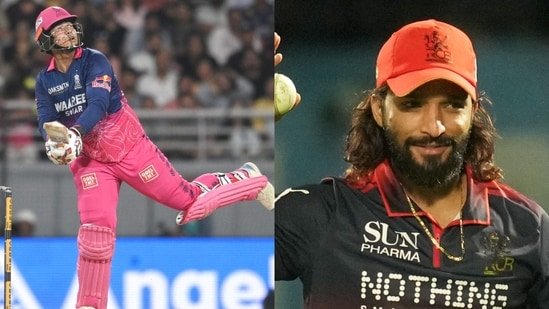
Every IPL franchise had ₹120 crore to build a squad. That purse was meant to buy everything: openers, finishers, wicketkeepers, Indian pace, overseas power, spin cover, all-round depth and enough flexibility to navigate the Impact Player rule.
IPL 2026 still produced a brutal market lesson. A complete matchday unit, not just an XI, could be built for ₹39.85 crore and still look balanced enough to compete with teams assembled at three times the cost.
The core 12-player package is clear: Vaibhav Sooryavanshi, Prabhsimran Singh, Devdutt Padikkal, Rajat Patidar, Sameer Rizvi, Donovan Ferreira, Krunal Pandya, Jamie Overton, Bhuvneshwar Kumar, Eshan Malinga, Kartik Tyagi and Prince Yadav.
The total auction cost: ₹39.85 crore.
That figure matters because it does not merely build 11 names. It builds a usable IPL team.
If the side bats first, the XI starts with Vaibhav, Prabhsimran, Padikkal, Patidar, Rizvi, Ferreira, Krunal, Overton, Bhuvneshwar, Malinga and Kartik. Once the batting innings ends, Prince Yadav comes in as the Impact Player for Sameer Rizvi, giving the team six bowling options.
If the side bowls first, Prince starts in the XI. That gives the attack Bhuvneshwar, Malinga, Kartik, Prince, Overton and Krunal from ball one. During the chase, Sameer Rizvi comes in as the Impact Player for Prince, restoring batting depth. Rajat Patidar leads the team.
Vaibhav is the value explosion that makes the team possible
Vaibhav Sooryavanshi is the first name in this team because his season bent the auction economy out of shape.
At ₹1.10 crore, he produced 776 runs at a strike rate of 237.31. That is not good value. That is a market collapse in reverse. One low-cost player delivered the kind of output franchises usually expect from the most expensive Indian batting assets in the league.
He also allows the rest of the team to breathe financially. A ₹40 crore cap cannot carry many premium players. It needs one absurdly underpriced superstar to open space elsewhere. Vaibhav does exactly that. He gives the side elite top-order destruction without consuming even one per cent of a normal IPL auction purse.
His role is also clean. He opens. He attacks the powerplay. He sets the innings tempo. There is no positional compromise here.
Prabhsimran Singh is picked beside him because the team needs a proper wicketkeeper who also fits naturally into the top two. At ₹4 crore, his 510 runs at a strike rate of 168.87 make him more than a keeper-batter convenience. He is a real opening option.
That solves one of the biggest problems in value XI construction. Many cheap teams hide a wicketkeeper somewhere in the middle and pretend the balance is fine. This one does not. Prabhsimran opens because that is his lane. He keeps because that is his role. One player solves two selection problems without damaging the batting order.
Devdutt Padikkal at three gives the side a left-hand stabiliser without slowing it down. His season brought 464 runs at a strike rate of 168.72, excellent for a player priced at ₹2 crore. In this XI, he is not being asked to finish games or slog from ball one at the back end. He sits where he belongs: top order, after two aggressive openers, with enough range to consolidate or continue the attack.
That top three gives the team a serious base: Vaibhav’s violence, Prabhsimran’s keeper-opener value and Padikkal’s top-order tempo.
Rajat Patidar is where the XI spends heavily on batting and leadership. His ₹11 crore price is not low, but this team is not about selecting only the lowest-cost players. It is about spending where the role demands it. Also, Rajat Patidar emerged as a standout skipper during the tournament.
Patidar gives the team a premium Indian No. 4, and that is one of the hardest roles to fill in the IPL. His 501 runs came at a strike rate of 193.43, which makes him more than a middle-order anchor. He is the innings accelerator, the player who can walk in after a wicket and raise the scoring rate rather than spend four overs repairing damage. In a capped-budget side, that matters enormously. Cheap top-order runs are easier to find than elite Indian middle-order hitting. Patidar is selected because he gives the team a role that the market usually punishes franchises for chasing.
Sameer Rizvi is the flexible batting piece. At ₹0.95 crore, he keeps the total cost under control and gives the side an Indian middle-order option. His 252 runs at a strike rate of 147.36 do not carry the same headline weight as Vaibhav or Patidar, but his role is different.
He is not the centrepiece. He is the batting-first insurance. If the team bats first, he gives the order another Indian batter before the all-rounders arrive. If the team bowls first, he does not start. He comes in only when the chase demands extra batting depth. That is exactly how an Impact Player-era squad should use a player like him.
Donovan Ferreira at six is the low-cost finishing weapon. For ₹1 crore, his 317 runs at a strike rate of 179.09 give this side late-overs power without burning money. His value is not in batting long. His value is in changing the final five overs.
He also fits the overseas count cleanly. This 12-player package uses only three overseas players: Ferreira, Overton and Malinga. That keeps the side comfortably inside the matchday overseas limit and avoids the usual Impact Player headache.
The Impact Player switch gives the XI its real shape
Krunal Pandya is the balance lock. At ₹5.75 crore, he is not a bargain-basement pick, but he gives the side something essential: left-arm spin, batting depth, experience and matchup flexibility.
His season brought 226 runs and 14 wickets. In this construction, that matters more than raw batting volume. Krunal allows the team to play aggressive top-order batters without leaving the lower half hollow. He also gives the captain a spin option that can be used according to matchups rather than desperation.
Jamie Overton is picked because the team needs a pace all-rounder who can actually bowl. At ₹1.50 crore, his 14 wickets and lower-order hitting make him a natural No. 8 in this setup. He gives the side seam depth, batting length and an extra route to balance. In the batting-first XI, he prevents the tail from arriving too early. In the bowling-first XI, he strengthens the attack without turning the batting card into a crisis document.
Bhuvneshwar Kumar is the bowling investment. At ₹10.75 crore, he is the second major spend after Patidar, and his presence is justified by genuine scarcity.
A cheap team can find batters. It can sometimes find raw pace. It cannot easily find an Indian lead pacer with new-ball skill, death-overs intelligence and consistent wicket-taking output. Bhuvneshwar’s 28 wickets and 7.95 economy make him the attack leader this team needs. Without him, the XI looks clever but fragile. With him, it has a senior Indian bowler who can control phases and take responsibility when an innings gets messy.
Eshan Malinga gives the attack its overseas strike option. At ₹1.20 crore, his 20 wickets make him one of the strongest bowling-value picks of the season. He is not being asked to carry the attack alone; that is Bhuvneshwar’s job. Malinga operates through the middle and late overs, where his wicket-taking instincts are sharpest.
Kartik Tyagi is the outrageous budget selection. At ₹0.30 crore, his 18 wickets make him impossible to leave out. In this side, he is not the lead bowler – that would be structurally reckless. He is the third Indian quick in a group led by Bhuvneshwar and supported by Malinga, Overton and Prince. That is precisely where his value becomes lethal. He delivers wicket output at a price where most franchises expect nothing more than bench cover.
Prince Yadav is the player who turns the XI into an actual IPL matchday team. At ₹0.30 crore, he is the Impact Player who gives the side a proper bowling-first or defending structure.
This is the real trick. If the team bats first, Rizvi plays and strengthens the batting. When the team defends, Prince replaces him and adds another bowler. If the team bowls first, Prince starts and gives the captain full bowling resources from the first over. When the chase begins, Rizvi replaces him and restores batting depth.
The final construction is strong because it spends only where it must. Patidar gets the premium batting spend because Indian middle-order power is rare. Bhuvneshwar gets the premium bowling spend because Indian pace leadership is rare. Krunal gets a mid-range spend because genuine all-round balance is rare.
Around them, the team stacks underpriced production: Vaibhav, Prabhsimran, Padikkal, Ferreira, Overton, Malinga, Kartik and Prince.
That is how a ₹39.85 crore team can look like a serious IPL unit. It has a proper opening pair. A wicketkeeper in his natural role. Padikkal at three, not buried in the lower order. Patidar as the premium No. 4. Rizvi and Ferreira for the middle-to-late phase. Krunal and Overton for all-round cover. Bhuvneshwar as attack leader. Malinga, Kartik and Prince as the strike and depth pace options.
The auction purse was ₹120 crore. This team costs less than ₹40 crore. That gap is not just a fun number. It shows how distorted the auction economy becomes when reputation, scarcity, panic bidding and role confusion collide in the same room.
IPL teams often pay for safety. IPL seasons reward output.
This ₹39.85 crore side shows the difference. It may not have won the auction room. It would have terrified the value sheet. As in our monetary model, these players generated a worth of ₹200 crore, a profit of nearly ₹160 crore.
Cost-efficient XI of IPL 2026
- Vaibhav Sooryavanshi (Rajasthan Royals)
- Prabhsimran Singh (Punjab Kings) (WK)
- Devdutt Padikkal (Royal Challengers Bengaluru)
- Rajat Patidar (Royal Challengers Bengaluru) (C)
- Sameer Rizvi (Delhi Capitals)
- Donovan Ferreira (Rajasthan Royals) ✈️
- Krunal Pandya (Royal Challengers Bengaluru)
- Jamie Overton (Chennai Super Kings) ✈️
- Bhuvneshwar Kumar (Royal Challengers Bengaluru)
- Eshan Malinga (Sunrisers Hyderabad) ✈️
- Kartik Tyagi
Impact Sub: Prince Yadav (Lucknow Super Giants)
Method Note
The monetary worth values are derived from a model based on disciplinary impacts of players caluculated by a model exclusively designed by the author. They are not official IPL numbers or franchise valuations.


