



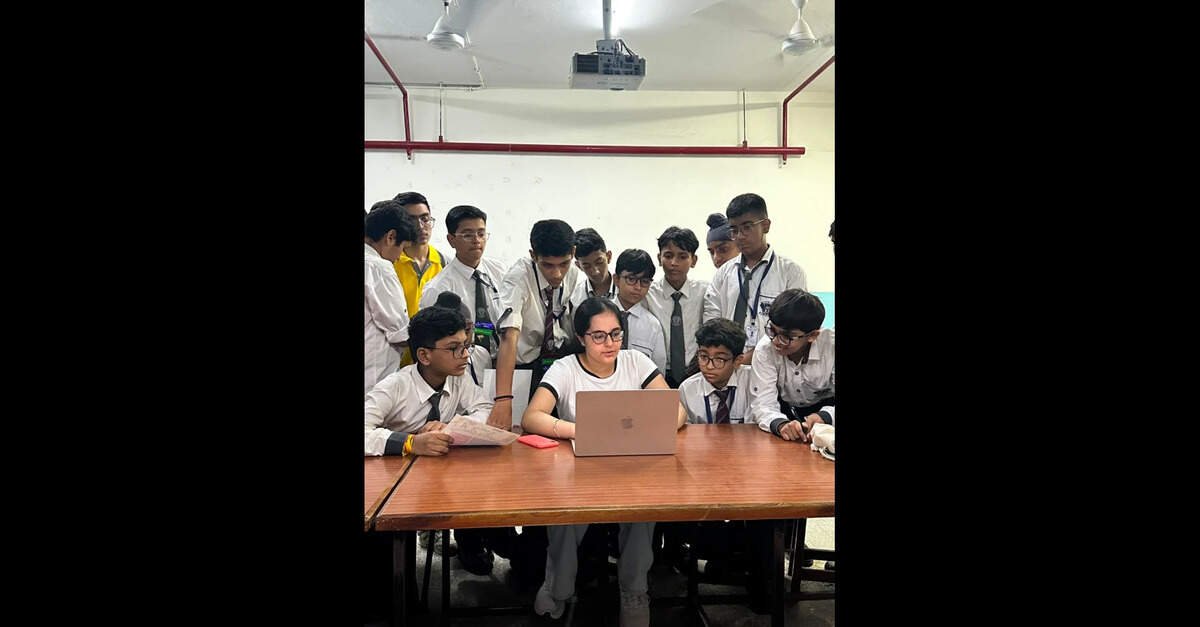
A Grade 12 student at Jumeirah College in Dubai is using technology to address two different gaps in everyday learning: helping families communicate better and giving women digital skills that can support employment and entrepreneurship.
Mehak Dhawan has developed two initiatives, Kindling and DigiSakhi, which began as separate projects but share a focus on making technology more useful in people’s everyday lives.
Kindling is designed to help parents and adolescents engage in more meaningful conversations through personalised conversation prompts, emotional check-ins, shared activities and guidance. The initiative has been taken into schools through parent workshops and sessions.
According to figures shared by Mehak’s team, Kindling has engaged an estimated 2,500 to 3,000 families across eight schools through workshops, parent sessions and onboarding.
The initiative was later expanded through Kindling Connect to workplaces and organisations working with families of children with special needs. At Country Delight, Mehak designed and led 10 family-engagement workshops, reaching nearly 11,000 members of the company’s workforce community, according to her team.
Following employee feedback, she presented a five-point family-wellness framework to the company’s executives. Her team said two recommendations were subsequently incorporated into the company’s updated HR policy, while Country Delight committed Rs 18 lakh in pre-seed funding to Kindling.
Mehak also worked with Radhika Foundation and Healing Nest to adapt the programme for families of children with special needs. Across seven workshops, the initiative reached more than 350 parents and caregivers, covering issues including developmental changes, emotional regulation, support systems and long-term financial planning.
At Nutan Marathi Senior Secondary School, Kindling reached another 350-plus students and parents, according to the team.
Her second initiative, DigiSakhi, focuses on digital and AI skills for women. It began with a pilot involving around 25 women, who were introduced to tools such as AI applications, Canva, website builders and digital portfolios.
The experience led to a broader effort to make digital-skills training accessible to women who may not attend conventional technology classes. In collaboration with Frontier Markets, DigiSakhi was redesigned into short, multilingual learning modules aimed at women with different literacy levels and levels of digital familiarity.
The modules cover online safety, digital banking and UPI payments, alongside AI, design, productivity, digital marketing and tools that can help women seek freelance opportunities or promote their businesses.
The content was integrated into Frontier Markets’ Meri Saheli ecosystem. Frontier Markets says its wider network includes more than 50,000 trained and digitised rural women across four states. That figure relates to Frontier Markets’ overall network and is separate from DigiSakhi’s reach.
According to Mehak’s team, DigiSakhi has reached more than 15,000 women through the collaboration and other outreach, including more than 20 workshops and community interventions across three to four states.
The two projects have since moved beyond their initial pilots. Kindling has expanded from school-based parent sessions into workplace and caregiver programmes, while DigiSakhi has moved from a small group of learners to multilingual digital content distributed through an established rural women’s network.
For Mehak, the common thread between the two initiatives is not simply the technology itself, but whether people can use what they learn after a session ends.
