


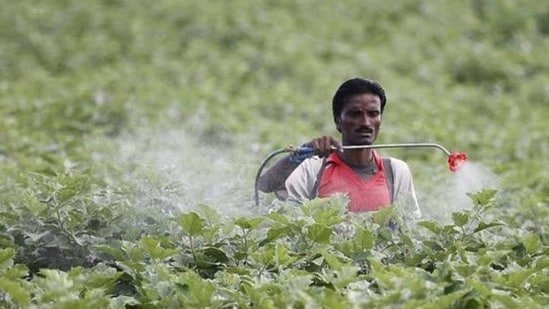
Recent discussions around paraquat (herbicide) in India have brought renewed attention to an issue that clinicians, toxicologists and public health experts have increasingly raised over the past several years, the severe health risks associated with one of the world’s most toxic herbicides.
Widely used for weed control, paraquat is associated with very high fatality rates in poisoning cases. Clinicians working in poisoning management and critical care note that even small quantities can cause irreversible damage to the lungs, kidneys and other organs. The absence of a specific antidote makes treatment particularly difficult and creates a significant burden on health care systems managing poisoning cases, many of which require prolonged intensive care despite poor survival outcomes.
While poisoning cases are not systematically captured through comprehensive national surveillance systems, doctors and poison specialists across several parts of India have repeatedly highlighted the serious clinical challenges associated with paraquat exposure, including both intentional ingestion and accidental occupational exposure. Public health experts have also raised concerns that current poisoning surveillance and reporting systems may not fully reflect the actual burden of pesticide poisoning in the country.
The issue has gained renewed policy attention following recent bans in Telangana and Odisha, suggesting that the Union government may be considering stronger regulatory action in response to mounting concerns around toxicity and poisoning risks. The discussions reflect a broader shift in how paraquat is increasingly viewed, not solely as an agricultural input but also as a public health, mental health, and health care systems concern.
Experiences from states such as Telangana, Odisha and Kerala have contributed to wider conversations around pesticide safety and poisoning prevention. Telangana recently imposed a temporary restriction on paraquat sales following growing public health concerns. In Odisha, repeated fatal poisoning cases in western Odisha led clinicians at Veer Surendra Sai Institute of Medical Sciences and Research to undertake a hunger strike in 2019, contributing to a state-wide ban on paraquat in 2023.
International experience also offers important lessons. At least 74 countries, including major agricultural economies such as China, Brazil and members of the European Union, have either banned or significantly restricted paraquat. Available evidence suggests that such regulatory actions can be implemented without major adverse impacts on overall agricultural productivity, particularly when supported by transition planning, agricultural extension services and access to safer alternatives.
One of the key challenges in addressing highly hazardous pesticides is the need for closer coordination between health and agriculture systems. Agricultural stakeholders may primarily examine herbicides in the context of cost-effective weed management and farming practices, while clinicians and public health experts often engage with the implications for poisoning management, treatment limitations, and broader impacts on families, health care systems and the environment. Strengthening dialogue and collaboration across these sectors can help support more balanced and evidence-informed policymaking. Such an approach is also aligned with the principles of One Health, which recognise the close interconnections between human health, agriculture and the environment.
The issue also has important implications for suicide prevention. In many rural settings, emotional distress may intersect with financial insecurity, debt, crop uncertainty and limited access to mental health support. Public health experts have long emphasised that restricting access to highly lethal means can play an important role in reducing suicide mortality. India’s National Suicide Prevention Strategy also recognises means restriction as an important evidence-based approach to suicide prevention, particularly in a country marked by wide social, economic and geographic inequalities in access to mental health and crisis support services.
This also aligns with the broader public health principle of the hierarchy of controls, which emphasises reducing risks at the source wherever possible. Public health experts note that while Personal Protective Equipment (PPE), safe storage practices and administrative controls remain important, they may be less reliable as standalone measures when dealing with highly hazardous substances in contexts marked by uneven enforcement and limited State capacity. As a result, upstream approaches that reduce access to hazardous chemicals that pose unacceptable risk are more effective and sustainable from a public health perspective.
These concerns were also highlighted at a recent national roundtable organised by the Centre for Pesticide Suicide Prevention in New Delhi, where clinicians, public health experts, policymakers and agricultural stakeholders discussed the need for more coordinated responses to paraquat-related harms. Discussions highlighted the importance of balancing public health protection, suicide prevention and practical implementation considerations, including farmer outreach, safer alternatives and transition planning.
At the same time, any future regulatory transition involving paraquat would require careful implementation planning, farmer outreach and support for safer alternatives.
The design of any phase-out process will also matter. While shorter transition timelines may reduce ongoing exposure risks more rapidly, they may also create challenges related to unused stockpiles, disposal and environmental safety. Longer transition periods, however, could prolong exposure risks and may also increase the likelihood of stockpiling unless accompanied by stronger safeguards, stock return mechanisms and enhanced risk mitigation measures across the supply chain.
As India’s policy discussions around paraquat continue to evolve, the issue can no longer be viewed solely through an agricultural lens. The broader implications for suicide prevention, farmer safety and sustainable agriculture require coordinated and evidence-informed responses that bring health and agriculture together in addressing pesticide-related harms.
(The views expressed are personal)
This article is authored by Bhawesh Jha, associate, Centre for Pesticide Suicide Prevention.
