






Is it too early? The dust hasn’t settled on the 2026 Asian Games and one is already speaking about the 2028 LA Olympics. A voice in the head seems to scream: let them chill for a bit. But then another voice, equally shrill, asks: Is that what the best in the world are doing?

Perfection doesn’t exist. Not yet. Probably never. But the quest for it is never ending. One week after winning his third consecutive Olympic gold at Paris, American shot putter Ryan Crouser was back in training.
In addition to winning three Olympic golds, he has also won the World Championships in 2022, 2023 and 2025.
Sure, everyone has their own method. Some need a break year. Some need a more relaxed approach. Others, like Crouser or archer Kumkum Mohod, might jump right in. But the whole point of the exercise is to leave no stone unturned ahead of a major career-defining competition.
Some do it to stay ahead and others to catch up, but either way there’s always work to be done. So here goes. A list of dos and dont’s, in no particular order, as India starts to get ready for LA 28.
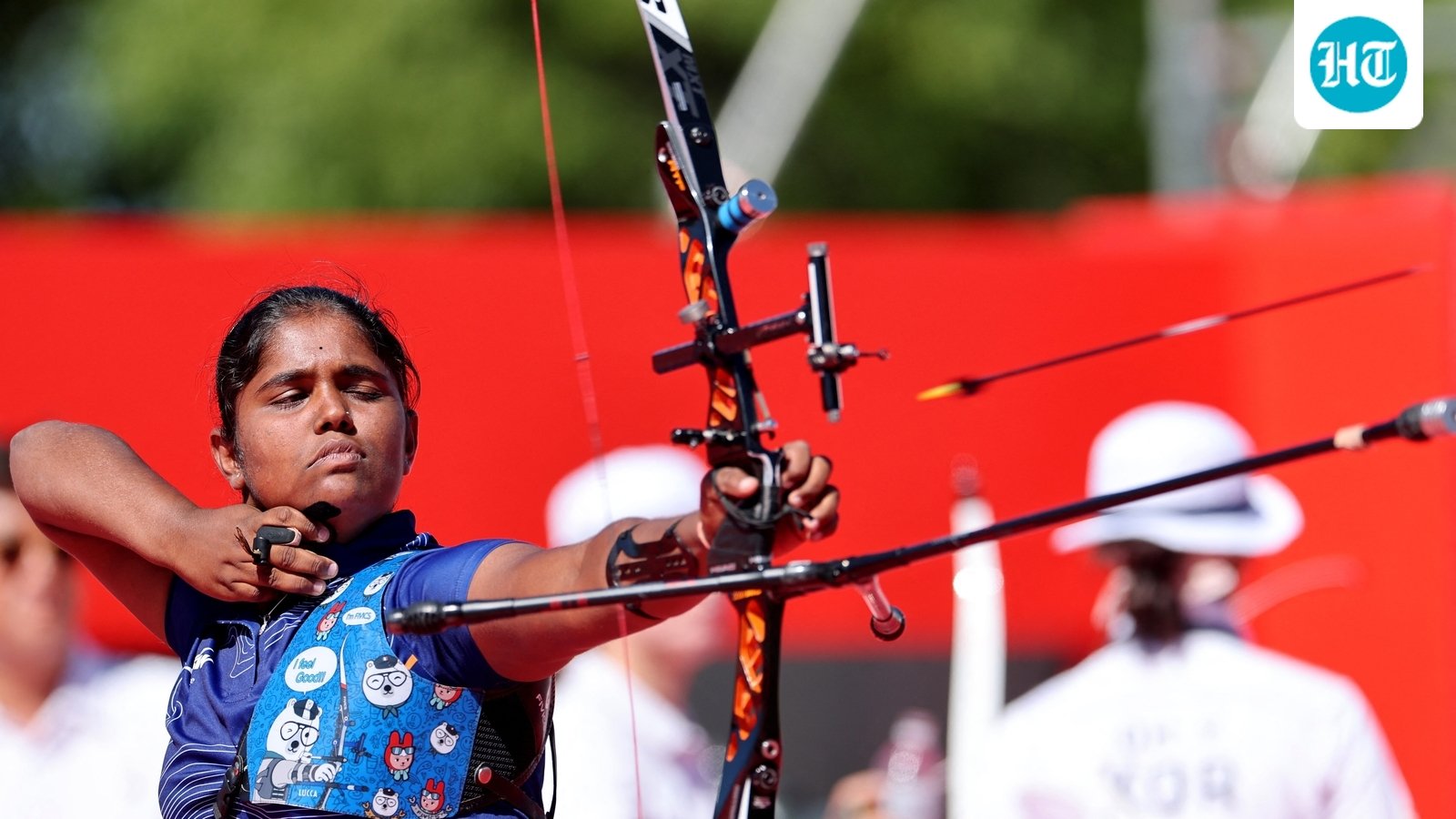
Nurture Kumkum
The 17-year-old has done the unthinkable. She has helped bring down the South Koreans in women’s recurve archery. But where does she go from here? There are no guarantees in sport and one doesn’t even know for sure that she will be going to LA 28 (from the competitive domestic trials), but her talent is unquestionable. At this point, she is no longer the challenger. She is the one being chased and that can bring with it a different kind of anxiety. So much of archery is the process. and if anything that is what Kumkum will need to reinforce in the time to come. Let her do so.
Identify world-class talents
Kumkum isn’t alone. And that is a good thing. Aman Sehrawat and Sujeet Kalkal have beaten the best in the world, as have some of the boxers. Squash player Anahat Singh, 18, is on the rise too. Suruchi Singh, 20, redeemed herself with a gold in the 10m air pistol mixed team, an Olympic event. Give them the system they deserve. Not just exposure trips but stability — in coaching and in method. India, for instance, has 48 able-bodied athletes in the TOPS group. One might argue that is far too many. At the 2016 Rio Olympics, India won 2 medals. At Tokyo, the medal count went up to 7, including Neeraj Chopra’s gold. And in Paris 2024, the count was 6 medals. So, getting into TOPS must be far more stringent. The same rule must apply to designating a sport as a priority.
Listen to Marijne, Nieva
Get them to speak to every coach of every discipline and make them listen. They know what to say and how to get results, (even in the Indian system). Build a coaching team that cares about results; about the athletes and not earning another Dronacharya award. Before Sjoerd Marijne (women’s hockey) and Santiago Nieva (women’s boxing) returned for their second stints, their respective sports were a mess. But they knew that the problem isn’t talent. Rather, petty inter-personal rivalry was dragging down the teams. Cut that out and focus on the goal, which is medals. Make Marijne and Nieva mentor other coaches too.
A professional system
The period before any big event has somehow managed to coincide with an administrative mess. Olympic gold medallist Abhinav Bindra chaired a high-level government task force in 2025 that submitted a comprehensive 170-page report to the Ministry of Youth Affairs and Sports to completely overhaul and professionalise India’s sports bureaucracy. But things have, frankly, gone the other way since then.
The report stated: “Neither SAI nor state departments have a dedicated sports administration service. Instead, positions are often filled by generalist civil servants or contractual staff lacking sector-specific expertise, resulting in ad hoc decision-making, weak institutional continuity and absence of long-term professionalisation.”
Clean up the doping mess
It is like age fraud. It robs deserving athletes and it robs the nation of athletes who have an actual chance of winning something. India really hasn’t done anything about this for too long. In December 2025, India topped the global doping list for the third consecutive year. Some athletes chase the jobs and awards that top performances bring but they end up undermining the entire system. A brutal crackdown is the need of the hour.
Administrators must step up
There is a post doing the rounds on X that shows Abhay Chautala, former president of the Indian Olympic Association, in the warm-up area along with Wrestling Federation of India president Sanjay Singh, getting a photo clicked with Aman Sehrawat, who had just won gold in the 57kg category. There are two problems with the act. First, administrators are not allowed in that area. Second, for the photo, they allegedly pulled in Antim Panghal, who was 10 minutes away from her gold medal match. These are not isolated incidents. Indian sports administrators, as shown by such acts, often seem to feel that they own the sport and the athlete. It’s about time this stops. At their core, administrators are facilitators and they need to get that too.
The right spend
India spends good money on elite athletes now. But most major cities in the country still lack sporting infrastructure and good coaches. Unfortunately, this means that once the elite athlete retires, the search for the next one must begin all over again. The cumulative budget allocated to the sports ministry since 2014 exceeds ₹30,000 crore, rising from an initial allocation of ₹1,643 crore in FY 2014–15 to a record ₹3,794 crore for FY 2025–26. Perhaps directing that spend better might yield even better results than the 85 medals (21 gold, 27 silver, 37 bronze) won in Japan.


