


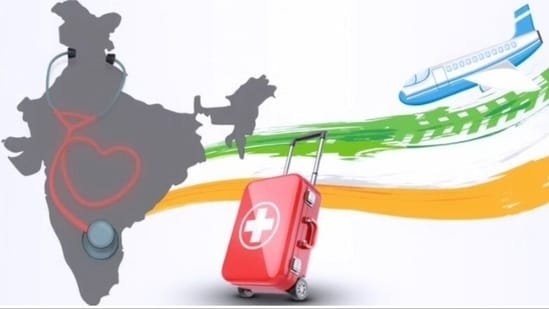
India’s emergence as a global health care destination is no longer just a health care story. It is becoming a workforce story. Over the past decade, India has steadily strengthened its position in medical tourism by offering a combination of advanced clinical expertise, internationally accredited hospitals, shorter waiting periods, and treatment costs that are often significantly lower than those in North America, Europe, and parts of West Asia. Today, patients from Africa, the Gulf region, South Asia, and increasingly developed markets travel to India for everything from cardiac procedures and oncology treatments to orthopaedic surgeries, fertility care, organ transplants, and wellness therapies.
The numbers reflect the scale of the opportunity. According to government estimates, India’s medical tourism market is expected to nearly double from approximately $8.7 billion in 2025 to $16.2 billion by 2030.
This growth is being fuelled by affordable, high-quality treatment, expanding health care infrastructure, and rising investment across hospitals, diagnostics, telemedicine, and digital health. Newer segments such as dental tourism, rehabilitation, preventive care, and wellness travel are adding further momentum. As patients increasingly prioritise quality outcomes and care experience alongside affordability, one question is becoming impossible to ignore: Who will deliver the care?
Medical tourism depends on far more than doctors and hospital infrastructure. It relies on a vast ecosystem of health care professionals, including nurses, allied health workers, diagnostics staff, rehabilitation specialists, patient coordinators, and hospital operations teams.
For international patients, communication, service standards, empathy, cultural sensitivity, and operational efficiency are just as important as clinical outcomes. As Indian hospitals balance growing demand from domestic patients with a rising influx of international patients, the need for skilled frontline talent continues to increase.
This is not a challenge India faces alone. According to estimates from the World Health Organization (WHO), the global shortage of health care professionals is expected to reach 11 million by 2030, with nursing and allied health care roles among the most affected. For India, the long-term success of medical tourism may depend as much on workforce readiness as on hospital capacity.
The challenge is particularly evident in employability outcomes. According to the India Graduate Skill Index 2025 by Mercer Mettl, only 42.6% of graduates are considered employable despite the country’s massive annual graduate output.
Health care employers increasingly seek professionals who can operate confidently in real-world clinical environments from day one. Beyond technical knowledge, they value communication, teamwork, adaptability, patient interaction skills, and familiarity with health care workflows that directly influence care quality, operational efficiency, and patient satisfaction.
As a result, health care providers are placing greater emphasis on education models that integrate learning with workplace exposure rather than relying solely on classroom instruction.
This shift is creating momentum for work-integrated learning models that bridge the gap between education and employment. Organisations such as Emversity are helping drive this transition by partnering with higher education institutions to deliver industry-integrated learning pathways designed around employer expectations and workplace capability. Today, the organisation works with health care partners and through these collaborations, students gain exposure to operational settings across nursing, diagnostics, allied health care, and patient service functions. Its UGC-recognised and NSDC-certified pathways are designed to build not only technical competence but also workplace confidence, professional communication, and practical problem-solving abilities. These are the capabilities that health care employers increasingly identify as essential when hiring frontline talent.
Medical tourism is reshaping the expectations placed on health care professionals. Hospitals serving international patients must deliver concierge-like experiences alongside clinical excellence. International patients increasingly expect clear communication, efficient care coordination, digital engagement, language support, and personalised service throughout their treatment journey.
As health care becomes more service-oriented, tomorrow’s workforce will need a combination of technical expertise, communication skills, professional behaviour, adaptability, and the ability to build meaningful patient relationships.
India’s rise in medical tourism is often discussed in terms of revenue growth and health care infrastructure. Equally significant, however, is the employment opportunity it is creating across nursing, diagnostics, allied health care, rehabilitation, patient coordination, and hospital operations. As health care ecosystems continue to expand, so too will the demand for skilled professionals capable of delivering globally competitive patient experiences.
(The views expressed are personal)
This article is authored by Vivek Sinha, founder, Emversity.
