



India entered 2026 on a strong economic footing. Growth was running above 7.5%, inflation had eased below 3%, fiscal consolidation was underway, IPO activity remained robust, and consumption and services exports continued to support momentum. While there were concerns over the currency and subdued equity markets, the broader economy remained resilient, supported by investment sentiment and progress on trade agreements.


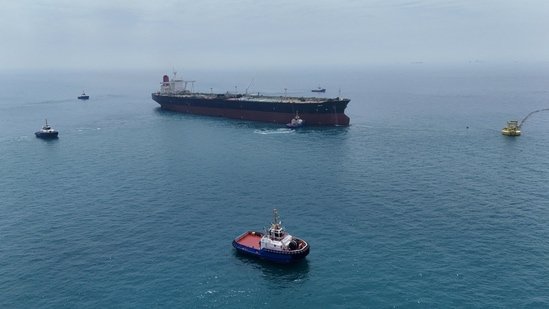
Then came an energy shock few countries had fully prepared for. The conflict in West Asia and the closure of the Strait of Hormuz tested not only India’s fuel supply chains but also its ability to shield households and businesses from a global energy crisis.
The Strait of Hormuz remains the world’s most critical energy chokepoint. India imports around 87% of its crude oil, half of its natural gas and more than half of its LPG. Before the conflict, 46% of crude oil imports, 93% of LPG and 55% of LNG passed through this narrow waterway. When it closed, LPG supplies fell sharply, India’s crude basket surged from about $70 to $120 per barrel, and the larger risk was a loss of confidence across the economy.
India was not alone. Many Asian economies faced similar vulnerabilities, while several advanced economies had to draw down strategic reserves and activate emergency supply arrangements. The disruption exposed the risks of excessive dependence on a single maritime chokepoint.
India’s response was immediate, coordinated and multi-dimensional. The Prime Minister’s Office, the ministry of petroleum and natural gas, other ministries, oil and gas PSUs and industry worked together across supply, demand management and fiscal policy.
The first priority was demand management to protect households. Supplies to homes using piped natural gas, CNG users and households without access to natural gas were safeguarded. Commercial LPG consumption was curtailed, while industries were encouraged to shift to piped natural gas wherever infrastructure permitted. This helped reduce pressure on imported LPG without disrupting domestic consumers.
The second pillar was supply augmentation. Refineries were directed to maximise LPG production, raising domestic output from 35,000 tonnes to 54,000 tonnes a day, a nearly 50 per cent increase. Facilities not originally configured for LPG production were adapted to contribute during the crisis.
Diplomacy complemented domestic action. India rerouted cargoes through alternative corridors, expanded imports from countries including the US, Russia, Nigeria, Norway and Canada, and worked closely with Gulf partners to ensure safe passage for Indian commercial shipping. Together, these measures stabilised supplies despite unprecedented disruption.
The third pillar was fiscal management. Rather than passing the entire increase in global prices to consumers, the government reduced fuel excise duties, absorbing a substantial fiscal cost while keeping retail prices broadly stable during the peak of the crisis. Oil marketing companies also absorbed significant under-recoveries. Even after some fuel price increases, domestic consumers were far better protected than many other countries, where prices rose much more sharply. Similarly, LPG subsidies ensured households continued paying well below import-linked costs, with governments and oil companies sharing the burden.
The crisis may have been managed successfully, but it also highlighted the priorities for the future.
First, India must accelerate the transition towards renewable energy, electric mobility and hybrid technologies. Every unit of clean energy reduces dependence on imported fossil fuels and strengthens long-term energy security.
Second, domestic oil and gas exploration deserves renewed urgency. India’s sedimentary basins remain significantly underexplored, and recent investments in basin-wide seismic surveys and AI-enabled exploration should be implemented at speed.
Third, strategic reserves need expansion. India entered the crisis with only around ten days of crude reserves and no dedicated LPG or LNG reserves. Larger strategic buffers would provide valuable time during future supply disruptions.
Fourth, diversification of supply sources should continue through long-term partnerships with producers across multiple regions, reducing exposure to both geopolitical shocks and volatile spot markets.
Finally, India should make greater use of domestic resources. Coal gasification, biofuels and other import-substituting technologies can reduce dependence on imported LNG, fertilisers and transport fuels while supporting domestic industry and lowering emissions.
The Hormuz crisis demonstrated that India is far better prepared than many assumed. Effective coordination between the government and the oil and gas sector prevented a global supply disruption from becoming a household crisis. The lesson now is clear: Crisis management must be followed by structural reforms that make India’s energy system more resilient, diversified and increasingly self-reliant.
(The views expressed are personal)
This article is authored by Rajiv Memani, chairman and CEO, EY India, managing partner, EY Africa-India Region, chairman, EY Global Growth Markets Council and former president, CII.


