






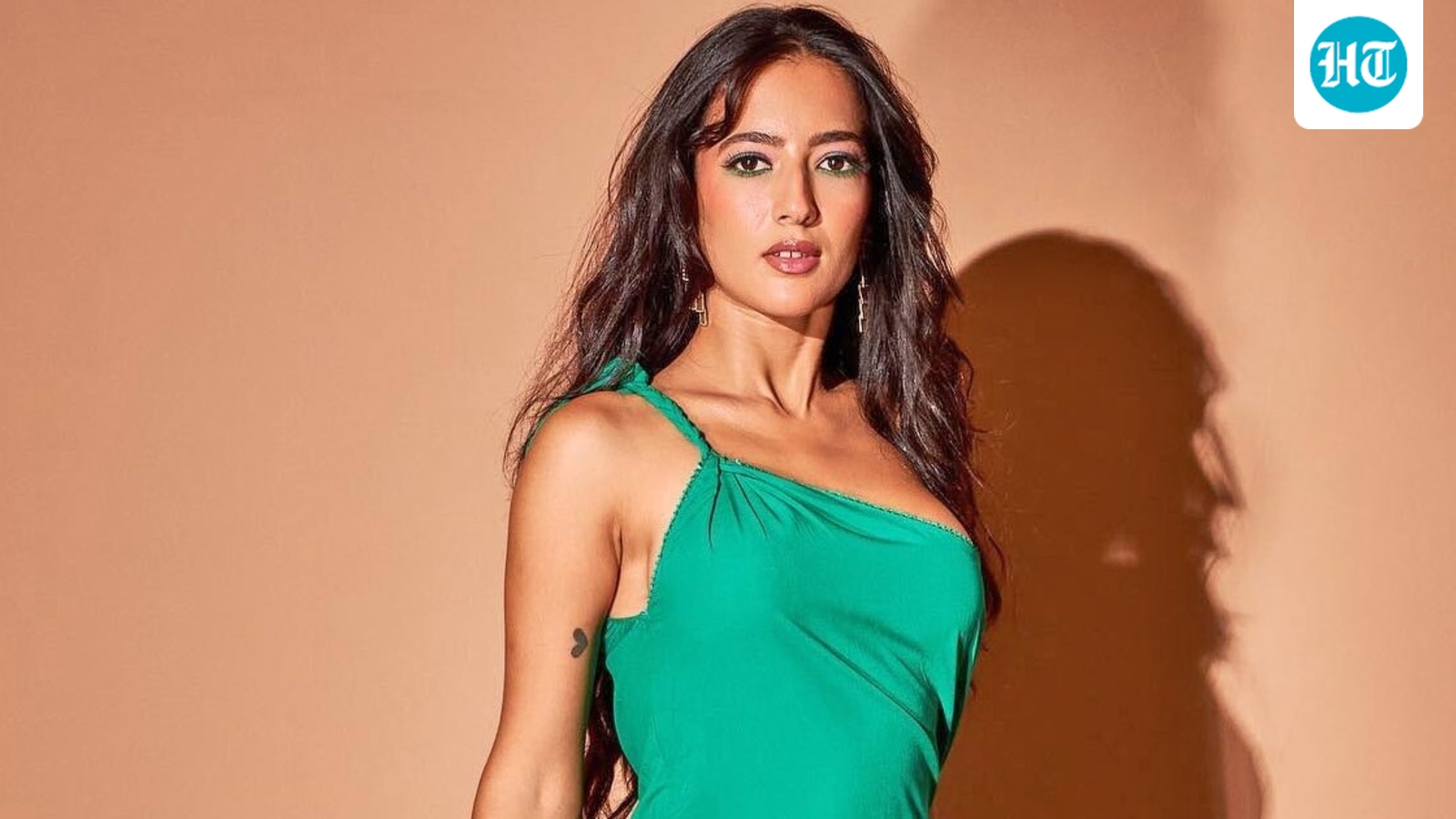
Splitsvilla winner and The Traitors 2 contestant Soundous Moufakir did not set out to build a beauty brand because she saw a gap in the market. She was looking for something she had grown up with and suddenly could not find. Having lived in France, where Morocco was just a short distance away, Soundous was used to Moroccan beauty rituals and ingredients being easily accessible. After moving to Asia, that changed. She could still find Moroccan products, but she was not convinced they were always authentic. That eventually led her to build MoroMaa, a beauty, lifestyle and body care brand that she launched in India on June 27, 2026.
The early response has been encouraging. MoroMaa has sold out two products within its first few months and has raised ₹1.5 crore from Aviral Bhatnagar of AJ VC for a 9% equity stake. Soundous, who has an MBA in Finance and continues to work in entertainment, is running the company as its founder and CEO. But her ambition is not simply to add another beauty brand to India’s already busy market. She wants to build a space for what she calls “M Beauty”, or Moroccan Beauty.
The Indian beauty consumer is changing
The market Soundous is entering is growing quickly, but she believes the biggest change is not just the size of the industry. It is the consumer. “The Indian beauty market is currently marketed around ₹1,230 billion, and it will go to around ₹4,000-4,500 billion by the next five to 10 years. So it’s gonna get crowded, but the beauty of it is we are engaging into a very smart and smarter, smarter audience who is not any more buying product because of a public face, which is the face of that brand,” she says.
She believes consumers are now doing more of their own research. They are looking at ingredients, formulations and their individual skin needs instead of simply buying a product because a celebrity is attached to it. “They understand ingredient, they understand formulation. They understand their skin type. They understand their cycle and which kind of product they need to use at each cycle, and that just pushes us as founders and as CEOs and business people to actually focus more on the R&D part, the formulation part, and at the same time the packaging that can be convenient,” she explains.
But an effective product is no longer enough on its own. Moufakir points to the growing importance of convenience and aesthetics, particularly in a market where social media can directly influence buying decisions. “Right now, if you go to the US, the market of TikTok is in billions because people purchase by attention, but at the same time, they’re looking for convenience stuff. They’re looking for a good product, but they don’t want it to look bad. They want it to look cool and good, and they are not giving up on that aesthetic part,” she goes onto say.
That leaves beauty founders with a difficult job: make something that works, make it easy to use and make consumers want to pick it up in the first place. “I think there will be a lot of competition in terms of how can you make a good, effective product, but at the same time, very convenient and very appealing to people to purchase,” she says.
What investors saw in MoroMaa
The ₹1.5 crore investment from AJ VC came as the brand was finding its feet. For Soundous, the investor’s decision came down to two things: whether MoroMaa was solving an actual problem and whether there was enough of a gap in the market for it to build something of its own.
She tells Hindustan Times, “If I speak from an investor point of view, it’s very easy to understand which company, easy not easy, but at least you filter it. You can filter the 100,000 applications to at least find the ones that you’re not sure about. And that goes to, does this person who’s creating this company solve a real problem? And while solving that problem, are they also offering something which is not there in the market? So is there any white space in the market that this company is filling?”
She also believes investors look closely at the person behind the idea, particularly when a company is still at an early stage. “Once the operational part is discussed with the investor, I think the second thing that they look at is the founder. I believe that any idea can actually get into a big company, but it also depends on the founder and who is behind it, how they think, do they have the right skills to be able to fit into the entrepreneurship skin. Not everyone can actually be an entrepreneur,” she adds.
The money will now help she take MoroMaa beyond its initial phase. She wants to put it towards product development, manufacturing, customer acquisition, distribution and building a team around her. “At least from my end, it’s more considered as a seed fund. I just started the company. I need someone to help me scale to a larger audience because that needs a lot of money. Sometimes you cannot just… There are a lot of things that happen, but like website is there, manufacturing is there, operational is there. Having the right people is very important because you are the founder, you have the bigger vision, but then the execution and the other brains that bring all that vision together is the team,” she adds.
Hiring is another challenge for a company at this stage. Soundous says the people who can help take a young business forward also know their value. “It’s very difficult to attract good brains and good profiles, because those people, they know their worth, so they ask for good salaries, and you cannot afford it at an early stage if you don’t have good funds in your bank account,” the actor-model adds.
Why she decided to go solo
Soundous did not necessarily imagine MoroMaa as a one-person founding story. She initially thought she would need a co-founder, but after speaking to potential partners, she could not find someone who matched what she was looking for. “In the beginning of starting MoroMaa, I was thinking, ‘Oh my God, I need a co-founder.’ Then I was talking to people, but nobody fit that profile that I wanted to partner with. Then I had no choice but just jumping into it and being the founder, at the same time the CEO,” she says.
Being alone at the top has meant learning every side of the business. The creative direction may come naturally to someone with her entertainment background, but running a company requires a very different level of attention to numbers and operations. “As equally as I’m concerned by the creative side of MoroMaa, and then the positioning of it, and the branding of it, I’m also concerned about the operation part because that’s what brings our company together. The unit economics are something that are very important that each person needs to focus on because that’s what makes the business scalable and what makes it profitable.” she adds.
She admits that taking on both positions was intimidating at first: “I was really scared to have that gap and that position of the founder, but at the same time the CEO, and I just did it. I was like, I’ll figure out the first model, the second one if I need to hire someone or I need to have a co-founder.”
In hindsight, she thinks starting without a co-founder may have worked in her favour. It forced her to understand the business before bringing someone else into the picture. “I think this is the best idea, that I didn’t get anyone on board yet, because as a founder at that early stage, it helps me understand my business. It helps me understand my unit economics. It helped me understand operations, supply chain, advertisement, communication, my packaging, my vendors, negotiation, explore the import, the taxing part, like everything. I am on the top of it,” she explains.


