


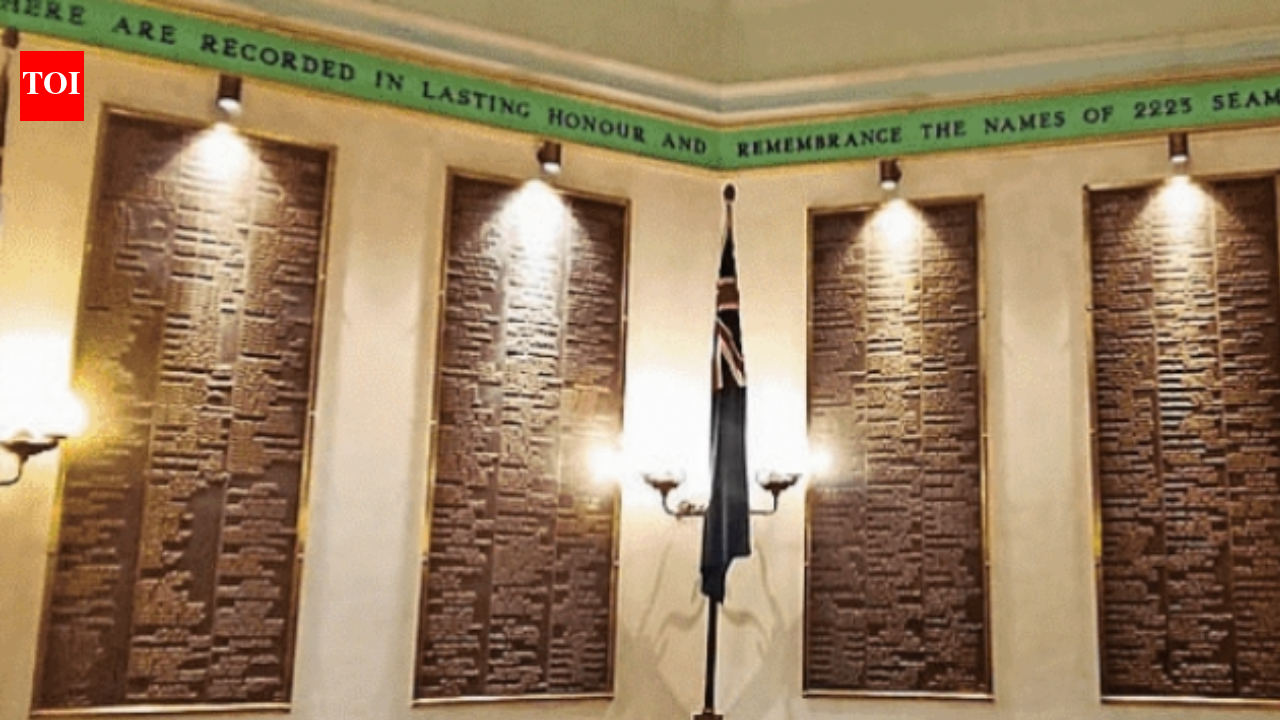
Beyond a row of shanties on the garbage-lined Thana street in Masjid Bunder hides a 95year-old triangular building that Dr Farzana Ansari’s husband likes to call “keechad mein kamal” — a lotus in the muck.For two hours every evening since 2024, the cheerful burqa-clad doctor has been seeing patients at the Indian Sailors’ Home, a hostel started in 1931 by the non-profit Indian Sailors’ Home Society for the welfare of seafarers.As the only woman in a building teeming with homesick seamen — some of whom have cried in her presence — Dr Ansari lit up when she recently discovered that Princess Anne had visited to lay a flower wreath in the Memorial Hall on Oct 17, 2023.The realisation came when she glimpsed the British royal’s photo in the new photography museum set up near the memorial hall by vacating a few seafarers’ rooms a few months ago.“We can’t change the structure much as it is a heritage building,” says Binoy Nakulan V, the hostel’s soft-spoken, yoga-loving resident manager, “but we wanted to displaythe pictures that we found as they portray our history.”Culled from the archives of the Indian Sailors’ Home Society, frozen moments include the triangular building from its opening ceremony on Dec 16, 1931, an umbrellatoting Lady Willingdon from her 1932 visit and a sari-sporting Sumati Morarji, chairperson of ScindiaSteam Navigation Company, during National Maritime Day in 1964.What the photographs don’t fully prepare you for is what lies at the building’s heart — the reason the H ome was built at all.The Memorial Hall is a serene octagonal chamber adorned with tall bronze tablets presented by the Imperial War Graves Commission, its circular ceiling carrying the adage “Heaven’s Light Our Guide” and the motto of the Star of India.Lining the walls are old flags of the Royal Indian Marine, Royal Indian Navy, Merchant Navy and Royal Navy — faded testaments to the seafaring empire these men served.The tablets bear the names of 2,223 Indian seamen of the Royal Navy, Royal Indian Marine and Merchant Navy who “fell in the Great War and whose grave is the sea.” Established as a lasting tribute to these men, the Home was inaugurated by Sir Frederick Sykes,Governor of Bombay — the hostel, the yoga hall, the gym, all of it grew around this chamber.After the Second World War claimed 6,500 more Indian seafarers, their names were added in a binder, chronicled in Devanagari.Read closely, the tablets are a lost social record of who actually crewed these ships. Grouped beneath vessels like Golconda, Huntsman and West Wales are names — Abdul Karim, Hasan Ali, Fernandes, D’Souza — lascars, firemen and deckhands whose wartime service has largely slipped from public memory.“Families visit from London and other countries,” says Nakulan, “but apart from that, not many are aware.” At Rs 50 per bed per day, with free lunch and a month’s stay permitted, the Home still shelters seafarers far from home.(To visit, call Nakulan on 23480031)
