




India has gone beyond its advocacy of the past few years and engaged in conversations with Russia and Ukraine in recent months to end the war between the two countries, external affairs minister S Jaishankar said on Sunday in the first public acknowledgement of New Delhi’s initiative to address the conflict.
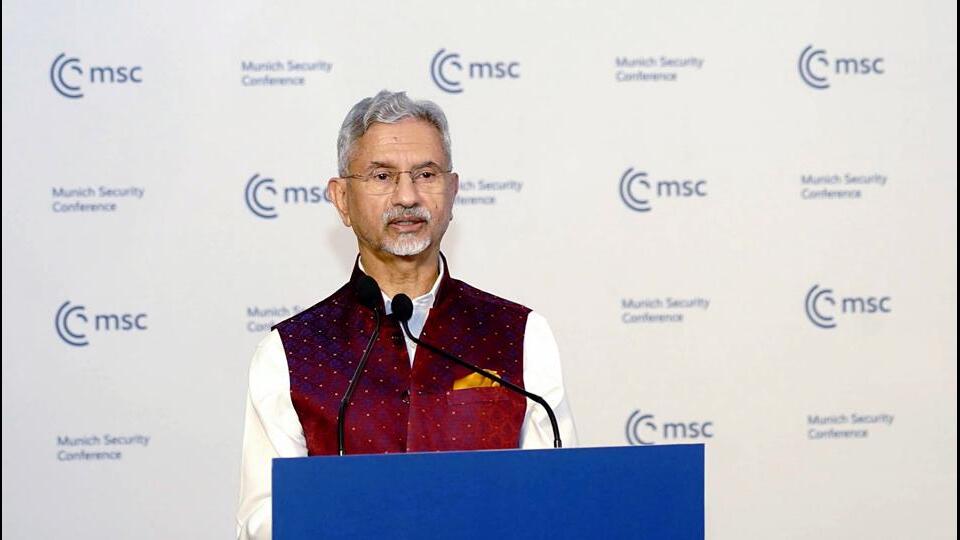
Jaishankar’s comments came two days after Ukrainian foreign minister Andrii Sybiha said Kyiv has received ceasefire proposals from four countries, including one from India that is “most comprehensive”, and three days after Russian President Vladimir Putin said Prime Minister Narendra Modi has “excellent ideas” aimed at mutually acceptable solutions.
Sharing limited details of the Indian initiative at the Munich Leaders Meeting in New Delhi, Jaishankar said it is focused on the safety of shipping in the Black Sea as ensuring grain and energy exports. He noted that India had taken a clear position on ending the conflict through dialogue and diplomacy.
“We have been advocating it for many years, and in recent months we have got a little bit more involved beyond advocacy,” he said. “We have conversations with both Russia and Ukraine in this regard. We are trying to be helpful, starting with the Black Sea, [the] safety of shipping issue.”
India, he said, is also “going beyond that to cover some immediate concerns which [Russia and Ukraine] have on grain exports, energy exports, non-attack possibilities”. He added: “Those are ongoing conversations right now.”
Modi met Putin on the margins of the Shanghai Cooperation Organisation (SCO) Summit in Kyrgyzstan in August and called for a shift from endless war to the end of war. The Ukraine conflict figured again in a meeting between Modi and Putin ahead of the Brics Summit in New Delhi last month. Modi also met Ukraine’s President Volodymyr Zelensky on the margins of the G7 Summit in France in June.
In early September, Jaishankar travelled to Ukraine, days after the meeting between Modi and Putin in Kyrgyzstan, and emphasised that the conflict cannot be resolved on the battlefield and that India stands ready to help in all efforts to end the war.
Jaishankar also spoke at Sunday’s event on India’s long-standing positive ties with Russia and its burgeoning relationship with the European Union (EU).
“India and Russia have historically had very good relations, particularly since the 1950s. That history is not forgotten,” he said. “For us, Russia, and the Soviet Union before that, was a country that stood by us in many ways when our security, when our territorial integrity was under threat.”
Without directly naming Pakistan, Jaishankar said that at a time when many countries “preferred backing a military regime next to us”, Russia had very good relations with India and this legacy shapes the current relationship.
Also Read: Russia-Ukraine tensions rising? Putin warns of using ‘all types of weapons’ if Kaliningrad attacked
The India-Russia engagement has also significantly widened. “It is very much more today an economic relationship as well. There is a military component, there are nuclear components, there are space issues, but there is a significant amount of trade and investment between the two countries, and energy and resources as well,” he said.
At the same time, there is a compelling case for a wider relationship between India and Europe, with the possibility of enhanced cooperation in advanced manufacturing, semiconductors, space and defence, Jaishankar said. There is also a convergence of the positions of India and Europe on artificial intelligence (AI), while European countries have become more open to Indian talents, he said.
At the multilateral level, India and the EU are part of initiatives to shape the world, such as the Partners for Multilateralism (P4M), which wants to ensure a better United Nations, Jaishankar said.
