



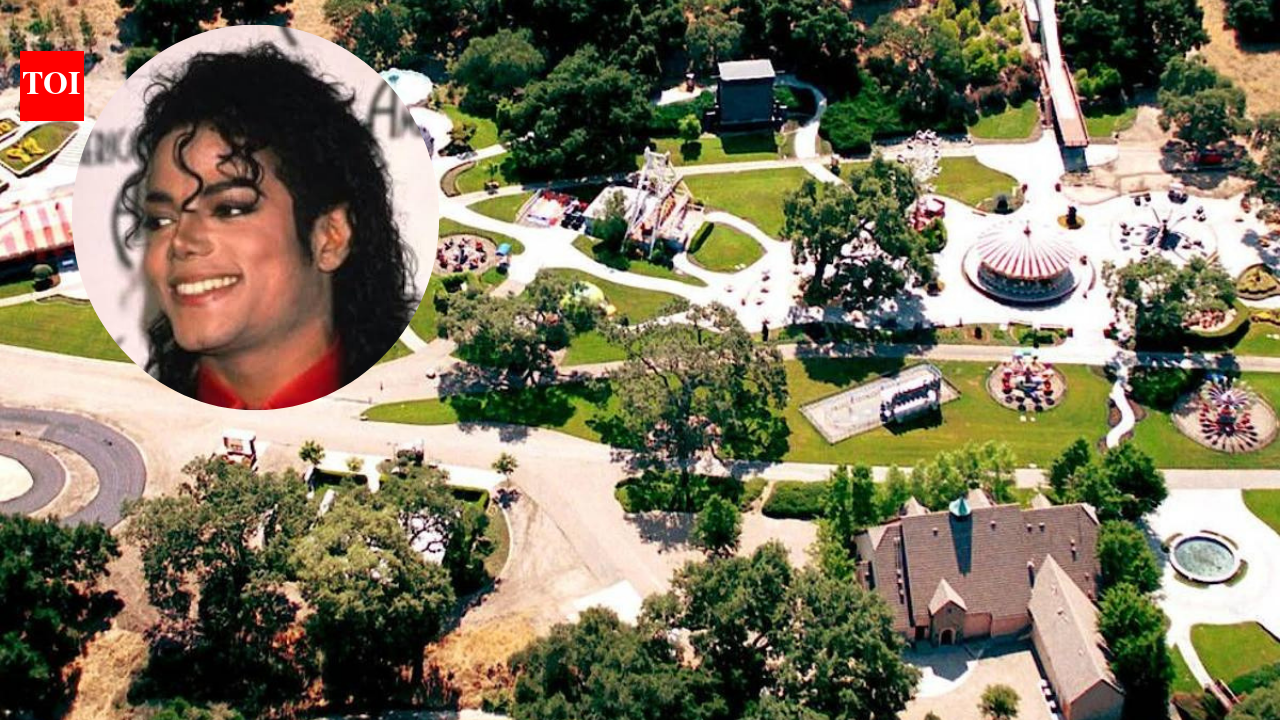
Michael Jackson‘s sprawling Neverland Ranch in California benefited for years from a state agricultural land-preservation programme that reduced its property-tax burden, but the arrangement came under scrutiny after county officials discovered extensive development on parts of the estate. The roughly 2,700-acre ranch in Santa Barbara County included Jackson’s home, an amusement park, zoo and other entertainment facilities, while much of the property was also used for cattle grazing. In 2003, county officials said Jackson had failed to obtain required permits or comply with zoning rules for a number of developments built over the previous decade. The dispute eventually led to about 70 acres being removed from the agricultural preservation programme, potentially increasing Jackson’s annual property taxes by tens of thousands of dollars.
Michael Jackson’s 2,700-acre ranch had a tax-saving secret
The secret behind the lower tax bill was California’s Williamson Act, a land-preservation programme created to encourage owners to keep agricultural land in farming and compatible open-space uses. Rather than taxing qualifying property according to its full potential development value, the programme allowed land under contract to receive a lower assessment based on its restricted use and agricultural income potential. Neverland qualified in part because Jackson legitimately leased most of the ranch to a cattle-ranching operation. The arrangement meant that the enormous property, despite being known worldwide for its lavish entertainment facilities, also had a genuine agricultural use that allowed qualifying portions to receive preferential property-tax treatment.
How the Williamson Act worked
California introduced the Williamson Act in 1965 to discourage the premature conversion of agricultural land to urban and other higher-value uses. Landowners who entered contracts agreed to keep their property in agricultural or compatible open-space uses for a specified period, while receiving reduced property-tax assessments in return. The programme was intended to make it financially attractive for owners to preserve farmland rather than sell or develop it.The arrangement was not a special tax break created for Jackson. It was a statewide programme available to qualifying agricultural properties. The unusual element at Neverland was the combination of agricultural land with a vast private entertainment estate containing attractions that were far removed from conventional ranching.
Neverland was more than a cattle ranch
Jackson purchased the property in the 1980s and transformed it into Neverland Ranch, creating a private world that included his residence, amusement-park attractions, a zoo and other recreational facilities. Yet most of the ranch remained connected to agricultural use, with cattle grazing carried out through a ranching operation.That combination eventually became important to county officials. The agricultural-preservation programme did not simply mean that every square metre of Neverland had to remain completely untouched. Rather, land covered by the agreement was subject to restrictions governing agricultural and compatible uses. The county therefore had to determine whether the developed portions of the estate complied with the applicable rules.
County officials began questioning the development
The issue came to a head in 2003, when Santa Barbara County officials investigated development at Neverland. County planners had raised concerns about the sprawling amusement-park area, prompting the county Agricultural Commissioner to request a report from the planning department.Officials said they discovered that Jackson had failed to obtain building permits or comply with zoning ordinances for a range of developments carried out over approximately 10 years. The investigation raised questions not only about the individual structures but also about whether the extent of development was compatible with the property’s agricultural-preserve status.
An amusement park and zoo became part of the dispute
The developments identified by county officials included some relatively ordinary structures as well as highly unusual features. They said permits should have been obtained for a gatehouse, a three-car garage, a primate centre, a go-kart track, seven amusement-park rides and a giant outdoor movie screen.Neverland’s amusement park and zoo were particularly significant because they illustrated how extensively parts of the ranch had been transformed for recreational use. County officials said Jackson had followed permit procedures and zoning rules for some of his developed property, but not for all of the rides and other construction.
About 70 acres were removed from the programme
In September 2003, the Santa Barbara County Board of Supervisors voted 4-0 to accept Jackson’s proposal to remove his house, amusement park, zoo and several other buildings from the agricultural-preserve programme. County officials said about 70 acres were involved.The decision did not mean that the entire 2,700-acre property suddenly ceased to have an agricultural connection. Instead, the affected developed portions were removed from the programme, separating those areas from the land that could continue to qualify under the agricultural-preservation arrangement.
Jackson could lose tens of thousands in annual tax savings
The change had a direct financial consequence. Santa Barbara County officials estimated that Jackson had been saving about $70,000 a year in property taxes through the agricultural-preserve arrangement.The county assessor’s office placed the 2002-03 assessed value of Neverland at $12,292,618. Jackson’s property taxes that year were estimated at about $130,000. County officials said that without the tax benefit, the property’s overall assessed value could rise by about $6 million, potentially increasing annual property taxes to around $200,000.Those figures were contemporary county estimates, so they are best presented as estimates rather than as a definitive calculation of Jackson’s long-term tax liability.
The tax increase was phased in
Jackson did not simply go from paying the lower tax amount to the full estimated amount overnight. Under the Williamson Act system, land leaving an agricultural-preserve contract can enter a nine-year non-renewal period during which its assessment gradually moves towards the level that would apply without the restrictions.Santa Barbara County officials said Jackson’s tax payments would therefore increase over a nine-year period beginning in January. The gradual process reflected the way California’s agricultural-preservation system handled the removal of land from its tax-benefit arrangement.
The permit problems were separate from the tax issue
The Neverland controversy involved two connected but distinct issues. One was whether the developed portions of the property could continue receiving the agricultural tax treatment. The other concerned whether Jackson had obtained the necessary permits and complied with county zoning requirements.Officials were considering possible legal action over back taxes and potential fines related to the permit and zoning violations. However, the contemporary reports do not establish that Jackson was convicted of tax fraud or deliberately engaged in tax evasion. Describing the episode as a tax-fraud case would therefore go beyond the evidence.
Why the ranch’s agricultural use mattered
The fact that most of Neverland was associated with cattle grazing was central to the story. County officials said Jackson legitimately leased most of the property to a cattle-ranching operation, giving the ranch a genuine agricultural use.That agricultural activity allowed the property to benefit from a programme intended to protect working agricultural land. The controversy arose when county officials examined how that agricultural use coexisted with the extensive amusement and recreational development on the estate.In other words, the unusual feature was not simply that a celebrity received an agricultural tax benefit. It was that one of California’s most famous private estates combined a working ranch with an amusement park, zoo and other highly developed facilities.
Neverland exposed the wider appeal of ranch tax breaks
The case also highlighted why large ranches can be financially attractive to wealthy landowners. California’s agricultural-preservation system can reduce property taxes when landowners agree to restrictions designed to preserve agricultural use.For owners of very large properties, even a relatively modest difference in the tax assessment can translate into substantial annual savings. The system therefore creates a financial incentive to maintain agricultural land rather than convert it to more intensive development.The Neverland case showed the other side of that bargain. The tax advantage came with conditions, and development that did not comply with those conditions could result in land being removed from the programme and the tax benefit being reduced.
Neverland later became part of Jackson’s financial troubles
The tax dispute emerged at a time when Jackson was facing growing financial difficulties. His problems eventually extended to the ownership of Neverland itself.In 2008, the ranch became subject to foreclosure proceedings after a loan connected to the property went into default. An investment company associated with Colony Capital acquired the loan, and the property was subsequently placed into a joint venture.Jackson died in 2009, and the property was later renamed Sycamore Valley Ranch. In 2020, billionaire Ron Burkle purchased the estate for a reported $22 million.
The tax-saving secret behind Neverland
The Neverland story was not about Jackson receiving a special celebrity-only tax deal. His property benefited from a California programme that was designed to encourage agricultural landowners to preserve their land for farming and compatible uses. The ranch’s cattle operation helped it qualify, while the extraordinary development of parts of the estate eventually brought the arrangement under scrutiny.When Santa Barbara County officials found unpermitted or non-compliant development, including amusement-park attractions and a zoo, about 70 acres were removed from the agricultural-preserve programme. Jackson was then facing the loss of a tax benefit estimated at roughly $70,000 a year, with the increase in his property taxes phased in over time.


