



Over the course of his four decades on earth, Sodi Naresh followed a rigid routine. He rarely stepped outside his village of Tekalguriam, only travelling two to three times a month to the nearest town of Jagargunda to buy essential kitchen supplies such as rice, salt, onions and oil. Deep inside Sukma in southern Chhattisgarh, the 46-year-old spent his days in the fields and forests near his house, trying to keep his head down and his family of six inconspicuous in an area that sat directly in the crosshairs of an armed conflict between the Maoists and the government.


Caught in the bloody war between the writ of the “Jantana Sarkar” — the Maoists’ parallel governance system — and the Indian state, entire generations here grew up without basic amenities and only one mission, safeguarding their loved ones from the cyclical violence.
Over the course of the past year, though, Naresh’s habits are changing. He is hoping to travel more, has applied for travel documents and a voter identity card, and dreaming of upgrading his hut to a brick-and-mortar house. And he is now glued to his phone, scrolling through videos posted by local YouTubers chronicling the collapse of the Maoist movement in these forests.
“I started using a mobile phone only in early 2025, after a tower was installed by the security forces,” he said. “That was a year after they took back control of our village and set up a camp. The Maoists never allowed roads, police or even electricity here. We never felt the need for phones”.
“If we had to send a message, we would walk 30 kilometres to the nearest town, stay overnight, and return the next day. For us, the Maoists were our voice, our representatives, our only link to the outside world.”
Also read: Senior Maoist, 8 other operatives surrender in Andhra
As final hours of a decades-long insurgency unfold in the forests of Bastar and the Union government’s March 31, 2026 deadline to end Left-Wing Extremism approaches, tens of thousands of local residents such as Naresh stand on the cusp of a tectonic change in their lives.
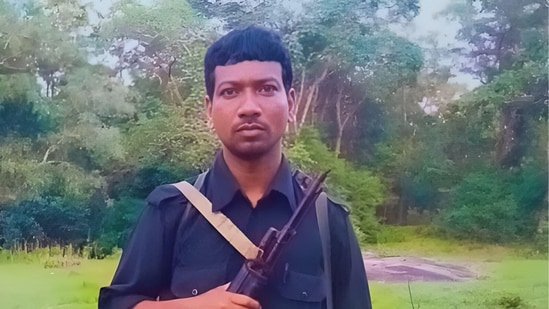
Deep inside these jungles, which was until recently the central guerrilla headquarters of the Maoists, a team of security forces is on a final mission. Accompanied by surrendered senior Maoist commander Papa Rao, they hope to apprehend the final smattering of Maoist fighters and persuade them to return. The team entered the forest last Friday and is expected back by Tuesday afternoon. With less than 48 hours to go, the message is clear: bring back as many as possible — alive if they choose to surrender, dead if they resist.
Over the past year, the insurgency has thinned dramatically. Nineteen of 21 members of the Maoist’s Central Committee have either been killed or have surrendered. Their military commanders and mid-level leadership have been wiped out. According to central forces, the rebels no longer exercise control over any village. Against this backdrop, Union home minister Amit Shah on Monday declared that “India is free of Naxalism” — fulfilling a promise repeatedly articulated by Prime Minister Narendra Modi over the past year.
For residents like Naresh, however, the story is more layered.
Since he was born in April 1980 — around the same time the Maoists were setting up their base in Bastar — Tekalguriam has had little electricity, mobile network or road connectivity, an isolation that was necessary for Maoists because it is next to the Puvarti village, once a key base for the military wing of the CPI(Maoist).
Puvarti was home to top Maoist commanders Madvi Hidma (killed in gunfight on November 18, 2025) and Barse Deva (surrendered on January 2, 2026). It was here that the proscribed party undertook maximum recruitments. On January 30,2024, security forces finally reached Tekalgurium and set up a camp. It was not without cost — Hidma and nearly 400 rebels killed three paramilitary personnel. But the Tekalgurium camp set up that morning paved the way for forces to enter Puvarti and deeper inside the once-impregnable red corridor.
“Taking control of Tekalgurium and Puvarti was a turning point. It was a message to the Maoists that they cannot protect their own fortress. Villagers here had never seen the real government,” said a senior government official.
The official flagged mobile towers — around 5,300 have been installed over the past 12 years in the area — and road infrastructure as a “game changer” that shifted the balance against Maoists
Last week, Naresh and his wife, Sori Sanni, applied for voter identity cards for the first time.
“They took our photographs and details. They said we will soon get voter IDs,” Naresh said. “The Maoists did not allow voting. No official dared to come here. This was Hidma and Barse’s area.”
His father, Sodi Hungma, 66, remembered a different time. “In the 1970s, before the Maoists came, I remember politicians visiting the village with flags,” he recalled. “I wasn’t old enough to vote, but elders would go to nearby towns. Officials would come here asking us to vote. By the time I came of age, the Maoists had taken over. Voting stopped. There were only red flags and posters set up by the Maoists later. If I vote now, it will be the first time in my life.”
Naresh said the Maoists settled disputes, informed them about the world, and ensured they were not troubled by any government official. “When we lived under their rule, it did not feel like we were deprived of anything. They came, issued orders and settled disputes. For us they were the government and the police. It was completely normal to me until the forces came here and I saw the real world,” he said.
But one practice always rankled — the mandatory donation of food every month. “They would come and ask each house to donate about 1kg of rice and other food items. We walked for a day to the weekly town and returned only the following day after getting rice, salt, onion and chillies. And then each house had to donate some of it. It was unfair.”
The Border Roads Organization is now constructing a road to this village from Jagargunda highway which will extend to Puvarti, replacing the make shift tracks built by the forces.
“If Maoism is truly over, I want a concrete house with a toilet,” Naresh said. “I want a tube well, some land to farm freely. Earlier, the Maoists decided how much I could cultivate near my home. Now I want to grow more, earn more—and maybe buy the kind of clothes I see people wearing on YouTube.”
Residents say the familiar sight of armed cadres demanding food or convening village meetings has given way to uniformed personnel conducting medical camps, distributing medicines. Meetings are still held but it is to encourage children to attend schools run by the forces or take medicines. The village has heard of corruption by the government, but hasn’t experienced any glitches.
“We’ve only been receiving…Maybe it will be better under the real government,” said Naresh’s wife, Sanni, who is still learning to use a mobile phone.
But even as the residents of Tekalgurium prepare to step into a new world, they confess they’re anxious about their culture, and the impact of modernity.“The Maoists’ Chetna Natya Manch would perform once or twice a month. The whole village would gather to sing and dance. Through those songs, we spoke about our heroes, our land and our lives around it. Those nights felt like festivals,” said Naresh.
“I will miss that.”


