


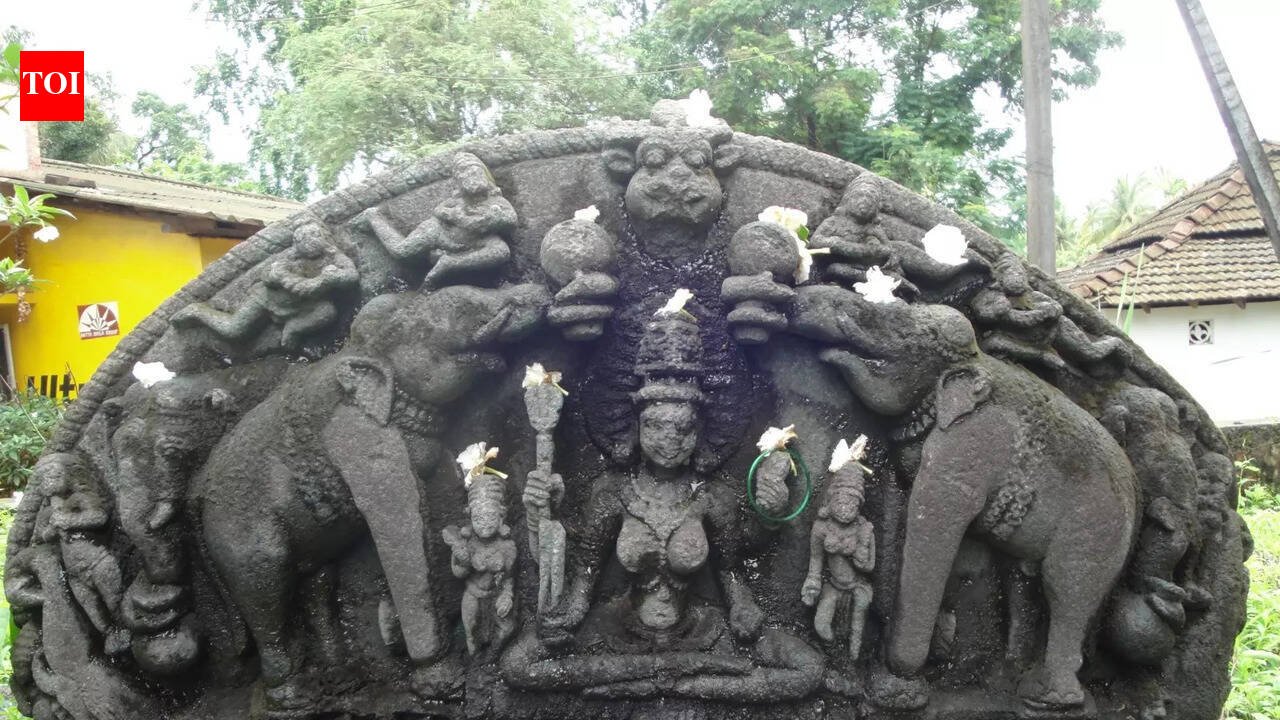
Panaji: A researcher has identified evidence of the worship of a war goddess, Gajagauri, in ancient sculptures excavated in Goa. The deity is believed to be unique to the state, with no record of her worship found elsewhere in the country. Rohit R Phalgaonkar of Sant Sohirobanath Ambiye Government College, Pernem, developed an interest in the goddess after hearing her name invoked during the Musell khel performance still staged in Chandor, Goa’s erstwhile capital.His research led him to a sculpture of Gajagauri discovered by noted historian Fr Heras during an exploration in Goa in 1931. The sculpture is currently housed at the Heras Museum in Mumbai. Presenting a paper at an international conference on Indian tradition, history, culture and society at JNU, New Delhi, earlier this month, Phalgaonkar said the Gajagauri sculptures at the Heras Museum and another at Shiroda have often been mistaken for Gajalaxmi.“Fr Heras also mentions Gajagauri in his books but the distinction was never made why it is a different deity. Gajagauri sculptures depict the goddess sitting on a lion, with weapons in either hands, and she is flanked by one elephant on either side, where the animals are seen in a much more aggressive pose. There is no lotus as seen in Gajalaxmi and instead she holds a sword or a trishul or similar weapons in her hand, transforming her into Gauri,” said Phalgaonkar. He said the presence of Gajagauri worship suggests past skirmishes or warfare in these regions.“The verse where she is invoked during the Musell khel, she is called the leader of 700 legions of the army. While Chandor was the earlier capital of Goa, there are references to mud fortifications in Shiroda, both indicating possible tussle in the region for control. While Gajalaxmi represents prosperity, Gajagauri represents wealth and prosperity that comes from victory in warfare. This goddess’ worship is not found so far anywhere else in the Konkan region or the country,” he said.A third instance of Gajagauri worship was identified in Dharbandora, another border area of Goa, where the sculpture reflects a syncretic form combining features of both Gajagauri and Gajalaxmi.“Interestingly, there are no references to Gajagauri in ancient texts. She appears to be a deity specifically modified to meet the needs of local conditions at the time, just like the regional deity Sateri,” Phalgaonkar said.


