


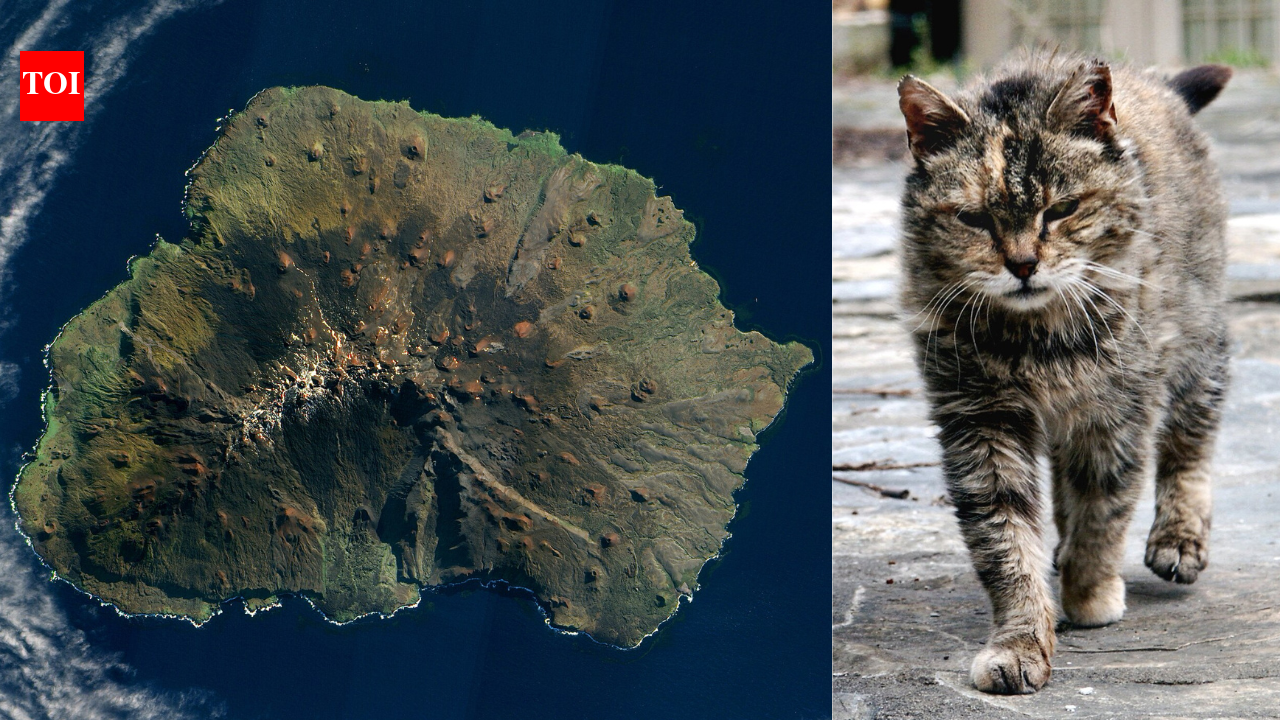
South Africa established a permanent meteorological station on sub-Antarctic Marion Island, a remote volcanic island in the southern Indian Ocean, in 1948. House mice were already present, and cats were brought to the station as a form of mouse control. The story that followed became a documented example of how introducing one non-native species to manage another can produce a new ecological problem. There is a small date discrepancy in the historical record: some later accounts describe five cats arriving in 1948, while the contemporary research record places five cats at the meteorological station in 1949. For factual precision, the evidence is strongest for five cats being present by 1949, with records describing two separate introductions that year. A 1974 paper by G.D. Anderson and P.R. Condy recorded that five cats were at the station in 1949. The cats did not remain confined to the station, and by October 1951, researchers had recorded the first feral cat about 12 kilometers from it. The island’s seabirds, particularly burrow-nesting petrels, became an abundant food source.
Satellite view of Marion Islands | Wikimedia Commons
From five pets to more than 2,000 feral catsThe cat population expanded rapidly over the following decades, and research later published in the New Zealand Journal of Ecology reported that five domestic cats had been introduced in 1949 and that the population was estimated at 2,136 ± 290 animals by 1975. Other research describes the estimate more generally as about 2,000 cats by the 1970s. That growth had serious consequences for Marion Island’s birds. The cats preyed heavily on burrowing petrels and other seabirds that bred on the island.The feral cats were estimated to be killing about 450,000 seabirds annually by the mid-1970s, mostly burrowing petrels. The 2017 Polar Biology paper by Ben J. Dilley, Michael Schramm and Peter G. Ryan notes that the cats had greatly reduced burrowing petrel populations. It also records that some species were apparently extirpated from the island. A later Cambridge University Press study similarly described an estimated annual kill of 450,000 petrels before the cats were eradicated. The figure was an estimate of annual predation, not a count of birds individually observed being killed.Cats were introduced because of the house mice around the meteorological station, but they did not remain a targeted control measure. Their descendants established themselves across the island. Research on the birds’ recovery later showed how heavily the introduced predator had altered Marion Island’s ecological balance. Some burrowing petrel populations had fallen sharply, and the effects persisted long after the cat population itself began to decline.The long effort to remove the catsScientists and conservation authorities eventually began trying to control the feral population. The campaign did not rely on a single method. In 1977, feline panleucopaenia virus was introduced as part of the control effort, reducing the population substantially. Hunting, trapping and later poisoning were also used. The eradication work continued for years because removing the final animals was far more difficult than reducing a large population. The New Zealand Journal of Ecology review records that biological control reduced the estimated population to 615 ± 107 cats by 1982. In 1986, shooting became part of a focused eradication effort, followed by trapping and other methods as the population reached lower densities. The last live cat was shot in January 1991, and the final cat was trapped in July that year. By 2000, after more than nine years without any confirmed sign of cats, researchers concluded that feral cats had been successfully eradicated from Marion Island.A 2017 study comparing petrel burrow densities with surveys from 1979 found that recovery had been slower than expected. House mice remained on the island and continued to affect its ecosystem. The researchers found that the removal of cats had ended one major source of predation, but it had not removed every ecological pressure facing burrow-nesting birds.
House mouse | Wikimedia Commons
The mice are now the island’s next major problemThe original cats were brought to Marion Island to deal with mice. More than seven decades later, invasive house mice remain at the center of the island’s conservation challenge. The current Mouse-Free Marion Project is preparing a large-scale eradication effort. In 2026, the project announced plans for an aerial baiting trial covering about 1,000 hectares in April and May 2027 before a full island-wide operation. The project says the trial will test baiting methods, equipment and logistics under Marion Island’s conditions.The planned operation comes after decades of research into the island’s invasive species. Cats are gone, but the mice they were originally meant to control survived and expanded their ecological impact. Today, Marion Island’s conservation work is focused on avoiding another partial solution: the current project aims to remove the invasive mice without introducing a new predator to replace them.
