


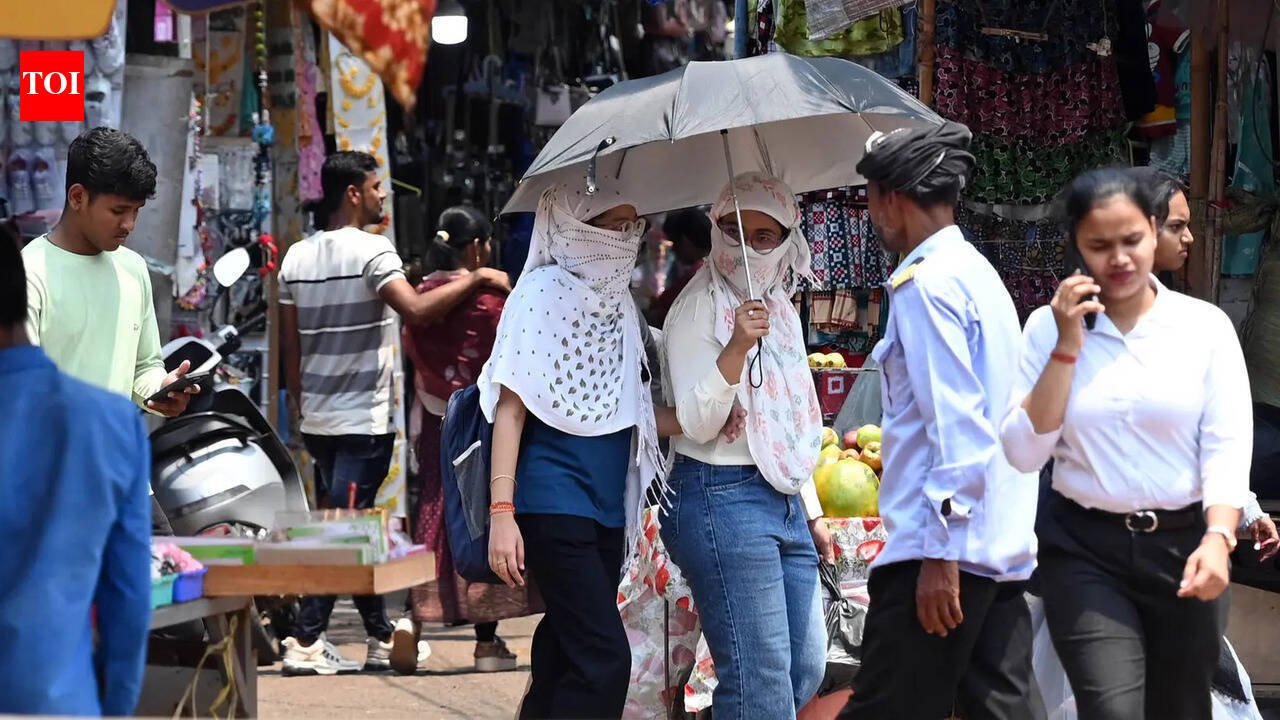
Bhubaneswar: Western Odisha reeled under intense heatwave on Wednesday with Titilagarh emerging as the hottest place at 42°C, as temperatures surged across the state. Bhawanipatna recorded the second-highest maximum temperature of 41.8°C, while eight other locations reporting temperature between 40°C and 41°C.The India Meteorological Department (IMD) forecast a further rise of 2°C to 4°C over the next two days, raising concerns of worsening heat conditions in several districts. The weather office also warned that hot and humid conditions are likely to persist for the next six days in 11 coastal districts, including Balasore, Cuttack and Puri.Heatwave conditions are expected to set in from Friday in Jharsuguda, Sambalpur, Balangir and Bargarh districts and may continue for three days, according to the forecast. Manorama Mohanty, head of the regional IMD centre, said prevailing wind patterns and clear skies were contributing to the sharp rise in temperature. “The wind pattern and clear sky condition will support the rise in mercury and continuation of hot and humid weather in some districts,” she said.The state govt has asked district collectors to stay on alert and take necessary precautionary measures. The special relief commissioner issued an advisory directing district administrations to spread awareness among people about the prevailing weather conditions and possible health risks. Residents in several parts of the state said the heat has already started disrupting life. “By noon, the roads are almost empty. It is difficult to step outside even for a few minutes,” said Ramesh Naik, a shopkeeper in Balangir.In Talcher, homemaker Sasmita Das said the humidity was making conditions worse. “Even inside the house, it feels uncomfortable. Fans are not enough in the afternoon,” she said. Talcher experienced 93% humidity with 40°C.A daily-wage worker in Sambalpur, Pradeep Kisan, said outdoor work was becoming increasingly difficult. “We have to work to earn, but the heat is exhausting. We are trying to finish work early in the morning,” he said. With temperatures expected to climb further, authorities are likely to intensify monitoring and preparedness measures across vulnerable districts.
