









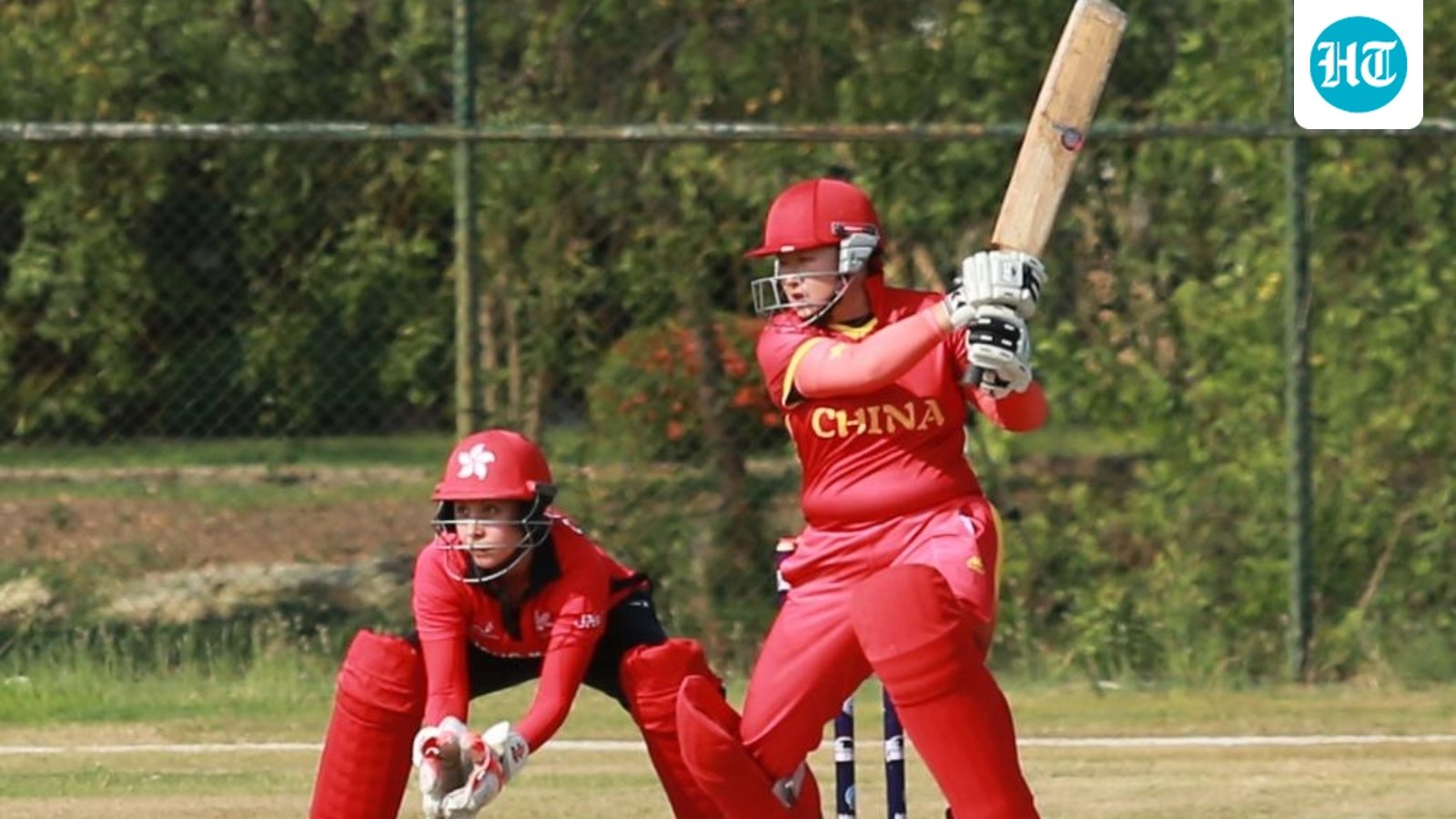
At first glance, China is an improbable frontier for cricket. Their men sit 92nd in the T20I rankings and their women 36th, while cricket remains peripheral in a sporting culture dominated by disciplines with far deeper institutional roots and much larger domestic audiences.
Yet for the International Cricket Council, that very absence is part of the attraction. China is being approached not merely as a place where more players might eventually emerge, but as a vast consumer market in which cricket can attempt something considerably more difficult: create sustained demand where almost none exists today.
The logic begins with an awkward truth about cricket’s prosperity. The sport commands more than a billion followers, but roughly 90 per cent of them are concentrated in South Asia, according to ICC chief executive Sanjog Gupta, leaving a supposedly global product unusually dependent on a narrow commercial geography.
Cricket’s concentration problem
That dependence is clearest in the ICC’s own financial structure. Its Indian media-rights agreement is its largest revenue stream, while revenue from ICC events exceeded $700 million in both 2024 and 2025, underlining how heavily the global game still leans on a relatively small number of lucrative markets. China is not being imagined as a replacement for India, nor is that remotely plausible. The strategic prize is diversification: cultivating audiences that can consume broadcasts and digital content, attract sponsors, and gradually enlarge cricket’s commercial perimeter beyond the territories that have traditionally sustained it.
Seen in that context, the ICC’s expenditure in China is strikingly modest. The governing body has spent around $1.5 million there over five years, a relatively small commitment when set against both the scale of its international event business and the sheer size of China’s sports economy. China’s national sports industry generated a total output of 3.8421 trillion yuan in 2024, while Beijing wants that figure to exceed seven trillion yuan by 2030. Cricket is therefore not trying to create a culture of sports consumption from scratch; it is trying to win a sliver of attention inside an already enormous and increasingly sophisticated sporting marketplace. That changes the meaning of the $1.5 million investment. Rather than resembling an expensive expansion programme, it looks more like a low-cost option on future attention: spend cautiously, test whether curiosity can become a habit, and commit substantially more only if the audience begins to deepen.
Building spectators before players
This is also what distinguishes the present push from cricket’s earlier attempts to establish itself in China. The traditional development model began with schools, coaches, pitches and participation, whereas the digital era allows the ICC to reverse part of that sequence and cultivate spectators before it has produced a mass base of cricketers. The first signals are modest but measurable. Some Women’s T20 World Cup matches have been broadcast in Mandarin, while the final week of the 2026 men’s T20 World Cup generated 4.4 million video views in China, and Gupta has also pointed to encouraging engagement from customised cricket content in markets including China, Indonesia, Brazil and Italy.
Those numbers demand restraint rather than celebration. Video views are not unique viewers, still less committed supporters, and in a country of around 1.4 billion people they amount to an early indicator of curiosity rather than proof of any meaningful breakthrough. The more consequential question is whether occasional discovery can be converted into repeated consumption. International sporting bodies have already demonstrated that aggressive localisation on platforms such as Douyin, Rednote and Weibo can create substantial audiences in China, but cricket’s challenge is turning that reach into affinity strong enough to matter to broadcasters, sponsors and, eventually, rights buyers.
China’s women may provide an important bridge between exposure and identification. The team has climbed 10 places in the rankings over the past two years, and Gupta has stressed that China’s national sides are composed largely of homegrown players rather than being sustained principally by South Asian diaspora communities. That distinction is commercially significant because expatriate participation can sustain a niche, but a mass market generally requires local identification. For cricket to acquire durable value in China, it must eventually generate Chinese players, Chinese stories and recognisable Chinese sporting protagonists around whom an audience can build an emotional attachment.
The physical groundwork is beginning to follow the audience-building effort. A new centre in Taicang has nine pitches, floodlights and seating for 1,500 spectators, while China now has three top-level cricket venues capable of supporting domestic competition, national-team training and potentially international fixtures. The 2028 Los Angeles Olympics provide another valuable shop window, although China itself remains a distant qualification prospect under a six-team-per-gender system heavily shaped by world rankings. Its greater value lies in placing T20 cricket inside the Olympic ecosystem, giving an unfamiliar sport visibility and institutional legitimacy that bilateral tours or isolated development programmes struggle to manufacture.
Gupta’s calculation is deliberately incremental rather than grandiose. If even segments of the population in China and Indonesia begin engaging with cricket, he believes they could help drive the sport’s next phase of expansion and contribute materially to the ICC’s ambition of adding another 500 million fans worldwide.
The ICC, therefore, does not need China to become a cricketing superpower for the experiment to work. It needs a sufficiently large slice of the population to begin caring, watching and returning often enough for broadcasters, sponsors and commercial partners to recognise that attention as something with enduring value. For a sport whose financial abundance has been built on extraordinary depth in relatively few markets, that would represent something far more consequential than another Associate nation climbing the rankings. It would demonstrate that cricket can export not merely matches, tournaments and players, but fandom itself.


