


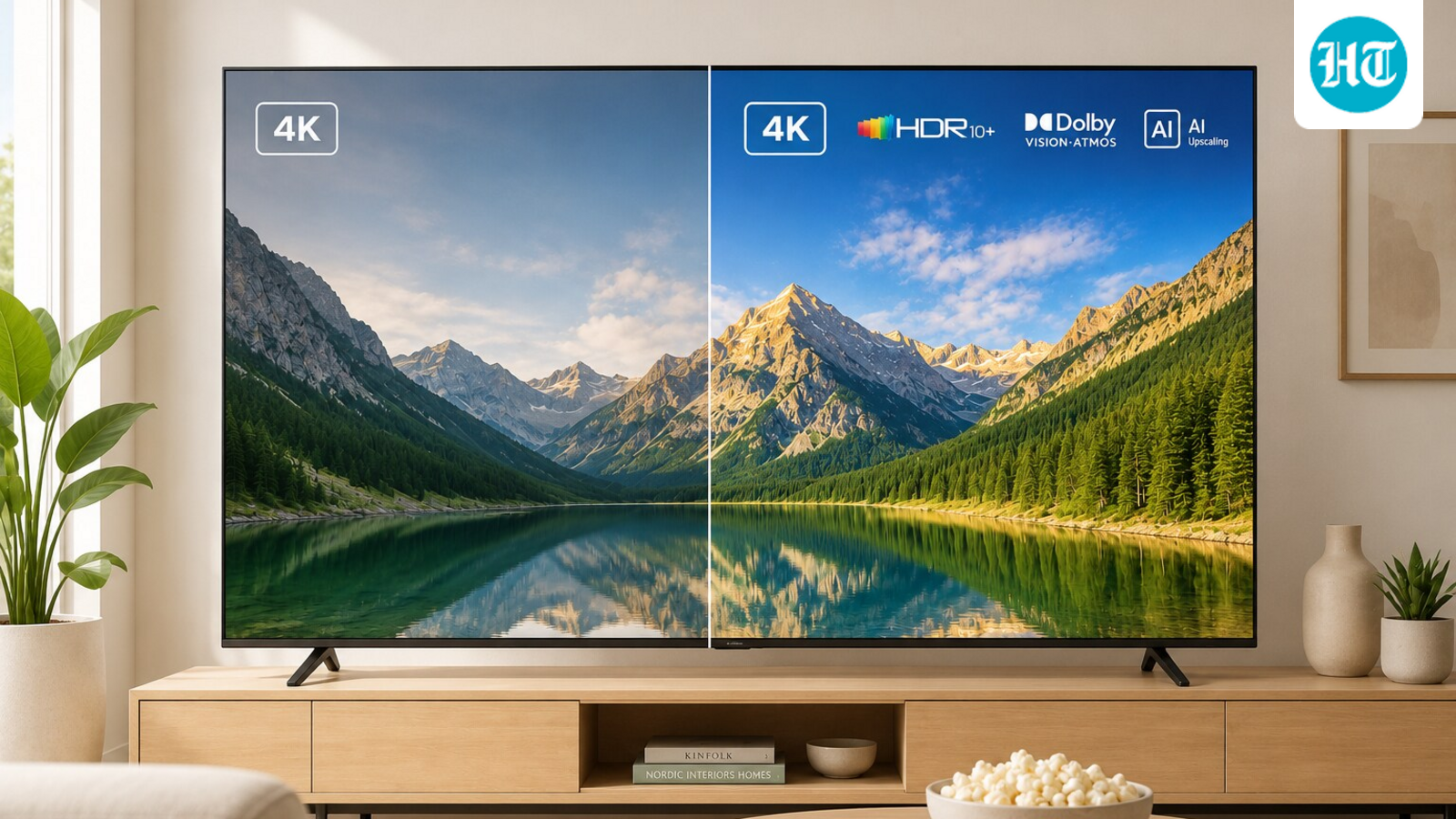
When I started looking at 4K TVs, resolution was one of the first things I checked. A 4K panel sounded like a clear upgrade over a Full HD TV, and for a long time, that was enough to make a TV feel more premium. I do not think that way anymore.
The TV market has changed quite a bit, almost every new TV in the mid-range and premium segments now comes with 4K resolution, so the number of pixels alone does not tell me much about how good the picture will look. What matters more now is what the TV does with those pixels.
That includes the panel technology, image processor, upscaling, brightness, contrast, colour reproduction and refresh rate. And in 2026, AI has become a much bigger part of that equation, with manufacturers pushing AI-powered picture and sound processing across their TV ranges. Samsung, for example, has expanded its Vision AI features across its 4K and higher-resolution TVs this year.
What matters more than the resolution
4K is now the starting point, not the upgrade
The biggest change for me is that 4K no longer feels like a feature that automatically makes one TV better than another. Two 4K TVs can have completely different picture quality.
One could use a basic LED panel with limited brightness and processing, while another could use Mini LED backlighting, better local dimming, a more powerful processor and advanced upscaling. Both are technically 4K TVs, but the viewing experience can be very different.
This is especially important because we do not watch native 4K content all the time. A lot of what we watch is still HD TV channels, YouTube videos, older movies and compressed streaming content. This is where the TV’s processor becomes important.
AI upscaling is becoming more important
This is probably one of the TV features I pay more attention to now. AI upscaling tries to improve lower-resolution content so it looks cleaner and sharper on a 4K screen. Modern processors can analyse scenes and attempt to reconstruct details rather than simply stretching the image across more pixels.
Samsung’s 2026 TVs, for example, use AI-powered upscaling and picture optimisation to improve content that was not originally recorded in 4K. Its Neo QLED 4K models can also analyse scenes and enhance older SD and HD content.
If most of your content is native 4K, the difference may not be as dramatic. But if you watch a mix of TV channels, YouTube and streaming services, good processing can make a noticeable difference.
Mini LED is changing what I expect from LED TVs
Instead of using larger conventional LEDs for the backlight, Mini LED TVs use much smaller LEDs and can control the backlight more precisely. That can improve brightness, contrast and detail in dark scenes.
Samsung’s new Mini LED range in India starts at ₹42,990 and includes screen sizes from 43 inches to 100 inches. The company is also using AI processing for picture optimisation and upscaling in this range.
Mini LED is also becoming more accessible, rather than being limited to extremely expensive flagship TVs. That is one of the reasons I think it is more interesting than simply moving from one 4K TV to another.
And then there is RGB Mini LED, which is one of the bigger TV trends this year. Instead of relying on a conventional LED backlight, the technology uses separate red, green and blue LEDs for more precise colour control. Several major TV manufacturers are bringing this technology to their 2026 line-ups.
Brightness and colour matter
When I compare TVs now, I would rather know how bright the panel gets and how well it handles HDR than simply know that it has a 4K resolution. Brightness can make HDR content look much more impactful, while good contrast helps dark scenes retain detail without looking grey or washed out.
This is one reason newer display technologies such as OLED, Mini LED and RGB Mini LED are getting so much attention. The industry is trying to improve the actual quality of each pixel and the way the TV controls light and colour, rather than simply increasing the resolution.
A higher refresh rate is not just for gamers anymore
Refresh rate is another specification I look at more closely now. A 120Hz or higher refresh rate can make fast-moving content look smoother, particularly sports and gaming. It can also make scrolling and motion feel more fluid.
Samsung’s newer Mini LED TVs, for example, support refresh rates of up to 144Hz on supported models, targeting both gamers and viewers watching fast-paced content.
You do not necessarily need 144Hz if you mostly watch films and TV shows. But if you play games or watch a lot of football and other sports, it can be worth paying attention to.
So what would I check before buying a 4K TV?
My checklist would now start with panel technology and picture processing, followed by brightness, contrast, HDR support and refresh rate. I would also look at how good the TV is at upscaling lower-resolution content because that is what many of us will actually watch every day.
The smart TV platform matters too, especially if you use streaming services regularly. For me, that is the biggest change in how I look at TVs. 4K tells me how many pixels the TV has. It does not tell me how good those pixels will look. And with AI processing, Mini LED and RGB Mini LED becoming increasingly important, I think that distinction is only going to matter more.
Similar articles for you
Upgrade your movie nights with these smart TVs that deliver a true cinema experience at home
Late night streaming feels better with these top 6 bedroom smart TVs
Thinking of upgrading your smart TV this year? These 10 options make sense in 2026
Disclaimer: At Hindustan Times, we help you stay up-to-date with the latest trends and products. Hindustan Times has an affiliate partnership, so we may get a part of the revenue when you make a purchase. We shall not be liable for any claim under applicable laws, including but not limited to the Consumer Protection Act, 2019, with respect to the products. The products listed in this article are in no particular order of priority.
