






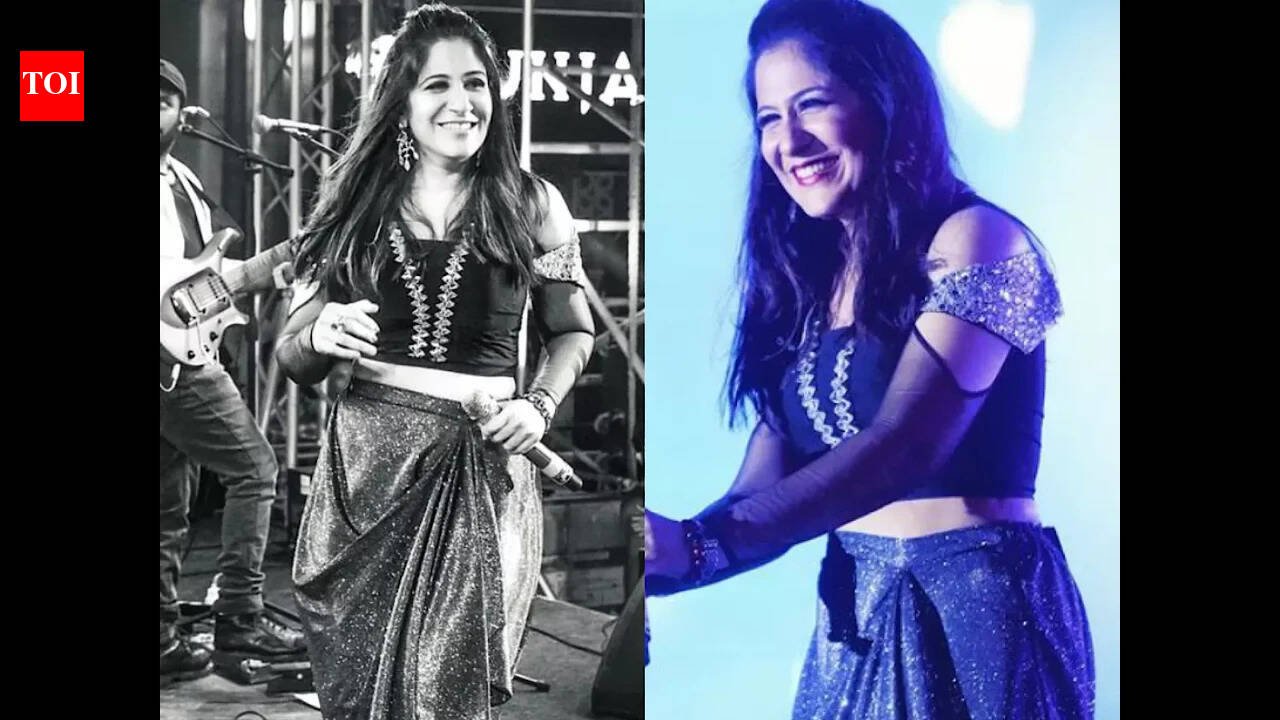
Shweta Mohan’s journey has carried her across many languages and musical worlds. From playback and pop concerts to devotional and classical music, she keeps finding new ways to reach the hearts of her listeners. In a candid conversation with Bangalore Times, she speaks about bringing devotional music to the stage, carving out an identity that shines beyond being Sujatha Mohan’s daughter, and the lessons she has treasured from AR Rahman and Ilaiyaraaja. Excerpts from the chat:‘Every stage I go on, I thank the universe for that platform’Trained in Carnatic classical music, Shweta has been exploring retro music with orchestras alongside playback and pop concerts. More recently, she has been delving deep into devotional and classical music with her group, SVARA. “I am absolutely enjoying this trichotomy. There’s no monotony in my profession,” she says.Talking about her deepest wish, she shares, “I want to transfer my energy onto the stage and pass it on to music lovers who want to be healed through music.”She has no wish to choose between playback and the live stage. “I want to explore everything,” she says. She has also begun composing and releasing her own music, though a busy playback schedule and constant travel mean original songs may come less often. Whether it’s a film, a private album or her own work, she brings the same sincerity to every song. “Every stage I go on, I thank the universe for that platform,” she adds.At a recent Bengaluru concert, she found a new kind of connection with the audience. She shares, “On a devotional stage, people really listen to the song. They feel that devotion through your voice. And your voice carries the whole concert.” The set brought together classical and devotional music, including Bho Shambho, Aigiri Nandini, Vathapi Ganapati and Kalinga Narthana Thillana, alongside a devotional piece blended with Michael Jackson’s Heal the World.‘I didn’t want to be written off as a nepo kid’The daughter of veteran singer Sujatha Mohan, Shweta reveals her journey came with its own pressure. Early in her career, some of her Malayalam songs were mistaken for her mother’s because listeners found similarities in their voices. “People never knew it was a new voice who was singing,” she recalls. Moreover, she did not want her opportunities to be attributed to her mother’s name. “I didn’t want to be written off as a nepo kid,” she says.Yet she has never wanted to distance herself from that association. “I have so much love when they ask about my mother. I know people love my mother more than they love me, especially in Kerala. I love that. And I’m very proud to be born as her daughter.”Television appearances eventually helped audiences connect the voice with her face and name, but she has never felt that a singer must be seen to be known. “I think the quality will speak for itself. If people are touched by your singing, they will go, dive deep and look into who the singer is,” she says.‘AR Rahman sir is my godfather’Shweta’s association with AR Rahman goes back to when she was 11 and first sang in a studio for Bombay. She later sang in Indira, and considers starting out in his studio a privilege. “I’m very proud of that and I feel blessed to have started off in that very studio,” she says.Over the years, the association has blossomed into mentorship. “To me, Rahman sir is a mentor more than a composer. I see him as my godfather,” she shares. Having toured and performed with him, she says his appreciation carries enormous weight. “His advice always recharges me and fills me with fresh energy. When he says, ‘Hey, I heard that song. I’m glad that you’re doing stuff like this,’ it turns my day around.” ‘Ilaiyaraaja is an unparalleled genius’Over the last couple of years, Shweta has had the privilege of sharing the stage with Ilaiyaraaja at several concerts. Calling him an “unparalleled genius,” she says, “I think Ilaiyaraaja’s creations will be remembered 200 to 300 years from now, just like how we remember Mozart.”Shedding light on one of the biggest lessons she learnt from him, she says, “Ilaiyaraaja always taught me to pursue excellence. He told me, ‘Don’t compromise on your music. There could be a million things happening around you, but you give what you think is good for you.’” That lesson shapes the advice she offers young artistes: “Don’t pursue trends or views or instant fame. Don’t pursue instant gratification, but pursue excellence and everything else will follow.”‘AI cannot replicate an artiste’s energy and emotion’For Shweta, the biggest difference between a human singer and AI is emotion. “When I sing, the audience receives the energy that comes from my soul. It’s what translates into people’s ears and into their hearts.” She believes AI cannot replicate that “energy and emotion.”During a recent recording session, she heard a voice that was technically flawless, with beautiful phrasing, breath control and pitch. When she asked who had sung it, everyone in the studio laughed and let her in on the secret: it was an AI-generated voice. “I freaked out. I was like, ‘Oh my God, such a perfect rendition,’” she recalls.Later, when she recorded the song herself, she couldn’t match that precision. “I don’t have the perfection or breath control that AI has. But the emotion that I lend to the lyrics, no AI could match that,” she says. ‘I really admire Dhanush as an actor and I’m happy to sing for his movies’Around 10 to 12 of Shweta’s biggest hits have come from Dhanush’s films. Talking about their association, she says it grew out of mutual appreciation. “He likes my voice and gives me good songs in his movies. I’m very happy to sing for his movies because I really admire him as an actor,” she says. Shweta adds that audiences look forward to the pairing in films, which makes it more special for her.


