




Need extra funds for your next purchase?
Loan up to ₹5 Lakhs
Starting at 11% p.a.*
Some days I have a wardrobe full of clothes and absolutely nothing to wear.
I have stood in front of my cupboard with a perfectly good pair of trousers in my hand and wondered what on earth I am supposed to wear with them. I have bought a top I loved in the store and then struggled to style it once I got home. And, like most people, I have occasionally convinced myself that the solution is to buy something new when what I actually needed was a better outfit idea.
These days, I sometimes ask AI instead.
I use it for outfit pairings, styling inspiration, colour combinations and, increasingly, to figure out whether I actually need to buy something or can create the look with what I already own.
It sounds slightly futuristic, but AI has become an unexpectedly useful addition to my fashion routine.
I ask AI what to wear with clothes I already own
One of my favourite ways to use AI is also one of the simplest.
I’ll describe a piece I want to wear and ask for different ways to style it. Sometimes I’ll mention the occasion too: work, dinner, a casual day out or a holiday, because the same pair of trousers can look completely different depending on what you wear with them.
What I like about this is that I’m not necessarily looking for one “perfect” outfit. I’m looking for possibilities.
A pair of navy trousers might suggest a white shirt and loafers, but AI may also make me consider a fitted T-shirt, a belt and kitten heels or a more relaxed combination with sneakers. Some suggestions work for me, some don’t. But even the ones I reject can make me look at my wardrobe differently.
It is essentially a second opinion when my styling brain has stopped working.
I use AI for fashion inspiration, too
Instagram and Pinterest are still my go-to places when I want to see what people are actually wearing. But AI is useful when I have a very specific idea in my head and can’t quite put it together.
I can say I want an outfit that feels polished but not corporate, feminine but not overly dressy, or comfortable enough for a long day without looking like I’ve made no effort.
Then I can keep refining it.
Too formal? Change the shoes.
Too casual? Add structure.
Don’t want heels? Give me a flat-shoe option.
That back-and-forth is what makes AI particularly interesting as a styling tool. Instead of scrolling through hundreds of outfits and hoping I find something close to what I imagined, I can start with the clothes, colours or aesthetic I already have in mind.
Sometimes I send AI a picture of my outfit
This has probably been the most useful part.
When I can’t figure out why an outfit isn’t working, I can upload a photograph and ask for suggestions. Maybe the proportions feel slightly off, perhaps the shoes are too heavy for the outfit or the look needs a different bag.
I don’t blindly follow the advice. Fashion is subjective, and AI doesn’t know how an outfit actually feels to wear.
But it can point out possibilities I hadn’t considered.
Sometimes the answer is as simple as changing the belt or swapping a handbag. Other times, I realise that I don’t actually need another item at all, I just needed to style the pieces I already had differently.
And that has changed the way I shop.
AI has made me think twice before buying something
This is where AI and fashion shopping become particularly useful.
Before, I might see a handbag or pair of shoes I liked and immediately think about whether I could afford it. Now I am more likely to ask a different question: How many outfits can I actually wear this with?
I can describe something I’m considering buying and ask for different ways to style it with pieces I already own.
If I am considering a neutral handbag, for example, I can think about whether it will work with my workwear, dresses, jeans and Indian outfits. If I’m looking at a pair of shoes, I can ask whether they will work with trousers as well as skirts and dresses.
That doesn’t mean AI should make the purchasing decision for me. But it helps turn an impulse purchase into a more considered one.
And for fashion shopping, that distinction matters.
Sometimes AI tells me not to shop at all
This might be my favourite part.
We are constantly being shown new clothes, new trends and new “must-have” pieces. It is very easy to convince yourself that your wardrobe needs another item when what you really need is a new way to wear something you already own.
AI can help with that.
I can ask for five different outfits using one dress or find ways to wear a shirt I have barely touched. I can ask what accessories would change the look or which shoes would make it feel more casual.
Sometimes, after doing that, I realise the thing I wanted to buy isn’t actually necessary.
Other times, it highlights a genuine gap in my wardrobe. If the same styling suggestions repeatedly require a particular type of shoe, belt or jacket that I don’t own, I have a much better idea of what would actually be useful to buy.
That is a far more sensible way to shop than simply adding whatever happens to be trending to my cart.
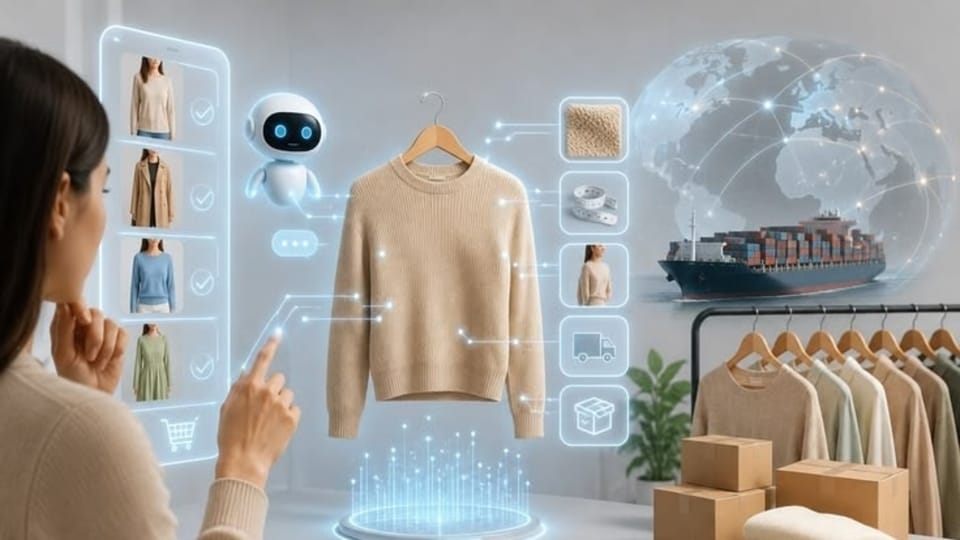
This is where AI could change fashion shopping
The fashion industry is already using AI for everything from product recommendations and visual search to demand forecasting and personalisation.
For consumers, the interesting possibility is a shopping experience that understands not just what we are searching for, but what we already own and how we dress.
Imagine telling an AI stylist that you have three pairs of trousers, two work dresses, a collection of white shirts and too many black bags, and asking what your wardrobe actually needs.
The answer might not be another dress.
It might be a pair of shoes that works with six outfits, a belt that changes the silhouette of your existing dresses or a lightweight jacket that makes several summer pieces wearable in cooler weather.
That could make fashion shopping more useful and potentially less wasteful, because the focus shifts from constantly adding clothes to getting more out of what we already have.
But I don’t want AI to decide my personal style
For all the ways I use it, there is one thing I don’t want AI to do: take over my taste.
An algorithm can tell me that a particular colour combination is flattering or that a certain shoe would balance an outfit. It cannot tell me why I love a particular dress or why I feel more like myself in one outfit than another.
And I don’t think personal style is supposed to be that predictable.
Sometimes I want to wear something that doesn’t make conventional styling sense. Sometimes I will ignore the “better” shoe because I like the other one more. Sometimes the outfit I feel best in isn’t the one an algorithm would have chosen.
That matters.
For me, AI works best as a styling sounding board. It gives me options, challenges my first instinct, and occasionally introduces me to a combination I would never have thought of.
The final decision is still mine.
So, has AI changed the way I dress?
A little, yes.
It hasn’t transformed my wardrobe or suddenly made me an expert stylist. What it has done is make me more experimental with the clothes I already own.
I use it when I am stuck, when I need inspiration or when I want a second opinion before buying something. And increasingly, I use it to answer a question I probably should have asked myself much earlier: Do I really need this, or do I just need to style what I already have differently?
That, to me, is where AI’s role in fashion gets genuinely interesting.
The future of fashion may not simply be about AI telling us what to buy. It could be about helping us understand what to buy less of, what to wear more often and how to make our existing wardrobes work harder.
And if an algorithm can save me from standing in front of my wardrobe at 8.30 am wondering what to wear, I’m certainly not complaining.
Similar stories for you:
Tried and Tested: Are Terra Luna’s linen staples worth the hype and the price?
Stop slipping on court: 8 Indoor sports shoes to play your favourite sport in style
Disclaimer: At Hindustan Times, we help you stay up-to-date with the latest trends and products. Hindustan Times has an affiliate partnership, so we may get a part of the revenue when you make a purchase. We shall not be liable for any claim under applicable laws, including but not limited to the Consumer Protection Act, 2019, with respect to the products. The products listed in this article are in no particular order of priority.
