



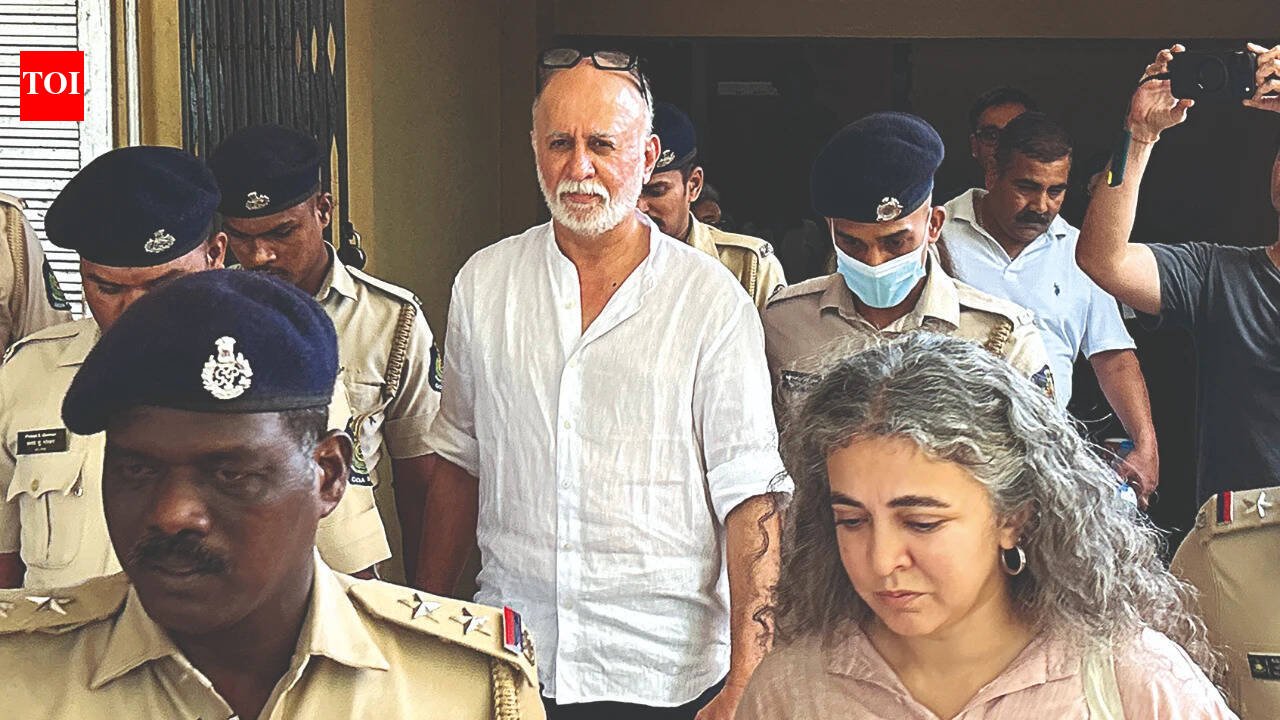
PANAJI: Former Tehelka founder-editor Tarun Tejpal, sentenced to 10 years’ imprisonment by the Bombay HC last month for raping a junior colleague in a hotel lift in 2013, surrendered before a court in Mapusa, Goa, on Monday.Tejpal had appealed against the order in the Supreme Court, which directed him to surrender within two weeks. The high court on Aug 6 overturned Tejpal’s acquittal in the case by a lower court in 2021 and pronounced him guilty. His advocate sought a lenient sentence on the grounds that he is a senior citizen today, aged 62, and that the case is 13 years old.Founder and former Tehelka editor Tarun Tejpal himself addressed a division bench of Justices Neela Gokhale and Amit Jamsandekar, claiming he is a “political victim”.Bombay high court, in its judgment, tore into the lower court verdict, particularly the manner in which it permitted conduct of the trial, ignoring binding Supreme Court guidelines on assessing sexual assault evidence.“The appreciation of evidence by the trial court is not only unreasonable but perverse. The conclusions arrived at by the trial court are untenable and, in the established facts and circumstances of the case, the view expressed by it is not a possible view,” the high court bench held.“Rather than evaluating the sterling case that was presented by the prosecution with the requisite judicial sobriety, the trial court resorted to hyper-technicalities” and “unjustifiably granted the benefit of doubt to the respondent where none reasonably existed”, it further stated.High court observed that the trial court “permitted an invasive, humiliating cross-examination into the victim’s past sexual history, moral views and personal WhatsApp messages”, despite statutory provisions prohibiting such questioning.It added that the trial court was “influenced by extraneous, inadmissible material and testimony” and used it “to censure her character and discredit her evidence”.The high court bench held that the lower court relied on stereotypical assumptions about how an “ideal” survivor should behave. It wrongly drew adverse inferences from the absence of visible injuries, the survivor’s inability to access a 7-year-old email account, her failure to physically resist in a particular manner and “her smiling demeanour during subsequent work events”.The trial court further erred in observing that there was no whisper of admission of sexual assault or any of its attributes in Tejpal’s apology mails sent to the survivor, the bench said.“The apology emails, in fact, clearly relate to an ‘encounter’, ‘sexual liaison’ and ‘furtive acts’, in respect of which the respondent issued two apologies — one formal and the other personal. Without any substantive material, the trial court has believed the apologies to be given under pressure,” the bench said, adding that the trial court misapplied legal principles and misread key evidence to favour the defence.
