



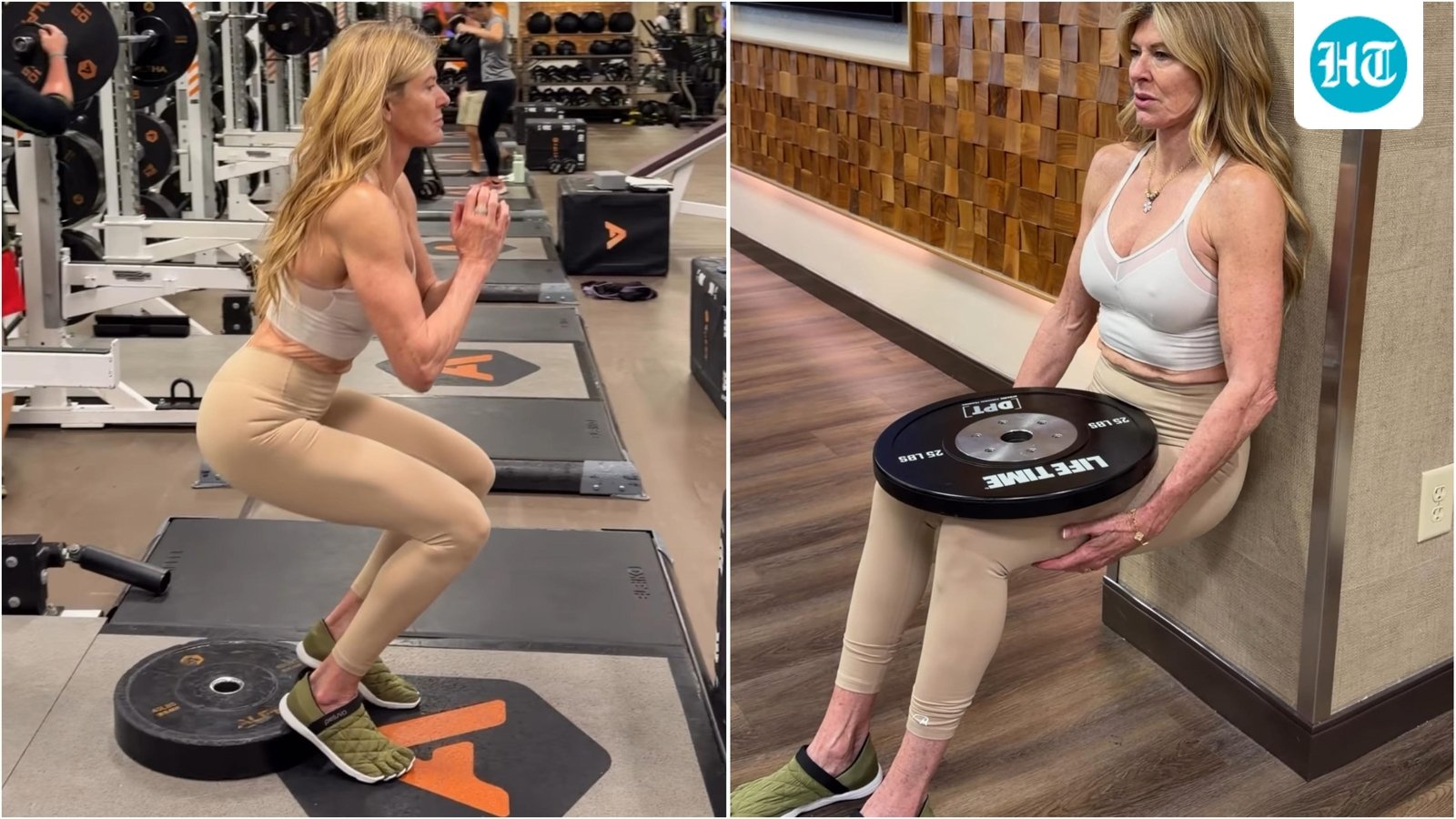
Knee pain can become more common with age, but staying active and strengthening the muscles around the knee can help support mobility. Carrie Lynn Sisson, a 70-year-old fitness content creator and longevity advocate, shares in her June 11 Instagram post four exercises she incorporates into her routine to keep her knees strong and mobile. (Also read: Think 8 hours of sleep is enough? Neurologist busts brain health myths on sleep, stress, alcohol and more )
1. Knee-over-toe squats
Carrie says people shouldn’t automatically avoid letting their knees travel over their toes during squats, as long as the movement feels comfortable and controlled.
“Avoiding this range is what makes knees fragile! Go as deep as feels good and hold onto a counter if you need to,” she says. For beginners or those working on balance, holding onto a stable counter or support can make the movement easier to control.
2. Tibialis raises
Tibialis raises target the tibialis anterior, the muscle at the front of the shin. Carrie says strengthening this often-overlooked muscle can help support everyday movement.
“The muscle on the front of your shin is the most undertrained muscle in your body, and it absorbs impact with every single step!” she says.
The exercise can be performed by standing with your back against a wall or another stable surface, keeping the heels on the floor and lifting the toes and forefoot upward before lowering them back down.
3. Step-downs
Step-downs focus on controlled movement and lower-body strength, particularly when lowering the body from a step.
“It’s not the stairs that hurt but the lack of control on the way down!” Carrie says. Her method is simple: “Stand on a step, lower one heel slowly to the floor, tap, come back up.”
The emphasis is on moving slowly and maintaining control rather than rushing through the repetitions.
4. Weighted wall sit
Wall sits are another exercise Carrie recommends for strengthening the quadriceps, which play an important role in supporting knee movement. “Your quads are your knees’ best bodyguards! The stronger they are, the less your knees have to complain,” she says.
Carrie recommends starting with 20–30 seconds and gradually increasing the duration as strength improves.
For older adults or anyone with existing knee pain, injury or balance concerns, exercises should be adapted to individual ability and performed with appropriate support or professional guidance.
Note to readers: This article is for informational purposes only and not a substitute for professional medical advice. Always seek the advice of your doctor with any questions about a medical condition.
This report is based on user-generated content from social media. HT.com has not independently verified the claims and does not endorse them.
