



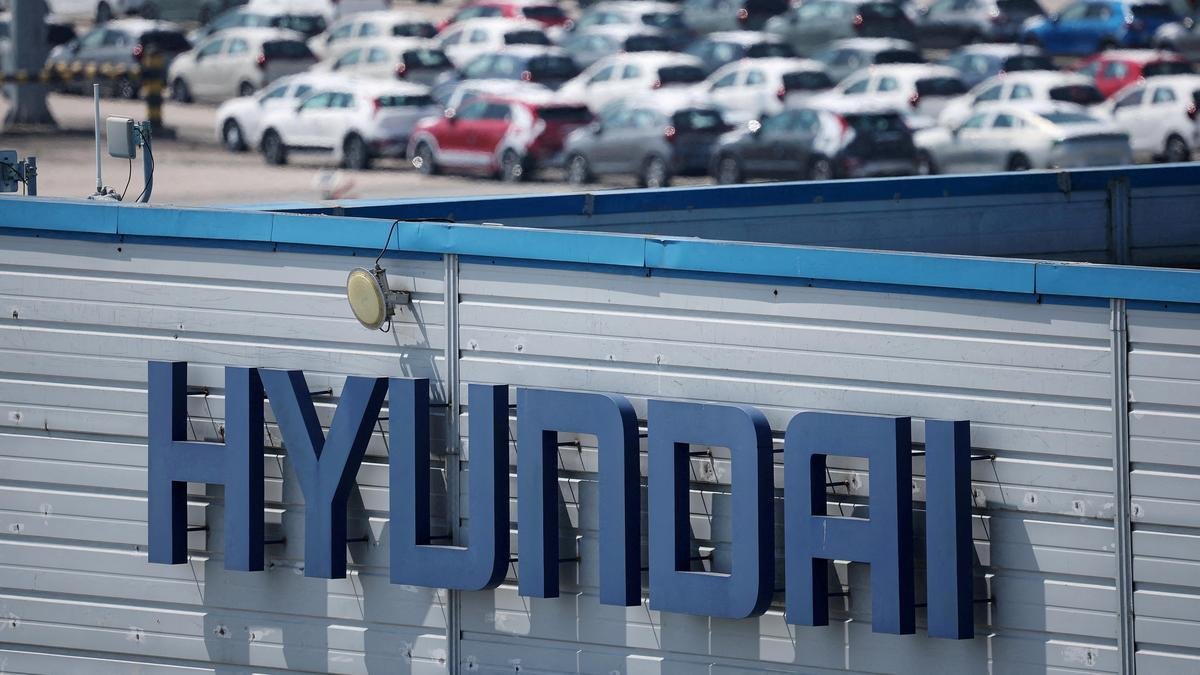
Hyundai Motor is pictured at Pyeongtaek port in Pyeongtaek. Image used for representation purpose only. File
| Photo Credit: Reuters
Hyundai Motor said on Friday (April 3, 2026) that exports to Europe and North Africa, which typically transit through the West Asia, were being disrupted by the conflict in the region, underscoring growing strains on global supply chains.
The disruption highlights how the conflict is choking key shipping routes, driving up logistics costs, delaying deliveries and adding pressure on the automaker and its suppliers.
Hyundai Motor, the world’s third-biggest automaker by sales with its affiliate Kia Corp, warned that even if the Iran war ended soon the impact would linger. Kim Dong-jo, a senior vice president at Hyundai Motor’s Global Policy Office, said rebuilding supply chains would take time.
“Even if the conflict ends, it will take a considerable amount of time to rebuild and restore existing supply chains,” said Mr. Kim, who was speaking at Pyeongtaek-Dangjin Port, southwest of the capital Seoul, where government officials, logistics firms and automakers met to assess the impact of the war.
The meeting took place at the port where cars were lined up on the wharf to be shipped on a giant vehicle carrier, set to carry about 4,900 vehicles and bound for the U.S. west coast.
Mr. Kim said rising logistics costs and raw material constraints linked to the conflict were also pressuring parts suppliers and production, adding that Hyundai was working with suppliers and the government to minimise disruption.
Hyundai Motor Group’s logistics unit, Hyundai Glovis , said it was currently unable to access some West Asia routes, forcing it to temporarily store cargo at alternative locations until conditions stabilise.
The company said that while routes to North America’s west and east coasts have not been significantly affected so far, restricted access to the Middle East and higher fuel costs were hampering operations and efficiency.
South Korea’s Trade Minister Yeo Han-koo told the gathering that some shipments were being diverted to intermediate hubs such as Sri Lanka, where they are being held while companies reassess when transport can resume.
Last month, Reuters reported that some used car exports from Japan were unable to enter Sri Lanka as ports became congested with cargo diverted from Dubai amid the West Asia conflict.
South Korea’s exports in March posted their strongest growth in nearly four decades, but shipments to the West Asia fell 49%. Auto exports were little changed, as supply disruptions offset strong demand for environmentally friendly vehicles.
Hyundai Motor said on Thursday (April 2, 2026) it sold 358,759 vehicles globally in March, down 2.3% from a year earlier, with domestic sales falling 2.0% and overseas sales declining 2.4%.
Shares of Hyundai Motor and Hyundai Glovis closed down 1.2% and 0.7%, respectively, on Friday (April 3, 2026) versus benchmark KOSPI’s 2.7% rise.
Published – April 03, 2026 02:07 pm IST


