



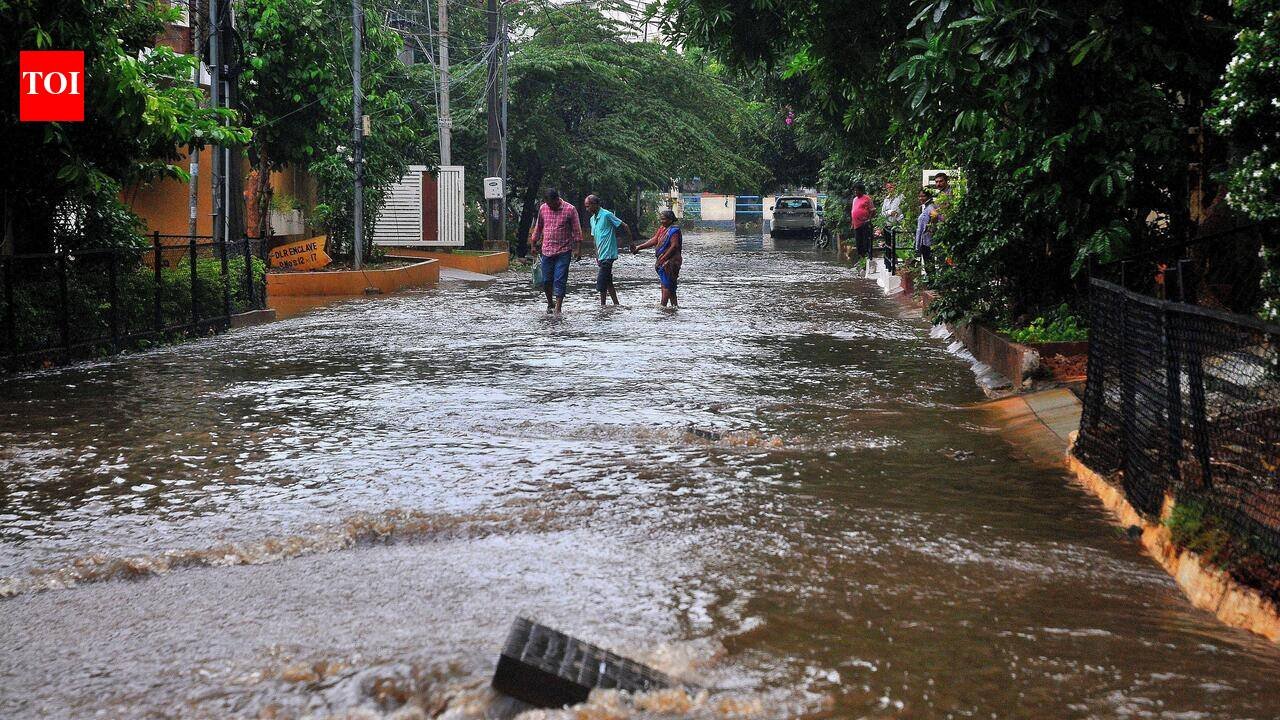
Hyderabad: With groundwater levels plunging beyond 100 feet in several parts of the city and daily tanker demand crossing 15,000, Hyderabad can no longer afford to depend on deeper borewells to quench its growing thirst. Experts say the city must shift from extracting more water to capturing every drop of the 800–900 mm of rainfall it receives annually.Ranked as India’s worst-affected metropolitan city for groundwater depletion, ahead of New Delhi and Mumbai, Hyderabad sees millions of litres of rainwater flow into drains every monsoon, only to spend crores on water tankers and drill deeper borewells during summer. In the last five months alone, residents have spent over Rs 50 crore on water tankersExperts warn that if Hyderabad is serious about becoming a global city, water security must become as important as roads, flyovers and skyscrapers. The way forward, they say, lies in a three-pronged strategy: recharge groundwater, recycle treated wastewater and reserve water exclusively for drinking, while meeting non-potable needs through recycled water. This shift, they argue, is essential to building a climate-resilient and water-secure Hyderabad.RWH top priorityExperts say the priority is to make rainwater harvesting (RWH) effective rather than merely mandatory on paper. While the Water, Land and Trees Act (WALTA) of 2002 requires rainwater harvesting structures in all residential, commercial, and institutional buildings meeting the minimum area criteria of 200 sq.mts, hardly 15% of the city is equipped with rainwater harvesting recharge pits, leaving the vast majority without such systems. “Making RWH universal and functional is the single most effective solution to reverse this trend. Simply constructing recharge pits is not enough; they need periodic desilting, cleaning and scientific design based on local soil and groundwater conditions. There is also a need to revive the traditional network of lakes, feeder channels and natural water bodies, which historically acted as giant recharge zones,” said KM Lakshmana Rao, retired civil engineer and an expert in disaster management.Urban planners have suggested integrating rainwater harvesting into all new infrastructure projects, including roads, parks, metro stations, flyovers and public buildings. Roadside recharge trenches and rain gardens can allow rainwater to seep into the ground rather than being rapidly drained away, they said.Focus on greywaterEqually important is the large-scale reuse of treated wastewater. Hyderabad generates nearly 2,000 MLD of sewage every day, much of which can be treated and supplied for construction, industrial processes, landscaping, lake rejuvenation and other non-potable purposes. Experts have stressed the need to treat 100% of the city’s sewage and significantly increase the reuse of treated wastewater to reduce dependence on drinking water sources. “HMWSSB supplies around 580-600 MGD of drinking water across the city. Of this, nearly 30-40% can be reclaimed as treated wastewater and effectively utilised for non-potable purposes,” said B Venkateswara Rao, retired professor, Centre for Water Resources, JNTUH.Experts also emphasised the need for long-term water security, urging the govt to maintain a strategic reserve of at least 50 TMC of water in reservoirs and release it only during severe drought-like conditions or emergencies. Public participation is equally important. Experts believe resident welfare associations, gated communities and industries should treat rainwater as a valuable local resource rather than a seasonal nuisance. Regular audits of rainwater harvesting systems, incentives for well-maintained structures and stricter enforcement against non-compliance could significantly improve groundwater recharge across the city. As part of efforts to increase treated water utilisation, HMWSSB is promoting the use of recycled water by identifying major government and private establishments, including educational institutions, stadiums, prisons, large gated communities and private sewage treatment plants (STPs). However, only 2% of treated water is being used in the city.Self-reliant apartmentsThe benefits are already evident in several apartment complexes across the city. Communities that invested in scientifically designed recharge pits, injection wells and rooftop rainwater harvesting systems have managed to sustain their borewells even during peak summer, substantially reducing their dependence on water tankers.Apartment in Manikonda goes tanker-free: At a time when thousands of apartments, especially in the western corridor, are increasingly dependent on water tankers to meet their daily needs, Anuhar Purple Tunes in Manikonda has emerged as a compelling example of how effective rainwater harvesting can transform urban water security. By investing in a rainwater harvesting system, the 20-flat residential community has eliminated its dependence on tanker water this summer. Last year, the residents spent nearly Rs 90,000 on water tankers, requiring around 90 tankers during the summer months. In May alone, the apartment relied on tanker supplies almost every day as groundwater levels had dropped sharply.This year, however, the community has not used a single water tanker. The rainwater harvesting system has significantly improving groundwater recharge, ensuring adequate water availability. “The benefits have extended beyond savings on tanker expenses. We have also witnessed a reduction in electricity bills as groundwater levels recovered. During the previous summer, the apartment spent nearly Rs 20,000 a month on electricity to pump water from deep borewells operating under low pressure. This year, monthly power bills have come down to around Rs 13,000, as improved groundwater levels allow pumps to fill overhead tanks and sumps in less than an hour,” said M Karunakar Reddy, resident of Anuhar Purple Tunes. The apartment also diverted rainwater from all rooftop drainage pipes into a centralised harvesting system, allowing rainwater to percolate into the ground and recharge the borewell.Beverly Springs bets on RWS: Beverly Springs apartment in Beverly Hills, Madhapur, has also adopted an extensive rainwater harvesting system. Last summer, the apartment spent nearly Rs 1 lakh on tanker water to meet its daily requirements. It has now constructed a scientifically designed rainwater harvesting pit and an injection borewell within the premises. Rainwater from the rooftops has been connected to a centralised harvesting network, allowing it to recharge groundwater instead of flowing into stormwater drains. “The project is expected to improve groundwater levels, enhance borewell recharge capacity and substantially reduce the apartment’s dependence on tanker water by the next summer. We believe the initiative will not only reduce recurring expenditure on tanker water but also strengthen long-term water security while contributing to groundwater conservation,” said Prakash Reddy, a resident of Beverly Springs.


