


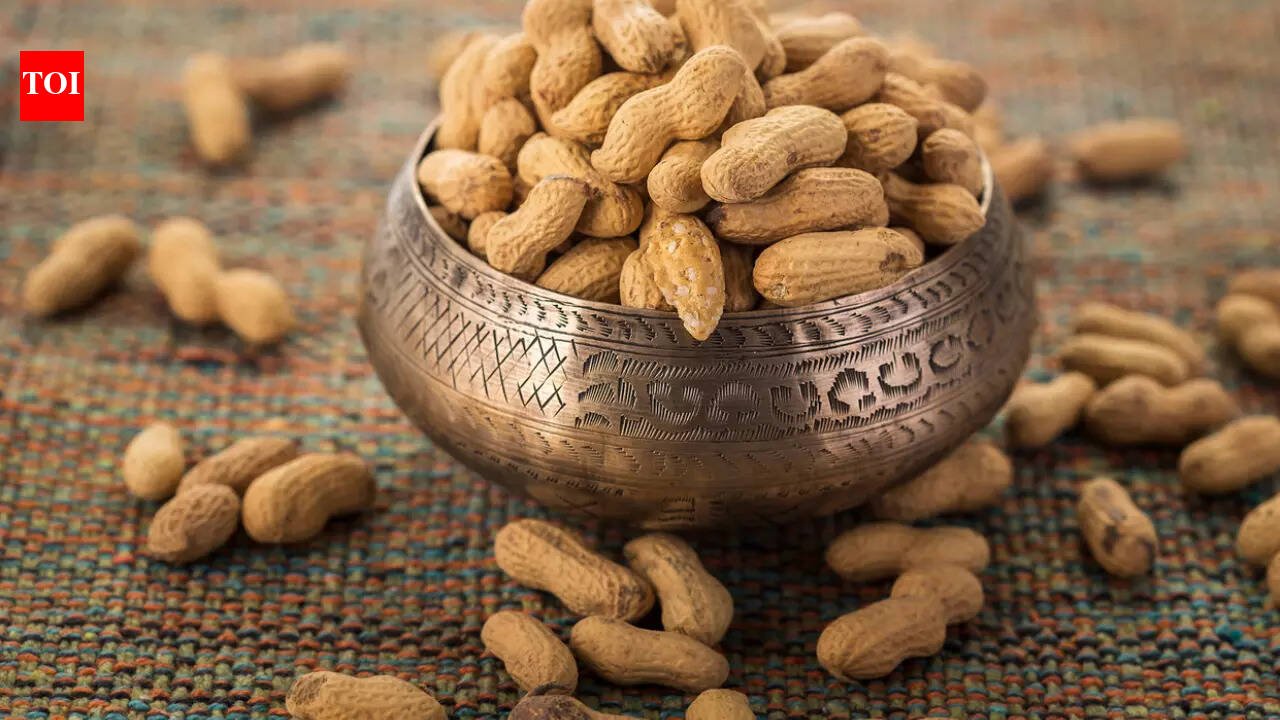
HYDERABAD: Scientists from the Hyderabad-based International Crops Research Institute for the Semi-Arid Tropics (ICRISAT) and collaborating institutions have identified genetic markers linked to iron, zinc and protein content in groundnut, paving the way for the development of more nutritious varieties of the crop.The findings, published in Scientific Reports, are based on whole-genome sequencing and genome-wide association studies of diverse groundnut lines. Researchers discovered significant variation in kernel iron, zinc and protein levels and identified key genomic regions associated with these nutritional traits.The study, titled “whole genome sequencing-based multi-locus association mapping for kernel iron, zinc and protein content in groundnut,” examined 184 diverse groundnut lines. By combining whole-genome re-sequencing with nutritional data collected across multiple growing seasons, researchers were able to pinpoint genetic factors controlling nutrient accumulation in groundnut kernels.
The research involved scientists from ICRISAT’s Center for Pre-Breeding Research and Center of Excellence in Genomics & Systems Biology in Hyderabad, SV Agricultural College under Acharya NG Ranga Agricultural University in Tirupati, the University of Agricultural Sciences in Dharwad, and Murdoch University’s Centre for Crop and Food Innovation and WA State Agricultural Biotechnology Centre in Australia.The study addresses the global challenge of “hidden hunger,” a condition caused by deficiencies of essential micronutrients that affects nearly three billion people worldwide. Iron and zinc deficiencies remain among the most widespread nutritional problems, particularly in developing countries.Groundnut (Arachis hypogaea L.), a nutrient-rich legume widely consumed across the world, is already used in therapeutic foods designed for malnourished children. Researchers aimed to identify genomic regions and candidate genes involved in maintaining iron, zinc and protein levels in groundnut kernels to support the development of biofortified varieties.Analysis across growing seasons revealed substantial variation among the 184 lines. Kernel iron content ranged from 7.6 to 42.8 parts per million (ppm), zinc content from 10.9 to 62.4 ppm, and protein content from 12.7% to 33.6%.Genome-wide association analysis identified 15 significant marker-trait associations from pooled seasonal data and another 44 associations from individual-season datasets. Researchers also discovered genomic “hotspots” on chromosomes Ah03, Ah05, Ah17 and Ah19, where genes linked to nutritional traits were concentrated.Among the candidate genes identified were MYB transcription factors, zinc finger proteins, RING finger proteins and NAC domain proteins. These genes play important roles in nutrient homeostasis by regulating the absorption, transport, storage and maintenance of minerals within plants. Gene expression studies in seeds and roots further provided insights into the biological mechanisms that influence nutritional quality in groundnut.To facilitate practical breeding applications, the researchers developed nine Kompetitive Allele Specific PCR (KASP) markers from the identified genomic associations. Three markers—snpAH00636, snpAH00641 and snpAH00644—were successfully validated and could be used in marker-assisted breeding programmes.These markers enable breeders to identify plants carrying favourable nutrient-related genetic variants at an early stage, reducing the need for repeated chemical analyses of harvested kernels and speeding up the selection process.The study also identified 14 superior haplotypes, or groups of inherited DNA variants associated with enhanced nutritional traits. These included nine haplotypes linked to higher iron content, three associated with zinc, and two related to protein levels. Superior haplotypes were found mainly in Spanish and Valencia Bunch groundnut types, while inferior haplotypes were more common in Virginia Bunch and Runner types.Additionally, three groundnut accessions—ICG 14118, ICG 11249 and ICG 9507—were identified as possessing high levels of iron, zinc and protein. These lines could serve as valuable donor parents in breeding programmes focused on improving nutritional quality.Researchers said the combination of marker-trait associations, validated KASP markers, superior haplotypes and high-nutrient accessions provides a strong molecular foundation for developing biofortified groundnut varieties. Such varieties could help improve dietary intake of essential micronutrients while maintaining crop productivity, offering a sustainable agricultural solution to combat malnutrition and strengthen food and nutrition security.
