


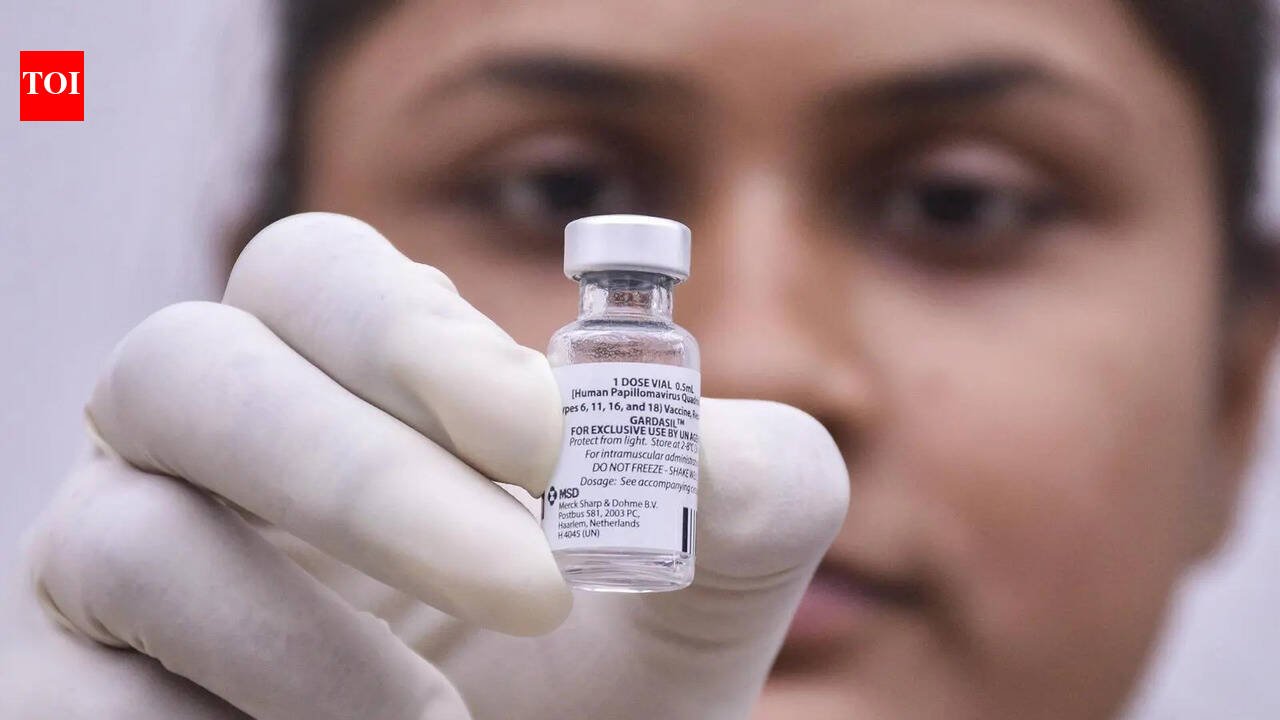
Gurgaon: Three months after Haryana launched its HPV vaccination campaign for adolescent girls, the state has inoculated only 41,899 of its 2.26 lakh target beneficiaries — covering just 19% of girls aged 14-15 years, with over 1.84 lakh still unvaccinated.The drive, launched on Feb 28 as a three-month campaign to protect girls against cervical cancer, has progressed slowly despite repeated reviews and intensified outreach. Coverage stood at a mere 6% (13,580 vaccinations) as late as April 23, prompting a high-level review. It inched up to 12% by May 5 and has since climbed to 19%, a gain of just 7% in nearly four weeks. Officials said the drive will continue until targets are met.District-level data reveals sharp disparities in performance. Karnal leads the state with 56% coverage, having vaccinated 6,872 of its 12,352 target girls. Kurukshetra (46%), Kaithal (43%) and Yamunanagar (42%) round out the better-performing districts. A second cluster — including Rewari, Palwal, Panipat, Mahendragarh, Ambala and Bhiwani — hovers near the state average, between 17% and 20%.Several districts, however, are significantly behind. Faridabad has reached only 10% coverage despite having the state’s second-largest target population of 21,572 girls. Nuh and Rohtak stand at 9%, Hisar at 7%, Sirsa at 6% and Jhajjar at 5%. Jind sits at the bottom with just 410 vaccinations against a target of 10,019 — a coverage rate of 4%. Gurgaon, with a target of 16,014, has vaccinated 2,706 girls, reaching 17%.The pace has also slowed sharply on the ground. On May 29, only 491 doses were administered across the entire state. Kaithal recorded the highest single-day count at 181, followed by Yamunanagar (96) and Kurukshetra (47). Jind, Sirsa and Mahendragarh reported zero vaccinations that day.Officials have attributed the sluggish rollout to vaccine hesitancy fuelled by misinformation, difficulties in reaching out-of-school girls and weak inter-departmental coordination in the campaign’s early phase. Following the state-level review, district administrations were directed to strengthen mobilisation through schools, panchayats, urban local bodies, ASHA workers and anganwadi centres. Teachers have been tasked with identifying eligible girls and securing parental consent, while field workers are focused on out-of-school adolescents.“Vaccine hesitancy remains a challenge in some areas because of misinformation about the HPV vaccine. We are working with schools, panchayats and community leaders to counter these myths. The vaccine has undergone rigorous safety evaluations and is a critical tool for preventing cervical cancer,” a health official said.Nearly all cervical cancer cases are caused by human papillomavirus infection, and India records an estimated 79,000 new cases and around 35,000 deaths each year. Public health experts warn that Haryana will need to dramatically accelerate its pace if it hopes to approach the global benchmark of vaccinating 90% of girls before the age of 15.
