



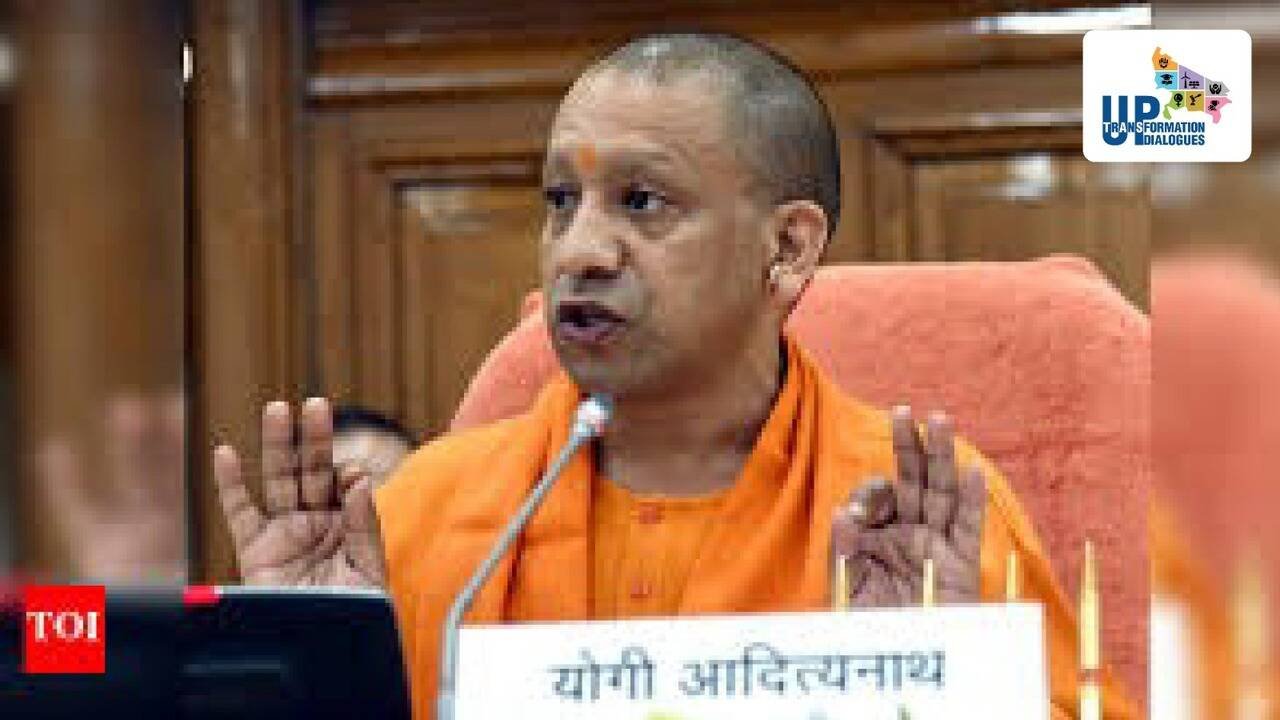
For decades, Uttar Pradesh has been India’s sugar bowl. The state accounts for the largest share of the country’s sugarcane production and is home to more than 120 sugar mills, supporting nearly 50 lakh sugarcane farmers and their families. Yet, despite abundant cane production, the sugar industry frequently faced financial distress. Sugar prices remained volatile, mills accumulated losses, and delayed payments to farmers became a recurring problem.Since 2017 under Yogii government, however, the sector has undergone a remarkable transformation. The revival has been driven not merely by higher sugar production but by a strategic shift towards ethanol production and bagasse-based cogeneration of electricity. What were once regarded as by-products have become major sources of revenue, helping mills diversify income, improve profitability, modernise operations and ensure faster payments to farmers. Today, the scenario is entirely different as Uttar Pradesh has emerged as India’s largest producer of ethanol, with ethanol production increasing roughly fourfold since 2017.
The resolve
It was few years ago when the prophetic words of Uttar Pradesh Chief Minister Yogi Adityanath conveyed the resolve of his government about the cane farmers and the sugar industry per se.“Sugarcane farmers are going to be our future. No sugar mills will remain in loss in the coming times and the government is working on a permanent solution for sugarcane farmers of Uttar Pradesh. Sugarcane will also be used to produce ethanol abundantly to tackle the ups and downs of the sugar market. We increased the use of technology to benefit our farmers, ensure their hard work bears appropriate results and end the dominance of the sugarcane mafia and other corrupt elements existing in the system.”Now, in 2026, his words proved precise in terms of execution of his idea and formulation of policy for the good of the sugar industry as a whole and the sugarcane farmers in particular. Uttar Pradesh stands tall as the leader in the country to not only being able to revive the sugar industry but also diversifying these to meet the needs of the hour.
The crisis before the transformation
Until the middle of the previous decade, most sugar mills relied almost entirely on the sale of sugar. This business model had several weaknesses like sugar prices fluctuated sharply, surplus production often depressed market prices, mills accumulated huge inventories, working capital shortages delayed cane payments and the private investment in new technologies remained limited.Whenever sugar prices declined, the entire value chain—from mills to farmers—came under financial stress. Recognising these structural problems, both the Government of India and the Uttar Pradesh government began promoting diversification of the sugar industry after 2017.
Ethanol: From by-product to growth engine
The biggest game changer was the expansion of the Ethanol Blended Petrol (EBP) Programme. Instead of producing only crystal sugar, mills were encouraged to manufacture ethanol using sugarcane juice, B-heavy molasses and C-heavy molasses. Oil Marketing Companies such as Indian Oil, Bharat Petroleum and Hindustan Petroleum offered assured long-term procurement at government-notified prices. This transformed ethanol into a dependable and profitable business. Unlike sugar prices, the government fixes ethanol prices, providing predictable returns and steady cash flow.As a result, sugar mills across Uttar Pradesh invested heavily in modern distilleries and expanded ethanol production capacity. Today Uttar Pradesh is the country’s largest ethanol-producing state, with production capacity expanding several-fold over the last nine years.
Massive investments in distilleries
The new ethanol policy encouraged sugar companies to establish integrated biofuel complexes. Major companies that expanded ethanol facilities include:
- Balrampur Chini Mills
- Bajaj Hindusthan Sugar
- Dwarikesh Sugar Industries
- Dhampur Sugar Mills
- Triveni Engineering & Industries
- Dalmia Bharat Sugar
- Simbhaoli Sugars
Several cooperative sugar mills also modernised their facilities.Many units installed new distillation plants capable of producing ethanol directly from sugarcane juice, substantially increasing profitability. The investment wave has generated thousands of crores of private investment and created employment in rural Uttar Pradesh.
Bagasse: Turning waste into wealth
Perhaps an equally significant transformation has been the utilisation of bagasse, the fibrous residue left after crushing sugarcane. Earlier, bagasse was treated largely as waste or used inefficiently as boiler fuel. Modern sugar mills now utilise bagasse in high-pressure cogeneration plants.The process works as follows:
- Bagasse is burnt in efficient boilers.
- Steam generated drives turbines.
- Electricity is produced.
- The mill uses part of the power internally.
- Surplus electricity is sold to the Uttar Pradesh power grid.
Thus every tonne of sugarcane now generates multiple revenue streams. Bagasse-based cogeneration has reduced dependence on coal while generating clean renewable energy. For many mills, electricity sales have become an important source of annual income.
A multi-product sugar industry
The modern sugar mill is no longer simply a sugar factory. Today’s integrated sugar complex produces:
- Sugar
- Ethanol
- Renewable electricity
- Industrial alcohol
- Extra Neutral Alcohol (ENA)
- Rectified Spirit
- Organic manure from press mud
- Bio-compost
Diversification has significantly reduced business risk. If sugar prices weaken, mills continue earning through ethanol and power generation.
Government initiatives since 2017
Several policy interventions accelerated this transformation. One has been expansion of Ethanol Blending.The Government of India steadily increased ethanol blending targets, creating assured demand for ethanol produced by sugar mills, higher procurement prices and simplified approvals encouraged mills to invest in distillation facilities. India has since reached 20 percent ethanol blending in petrol ahead of earlier timelines, supported by substantial supplies from sugar-producing states.
Financial assistance
Sugar mills received easier access to loans for establishing distilleries. Interest subvention schemes reduced project costs. The Uttar Pradesh government also facilitated clearances and encouraged investment through industry-friendly policies.
Modernisation
Numerous mills upgraded their Boilers,Turbines, Distillation technology, Energy-efficient equipment and Cogeneration systems which reduced production costs while increasing energy efficiency.
Record payments to sugarcane farmers
Perhaps the biggest beneficiaries of ethanol-led growth have been sugarcane farmers. Improved cash flow enabled mills to clear cane dues much faster than before. During the last nine years, Uttar Pradesh has facilitated record sugarcane payments exceeding Rs 3 lakh crore, an unprecedented achievement for the state. Timely payments improved farmers’ liquidity, enabling investment in better seeds, irrigation, mechanisation and crop management. Higher confidence among farmers also encouraged sustained sugarcane cultivation.
Environmental benefits
The ethanol programme has environmental benefits extending beyond the sugar industry such as Cleaner FuelBlending ethanol with petrol reduces carbon monoxide emissions, lowers greenhouse gas emissions, improves combustion efficiency, and decreases dependence on imported crude oil.
Renewable power
Bagasse-based cogeneration replaces fossil fuel-based electricity, reduces coal consumption, lowers emissions, and converts agricultural waste into productive energy.
Circular economy
- Almost every part of sugarcane is now utilised:
- Juice becomes sugar and ethanol.
- Molasses becomes ethanol.
- Bagasse generates electricity.
- Press mud becomes organic manure.
- This near-zero-waste model represents one of India’s best examples of a circular bioeconomy.
Contribution to rural development
The revival of sugar mills has strengthened rural economies across western, central and eastern Uttar Pradesh. The benefits include: Greater employment in mills,jobs in ethanol plants, transport opportunities, better demand for sugarcane, increased incomes for farmers,higher rural purchasing power, growth of ancillary industries. Districts such as Muzaffarnagar, Shamli, Meerut, Bijnor, Saharanpur, Lakhimpur Kheri, Sitapur, Hardoi, Bareilly and Pilibhit have particularly benefited from these developments.
New generation projects
The evolution continues beyond conventional ethanol. Several companies are investing in second-generation (2G) ethanol, which uses agricultural residues such as sugarcane bagasse and crop waste instead of food-based feedstock. A landmark private-sector hybrid 2G ethanol project in Uttar Pradesh recently received central financial support under the PM JI-VAN Yojana, reflecting the state’s continued leadership in biofuels. These projects promise to reduce stubble burning,utilise agricultural waste,create additional farmer income,further strengthen India’s clean-energy transition.
Uttar Pradesh’s leadership
Today Uttar Pradesh stands as:
- India’s largest sugarcane producer.
- India’s largest ethanol-producing state.
- Home to one of the country’s biggest sugar industries.
- A leader in renewable power generation from bagasse.
- A major contributor to India’s ethanol blending programme.
Even in seasons with lower sugar output, the diversified revenue model has helped the industry remain more resilient because sugar diverted for ethanol is offset by stable ethanol earnings.The revival of Uttar Pradesh’s sugar industry over the last nine years is one of the state’s most significant examples of value addition through diversification. By transforming ethanol and bagasse from low-value by-products into major revenue streams, sugar mills have become integrated bio-energy enterprises rather than conventional sugar factories. The combination of supportive government policies, expansion of ethanol blending, investment in distilleries, bagasse-based cogeneration, and technological modernisation has strengthened the financial health of mills while ensuring faster payments to farmers. With more than Rs 3 lakh crore paid to sugarcane growers over this period and Uttar Pradesh emerging as the country’s largest ethanol producer, the sector has become an important pillar of rural prosperity, renewable energy and India’s transition towards a greener economy.The journey demonstrates how innovation, policy support and efficient utilisation of agricultural resources can transform a traditional industry into a modern, sustainable and globally competitive bio-energy ecosystem.In just nine years, Uttar Pradesh’s sugar industry has evolved from a traditional, crisis-prone sector into a modern bio-energy ecosystem. By leveraging ethanol and bagasse, supported by forward-looking policies and private investment, it has delivered financial stability to mills, record payments to farmers, renewable energy, and rural prosperity. This successful diversification stands as a strong model of value addition in Indian agriculture.


