



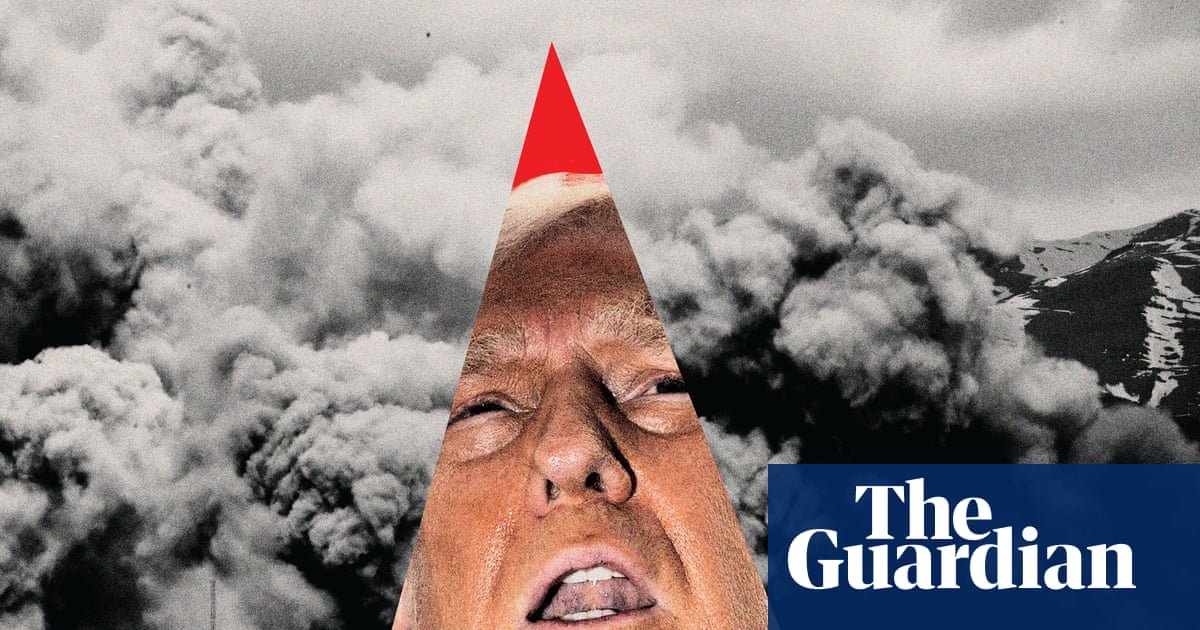
Donald Trump is still high on the capture of Nicolás Maduro. The easy abduction of the Venezuelan president didn’t just grant Trump control of the nation’s oil and critical minerals resources. It allowed him to throttle the government of Cuba by denying it access to energy, raising the tantalizing prospect that he might bring down a communist regime that has annoyed Washington since 1959.
Trump is confident that his joint venture with Israel in Iran will do just as well. The barrage of Iranian missiles and drones aimed at Israel and Iran’s Arab neighbors has done nothing to change Trump’s mind that he can win, regardless of how he defines “winning”.
Whatever the war does to energy markets, the American economy can take it. “Short term oil prices, which will drop rapidly when the destruction of the Iranian nuclear threat is over, are a very small price to pay for U.S.A., and World, Safety and Peace,” he noted on social media. “ONLY FOOLS WOULD THINK DIFFERENTLY!”
Trump’s feeling of invincibility is also due to the fact that his erratic policymaking, so far, hasn’t caused as much damage as originally feared. Despite his wall of tariffs, his dismemberment of the federal workforce, his deportation of immigrant workers and his relentless attacks on the Fed, just a few weeks ago leading economists were wondering whether the economy may achieve that most difficult of feats: a soft landing from the era of high inflation.
The United States is also perhaps the best insulated of the major advanced economies against a spike in the price of energy. Imports of crude have declined significantly as domestic production surged from the early 2000s. Natural gas, whose domestic price is not as sensitive to spikes in global markets, has taken a larger role in the energy supply.
Today, oil satisfies about 38% of US energy consumption, almost 10 percentage points less than during the 1973 oil crisis, when Arab oil producers stopped shipping to the US to punish it for supporting Israel in the Yom Kippur war. Natural gas’s share has meanwhile grown from 30% to 36%.
European markets shuddered when Iran throttled the strait of Hormuz, through which 20% of the world’s oil shipments flow, and swooned when Qatar shut down liquefied gas facilities. On this side of the Atlantic, though, Trump’s favorite gauge of the US economy, the S&P 500 index, still hovers close to its all-time high.
But however high Trump is riding, he is nonetheless facing defeat. Not military defeat against whatever is left of Iran’s armed forces. He is about to be defeated by the only power ever capable of stopping American military adventures: the opposition of the American public.
The war against Iran has been deeply unpopular from the start, an unusual twist for a nation that tends to support sending the kids off to fight, even under dubious justifications. Its economic effects are not going to help its popularity going forward.
And self-sufficiency in energy cannot fully insulate the United States. The price of oil is set in global markets, whether it comes from Texas or the Middle East. Regular gasoline already shot up to its highest since Trump took office, past $3.50 a gallon. The government now forecasts that retail gasoline prices will only return to their 2025 level in the fall of 2027, while the retail price of diesel will remain above its pre-war level at least until the end of next year.
Trucking companies will largely pass on higher prices to customers. Farmers facing higher fuel and fertilizer prices will also slap them onto the price tag of food. Retailers and airlines will also be hit by rising fuel costs.
All this will undoubtedly show up in March’s reading on inflation, which had steadied in February to a 2.4% increase compared with a year earlier. And all this will get in the way of interest rate cuts by the Federal Reserve. Meanwhile, expensive gas at the pump is likely to hit sales of Americans’ beloved SUVs.
All of this will hammer Trump’s approval ratings where it hurts.
The president understands these risks, which is why he is pulling out the stops to bring oil prices down. The administration unveiled a plan to insure tankers and escort them through the strait. It waived sanctions against some Russian oil exports and is considering ways to expand Venezuelan oil production, to fill any supply shortfall.
But reversing the largest jump in oil prices in more than three decades will take more than that. Either the war ends or the US degrades Iran’s capabilities to the point where the country can no longer threaten oil tankers moving through Hormuz.
Trump, according to his public statements, simultaneously believes that he can achieve Tehran’s “unconditional surrender” and that the war “is very complete, pretty much”. But his advisers in Washington should have learned by now that you can bomb a country to smithereens from the air and still not win the war over the long term. Neither Iran’s Revolutionary Guards nor the Basij – institutions hated by most Iranians – will simply give up their weapons and risk their lives. However much Iranian infrastructure has been destroyed, there are thousands of armed warriors on the ground able to fight back and prop up a hostile regime in Tehran.
Trump could back down from demanding “unconditional surrender”, invent alternative grounds to claim victory and bring his flotilla home. But that will hardly look good. Alternatively, he could deploy ground forces, an option he has not ruled out. Or he could keep on bombing, shifting to civilian targets once he is done destroying Iran’s military infrastructure.
Neither of these approaches is quick, though, which means the economic pain from this war will most likely linger. And Trump may learn that, however easy it was to capture Maduro, beheading the US’s rivals is not necessarily a winning strategy everywhere in the world.


