



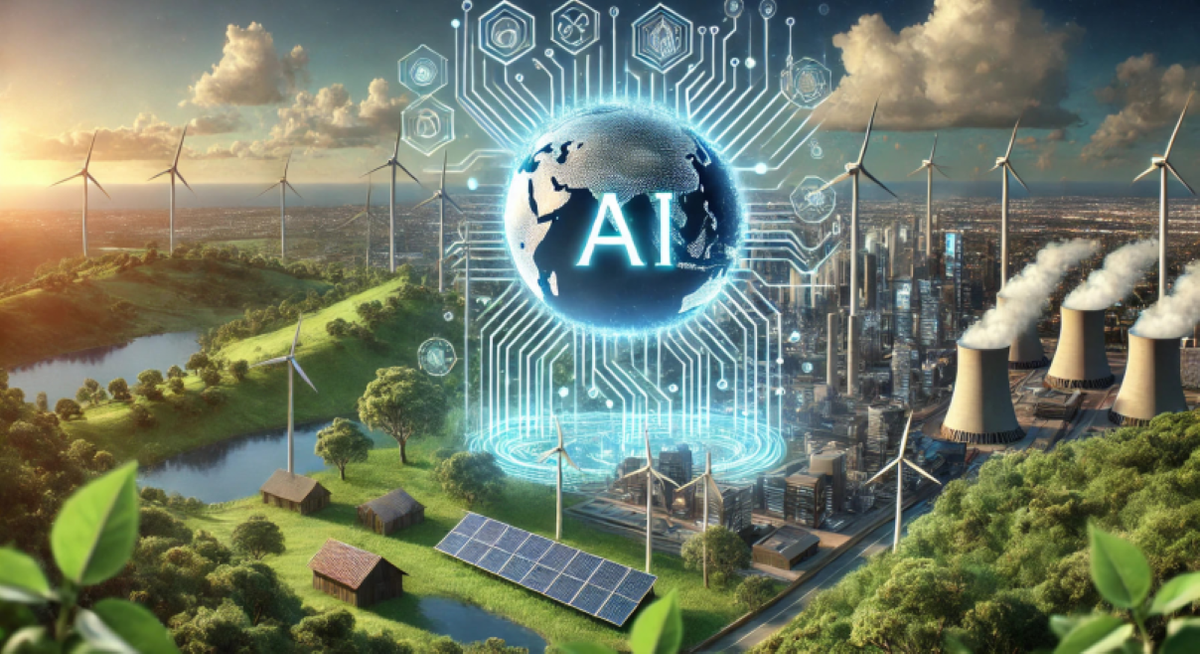
The technologies shaping tomorrow’s economy will depend not only on physical infrastructure but also on skilled people, research and innovation
Artificial intelligence (AI) is reshaping how people live, work and communicate. Every online search, digital payment, email, video call, cloud service and AI chatbot relies on an invisible digital infrastructure that most people never see. At the heart of this infrastructure are data centres, specialised facilities filled with powerful computers that process, store and deliver digital information.
As AI systems become increasingly capable, these facilities require growing amounts of electricity, land and cooling. This rising demand has prompted scientists and engineers to explore an extraordinary question: could some of tomorrow’s data centres one day operate in space?
Although the idea sounds like science fiction, it has become a serious area of scientific research. Technology companies, universities and space agencies are studying whether orbital computing could eventually complement terrestrial data centres. Jeff Bezos has long argued that some heavy industries may ultimately move into space, while Elon Musk has spoken about the long-term potential of expanding computing capabilities beyond Earth.
Google researchers have also examined the engineering challenges of operating AI computing hardware in space, including radiation exposure and long-term system reliability. Meanwhile, organisations such as NASA, the European Space Agency (ESA), the Japan Aerospace Exploration Agency (JAXA), the Canadian Space Agency (CSA), the China National Space Administration (CNSA) and the Chinese Academy of Sciences (CAS) continue advancing research in spacecraft technologies, computing systems and future space infrastructure.
International organisations, including the International Energy Agency (IEA), the World Economic Forum and UNESCO, have highlighted the growing importance of artificial intelligence, digital infrastructure, rising energy demand and the responsible development of emerging technologies.
Meanwhile, researchers such as Nicolas Longépé and Yonggang Wen, together with leading universities including the Massachusetts Institute of Technology (MIT), Stanford University, Harvard University, the University of Oxford, the University of Cambridge, the University of Toronto, the Technical University of Munich, the University of Tokyo, Tsinghua University and the Harbin Institute of Technology, are advancing research in artificial intelligence, advanced computing, robotics and space engineering that could contribute to future orbital computing systems.
While the idea of orbital data centres is still under development, it offers valuable lessons for regions like Kashmir. The technologies shaping tomorrow’s economy will depend not only on physical infrastructure but also on skilled people, research and innovation. Preparing young people for these emerging fields may prove far more important than predicting exactly where future computing facilities will be located.
One of the principal reasons researchers are exploring orbital computing is energy. Modern AI systems consume enormous amounts of electricity. According to the International Energy Agency, electricity demand from data centres is rising steadily worldwide, placing increasing pressure on power generation, land availability and cooling infrastructure.
As AI continues to expand, researchers are investigating new ways to improve efficiency while reducing environmental impacts. Recent engineering studies suggest that future solar-powered orbital computing platforms could potentially operate at the megawatt scale, although such concepts remain technically and economically challenging.
From an engineering perspective, space offers both opportunities and challenges. Satellites in suitable orbits can generate solar power for long periods, and some specialised computing tasks could be carried out closer to where data are collected in space. However, these possible advantages come with major technical challenges that scientists and engineers still need to overcome.
Cooling computers in space is much harder than on Earth because space is a vacuum, where heat cannot be carried away by air. Instead, spacecraft use specially designed radiators to release excess heat. NASA and the European Space Agency consider heat management one of the biggest engineering challenges in spacecraft design. These cooling systems make space-based computing platforms larger, heavier and more complex.
Radiation is another major challenge. High-energy particles in space can damage computer chips, corrupt data and disrupt electronic systems. Researchers continue testing advanced computer hardware under simulated space conditions to understand how it performs in orbit. Their findings show that computers designed for space need much stronger protection than those used in conventional data centres.
Reliability is equally important. On Earth, faulty servers can often be repaired or replaced within hours. In space, maintenance would be extremely expensive and technically demanding. Future orbital computing systems would therefore need to be highly reliable, equipped with backup systems, and capable of operating independently with minimal human intervention.
Current research suggests that orbital data centres are more likely to complement rather than replace those on Earth. They could prove valuable for specialised applications such as processing satellite data, supporting deep-space missions and analysing information already generated in orbit. Every day, internet services, cloud computing and most AI applications are expected to continue relying primarily on terrestrial data centres for the foreseeable future. For Kashmir, the more important lesson is not where future data centres will be located, but why understanding emerging technologies will matter in an increasingly digital world.
Tamil Nadu shows how long-term investment in research and infrastructure can help build a strong technology sector. It has become one of the country’s leading data centre hubs, while Maharashtra, Telangana, Uttar Pradesh and Andhra Pradesh continue to attract major investments in cloud computing and AI infrastructure. Institutions such as the Indian Space Research Organisation (ISRO), the Indian Institute of Science (IISc), the Indian Institutes of Technology (IITs) and the Indian Institute of Space Science and Technology (IIST) are carrying out important research in artificial intelligence, satellite technology, advanced computing and space science. Their work will help shape the country’s technological future.
Kashmir can learn from these developments. Universities and colleges can strengthen education in artificial intelligence, computer science, electronics, robotics, cybersecurity and space technology. Students can take part in research, innovation and entrepreneurship, while local startups can create digital solutions for agriculture, healthcare, tourism, disaster management, education and public services. These skills will remain valuable whether future technologies are developed on Earth or, one day, in space.
The idea of data centres in space is about much more than satellites. It shows that every major technological breakthrough begins with curiosity, research, thorough testing and hard work. Kashmir’s future in the age of AI will depend not on where future data centres are built, but on whether today’s students become tomorrow’s scientists, engineers, researchers and innovators.
Technology will continue to change, but the greatest investment Kashmir can make is in its people. By investing in education, scientific thinking and innovation today, Kashmir can help create the technologies of the future instead of simply using them.
(The Author writes on technology and artificial intelligence. [email protected])


