


India has a salt problem, and it’s silently costing lives.
Salt is so embedded in our daily cooking that it escapes scrutiny. That invisibility masks a stark reality: Indians consume nearly double the World Health Organization (WHO)’s recommended daily salt (and sodium) intake. The consequences are rising rates of hypertension, stroke, and other cardiovascular diseases (CVD). This harm is driven by excess sodium from salt in our diets.
This is not just about taste, dietary choice or cultural practice though it is deeply rooted in all three! In India, excessive salt intake is quietly fueling a public health emergency.
Sodium reduction strategies using behaviour change communication could show results but globally the evidence suggests that people can’t be nudged away from the saltshaker by behaviour change communication alone. While behaviour change communication can support sodium reduction, we need other simple solutions to be able to achieve India’s goal of reducing sodium intake at population level by 30% by 2030.
But what if the solution did not require drastic changes in behaviour, expensive medications, or complex health interventions? What if it was as simple as switching the salt we use?
Potassium-enriched low-sodium salt substitutes (LSSS) offer the simple ‘salt switch’ that India needs.
A recent consensus statement by senior clinicians, dietitians, nutritionists, public health experts and academicians emphasises that the use of potassium enriched low-sodium salt substitutes as an effective strategy to address the growing burden of hypertension and other cardiovascular diseases in India.
This statement has been endorsed by leading nephrologists, cardiologists, clinical nutritionists and medical societies in India, reinforcing the growing scientific and public health consensus around the use of LSSS.
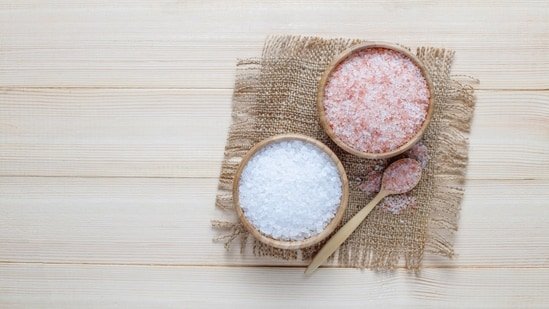
Edible salt is chemically sodium chloride. In LSSS, a portion of sodium is replaced with potassium. Indian diets are typically high in sodium and low in potassium. This simple substitution addresses both imbalances at once reducing sodium intake while increasing potassium consumption. The result is a low-cost, evidence-based intervention that lowers blood pressure and reduces cardiovascular risk without altering taste or cooking practices.
And yet, despite compelling evidence, adoption remains strikingly low.
What makes LSSS remarkable is not just its effectiveness, but how easy it is to incorporate into daily life. LSSS has the potential to be a gamechanger in reducing hypertension because it requires far less effort than most dietary changes. It preserves taste, appearance and cooking behaviour, making healthier choices easier to sustain. Food habits are deeply cultural, and public health interventions often fail when they demand major deviations from what people are accustomed to. LSSS sidesteps much of this resistance because it looks like salt, cooks like salt and tastes like salt, but with significantly less harm. However, this does not mean adoption happens automatically. Even a simple substitution requires awareness, availability and intention choosing a different salt brand or asking for it at the shop.
This is rare in public health: a solution that is invisible in daily life, yet transformative in impact.
India’s salt consumption pattern makes this intervention powerful.
Unlike high-income countries, where most sodium intake comes from processed foods, nearly 80% of dietary sodium in India comes from salt added during home cooking. This means switching to LSSS in homes could deliver immediate, population-wide benefits. No prolonged reformulation battles, just a quiet shift in what sits on the kitchen shelf.
Concerns about the safety of LSSS often dominate discussions, and rightly so—but they must be placed in proportion to population-level benefit. A small subset of people, particularly those with advanced kidney disease or on specific medications need to restrict potassium intake.
With clear labelling, simple screening and appropriate counselling, the vast majority of people can safely benefit from switching to LSSS.
Public health decisions must weigh manageable risks against substantial benefits, not allow caution to be too restrictive and become paralysis.
If the science is clear and the solution simple, why has adoption lagged?
Awareness remains low; many consumers are unaware such alternatives exist.
Among clinicians and dietitians, there is therapeutic inertia a hesitation to integrate non-pharmacological, nutrition-based interventions into routine care. Professional bodies and health programmes must align on clear, practical guidance that translates LSSS from evidence into everyday dietary advice.
Unlocking the potential of LSSS requires coordinated action.
Public awareness efforts must should align around a simple message: Same taste, better health. Dietitians, nurses and frontline health workers should routinely include LSSS in hypertension counselling, alongside advice on medication adherence and physical activity. Affordability is critical. Policy measures such as reduced GST, public procurement and integration into food programmes.
Finally, labelling that provides adequate caution while not being too restrictive and usage guidelines can ensure safe uptake without discouraging households.
No single intervention will solve India’s cardiovascular crisis. But we cannot afford to overlook solutions that are simple, scalable and cost-effective. Once adopted, LSSS works quietly to reduce sodium intake, increasing potassium and lowering blood pressure over time. It is not glamorous. It does not make headlines like new drugs or technologies. Yet it may save thousands of lives each year.
A simple switch, one that preserves taste while protecting health, could quietly reshape the nation’s cardiovascular future.
(The views expressed are personal)
This article is authored by R Aishwariya, project officer and Suparna Ghosh-Jerath, programme head, Nutrition and Food Policy, The George Institute for Global Health, India and Manika Sharma, principal advisor, Food Policy, Resolve to Save Lives, India.
